

Science News Roundup: Russia says it plans to send cosmonauts to the Moon next decade - TASS; Gamma-ray burst in faraway galaxy disturbed Earth's upper atmosphere
Those waves traversed the cosmos and finally reached Earth last year.
Following is a summary of current science news briefs.
Russia says it plans to send cosmonauts to the Moon next decade - TASS
Russia plans to send cosmonauts to land on the Moon next decade for the first time in its history and intends to build a moon base from 2031, according to the Russian corporation responsible for manned space flights, state news agency TASS reported. A draft plan presented by Vladimir Solovyov of RKK Energia said that Russia was planning manned missions to the moon, including the first Russian human moon landing, along with a moon base, TASS said on Wednesday.
Gamma-ray burst in faraway galaxy disturbed Earth's upper atmosphere
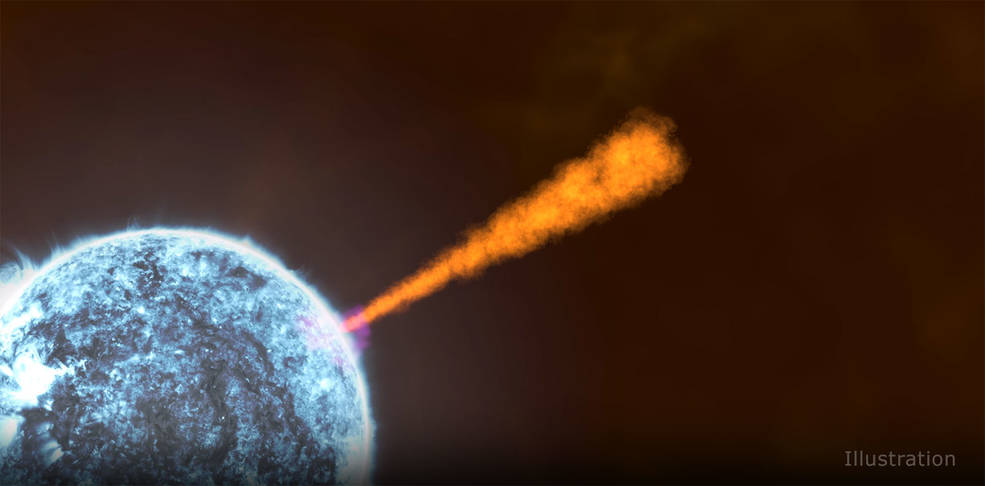
About two billion years ago in a galaxy far beyond our Milky Way, a big star met its demise in a massive explosion called a supernova that unleashed a huge burst of gamma rays, which pack the most energy of any wave in the electromagnetic spectrum. Those waves traversed the cosmos and finally reached Earth last year. This gamma-ray burst, researchers said on Tuesday, caused a significant disturbance in Earth's ionosphere, a layer of the planet's upper atmosphere that contains electrically charged gases called plasma.


 Google News