

ISRO launches XPoSat - India’s first dedicated polarimetry mission
- Country:
- India
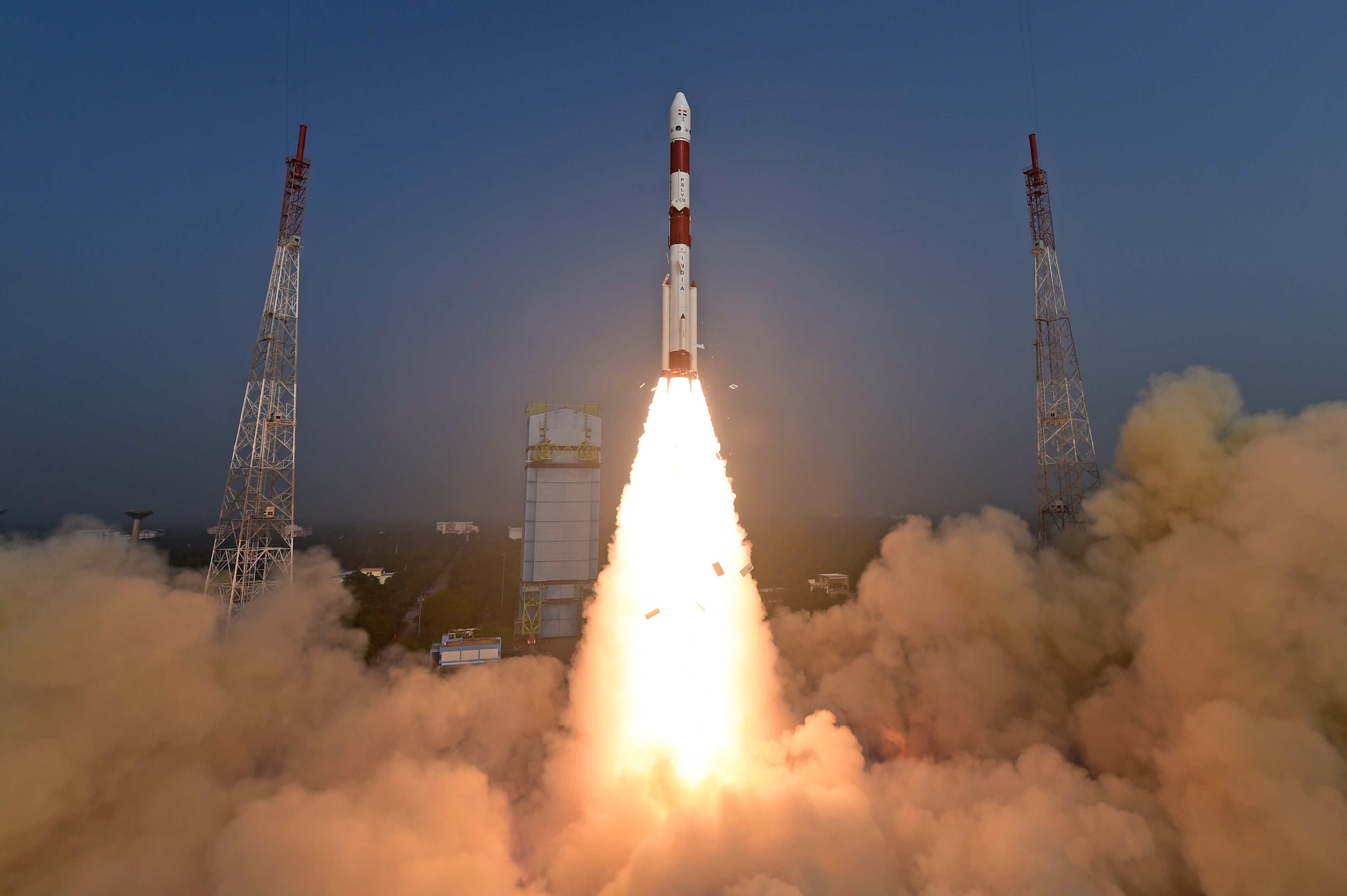
On January 1, 2024, the Indian Space Research Organisation (ISRO) successfully launched the X-ray Polarimeter Satellite (XPoSat), India's first dedicated polarimetry mission to study various dynamics of bright astronomical X-ray sources in extreme conditions.
The mission lifted off on the agency's PSLV-C58 vehicle at 09:10 Hrs. IST from the Satish Dhawan Space Centre SHAR, Sriharikota. The satellite carrying two scientific payloads was placed precisely into the intended orbit of 650 km, the agency said on Monday.
The spacecraft's scientific payloads include POLIX (Polarimeter Instrument in X-rays) and XSPECT (X-ray Spectroscopy and Timing).
- POLIX is an X-ray Polarimeter for astronomical observations in the energy band of 8-30 keV. Developed by Ramam Research Institute (RRI), Bangalore in collaboration with U R Rao Satellite Centre (URSC), the instrument is expected to observe about 40 bright astronomical sources of different categories during the planned lifetime of the mission of about 5 years.
- XSPECT is an X-ray SPECtroscopy and Timing payload designed to provide fast timing and good spectroscopic resolution in soft X-rays. The instrument can provide long-term monitoring of spectral state changes in continuum emission, changes in their line flux and profile, and simultaneous long-term temporal monitoring of soft X-ray emission in the X-ray energy range 0.8-15 keV. XSPECT would observe several types of sources viz X-ray pulsars, blackhole binaries, low-magnetic field neutron star (NS) in LMXBs, AGNs and Magnetars.
PSLV-C58/XPoSat Mission:Lift-off normal 🙂🛰️XPoSat satellite is launched successfully.🚀PSLV-C58 vehicle placed the satellite precisely into the intended orbit of 650 km with 6-degree inclination🎯.The POEM-3 is being scripted ...#XPoSat
— ISRO (@isro) January 1, 2024
Update
ISRO announced the successful testing of a 100 W class Polymer Electrolyte Membrane Fuel Cell based Power System (FCPS) in its orbital platform, POEM3, launched onboard PSLV-C58. The test provided a wealth of data on the performance of various static and dynamic systems that formed part of the power system and the physics at play, the agency said.


 Google News