

Euclid telescope begins survey of dark Universe
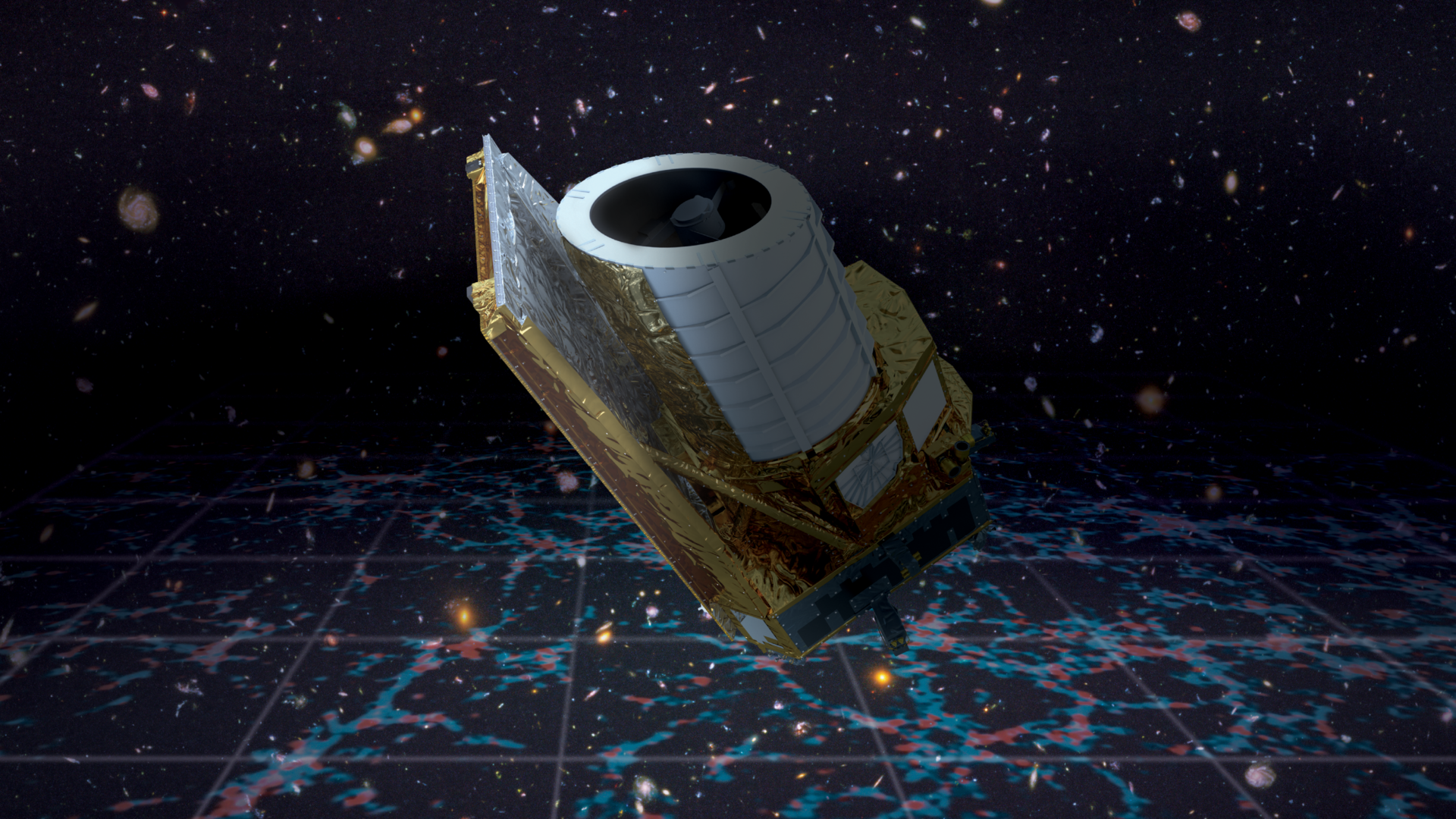
The European Space Agency's Euclid space telescope has officially started its survey of the dark universe. The telescope will observe a patch of 130 square degrees (more than 500 times the area of the full Moon) over the next 14 days, which lies in the direction of the constellations of Caelum and Pictor in the Southern Hemisphere.
Launched in July 2023, Euclid will observe billions of galaxies across 10 billion years of cosmic history to investigate dark matter and dark energy over the next six years. The dark universe detective will follow a 'step-and-stare' observation mode, meaning it will stare at one area of the sky for about 70 minutes, producing images and spectra, and it then takes four minutes to move to the next area of the sky.
"Thanks to its wide-eyed look at the cosmos, and its long exposure time and sensitivity, the number of galaxies that Euclid can see in one pointing is huge," explains Roberto Scaramella, Euclid survey scientist at the National Institute for Astrophysics (INAF) in Italy, and lead of the consortium survey group since the beginning of the mission.
During its mission, Euclid will explore how the Universe has expanded and how large-scale structure is distributed across space and time, offering invaluable insights into the role of gravity and the nature of dark energy and dark matter.
📣Science alert!📣Today, our Euclid space telescope begins its survey of the dark Universe. Over the next six years, Euclid will observe billions of galaxies across 10 billion years of cosmic history creating the the most extensive 3D map of the Universe yet!🔗… pic.twitter.com/r3YSfNtfcG
— ESA (@esa) February 14, 2024


 Google News