

Dr Jaishankar Inaugurates 2nd 'Silent Conversation: From Margins to the Centre' Art Exhibition
During the inauguration, Dr. Jaishankar emphasized the inseparable link between India's development trajectory and environmental conservation.
- Country:
- India
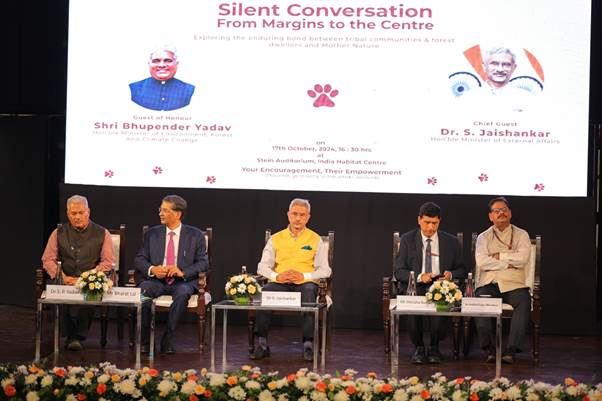
Union Minister for External Affairs, Dr S. Jaishankar, inaugurated the second edition of the art exhibition "Silent Conversation: From Margins to the Centre" in New Delhi on 17 October 2024. The four-day exhibition, which runs until 20 October, has been organized by the National Tiger Conservation Authority (NTCA) in collaboration with the Sankala Foundation, the National Human Rights Commission (NHRC), and the International Big Cat Alliance. The event serves as a platform to spotlight India's conservation efforts and the role of marginalized communities in protecting the environment.
Focus on Environmental Conservation and Tribal Welfare
During inauguration, Dr. Jaishankar emphasized the inseparable link between India's development trajectory and environmental conservation. He reiterated the government's commitment to ensuring the welfare of Scheduled Tribes through several initiatives. In particular, he highlighted the Antyodaya scheme, which seeks to uplift marginalized communities, ensuring inclusivity and that "no one is left behind."
"India's progress on environmental conservation, especially with initiatives like tiger conservation, would not have been possible without the dedicated guardianship of tribal communities and forest dwellers," Dr Jaishankar said. He acknowledged that their efforts have helped India make remarkable strides in protecting its biodiversity. The minister praised their active role in combating poaching and emphasized that successful conservation policies rely on community participation or Janbhagidari.
He also pointed to the 2022 amendments to the Wildlife Protection Act, noting that they were designed to balance environmental conservation with the country's development goals. These amendments represent India's growing recognition of sustainable development, where economic progress does not come at the cost of environmental degradation.
Coexistence and Global Challenges
In a video message played during the event, Union Minister for Environment, Forests, and Climate Change, Shri Bhupendra Yadav, echoed similar sentiments. He stressed the importance of coexistence between communities and nature, noting that this relationship is at the heart of India's conservation philosophy. Yadav praised the way tribal and forest communities live in harmony with nature, protecting and respecting it.
"The world today faces immense challenges—climate change, biodiversity loss, and soil desertification, to name a few. However, India's approach to living in harmony with nature can serve as a model for others," he remarked.
Celebrating India's Conservation Legacy
On the occasion, two important publications were released to celebrate India's wildlife heritage and the success of its conservation programs. The book "Hidden Treasures: India's Heritage in Tiger Reserves" was unveiled, showcasing the rich biodiversity of India's tiger reserves and the cultural significance of these protected areas. Additionally, a magazine titled "Big Cats" was launched, providing insights into the conservation efforts aimed at protecting India's big cats, including tigers, leopards, and snow leopards.
The event also featured a cultural program that highlighted the deep connection between India's tribal communities and the forests they protect. Dr. Gajendra Singh Shekhawat, Union Minister for Culture and Tourism, was among the dignitaries attending the evening event, further emphasizing the importance of preserving India's natural and cultural heritage.
India's Global Leadership in Conservation
India has emerged as a global leader in wildlife conservation, particularly in its efforts to protect the Bengal tiger, which remains a flagship species for the country. With the success of the National Tiger Conservation Authority, India is home to over 70% of the world's wild tiger population. This achievement has been largely attributed to the active participation of local communities, including forest dwellers and indigenous tribes, who have served as the custodians of these ecosystems for generations.
Through initiatives like Project Tiger and alliances like the International Big Cat Alliance, India continues to collaborate with global partners to address the challenges of poaching, habitat loss, and human-wildlife conflict. Dr. Jaishankar's remarks at the inauguration underscored India's commitment to taking this leadership forward, working both domestically and internationally to ensure the long-term survival of its iconic species and the well-being of its marginalized populations.
The "Silent Conversation: From Margins to the Centre" exhibition aims to foster dialogue on these crucial issues, showcasing art and photography that reflect the symbiotic relationship between nature and human communities, while also encouraging citizens to embrace conservation efforts.


 Google News