

Indian Astronomers Map Hidden Dust Layers Shaping the Milky Way’s Structure
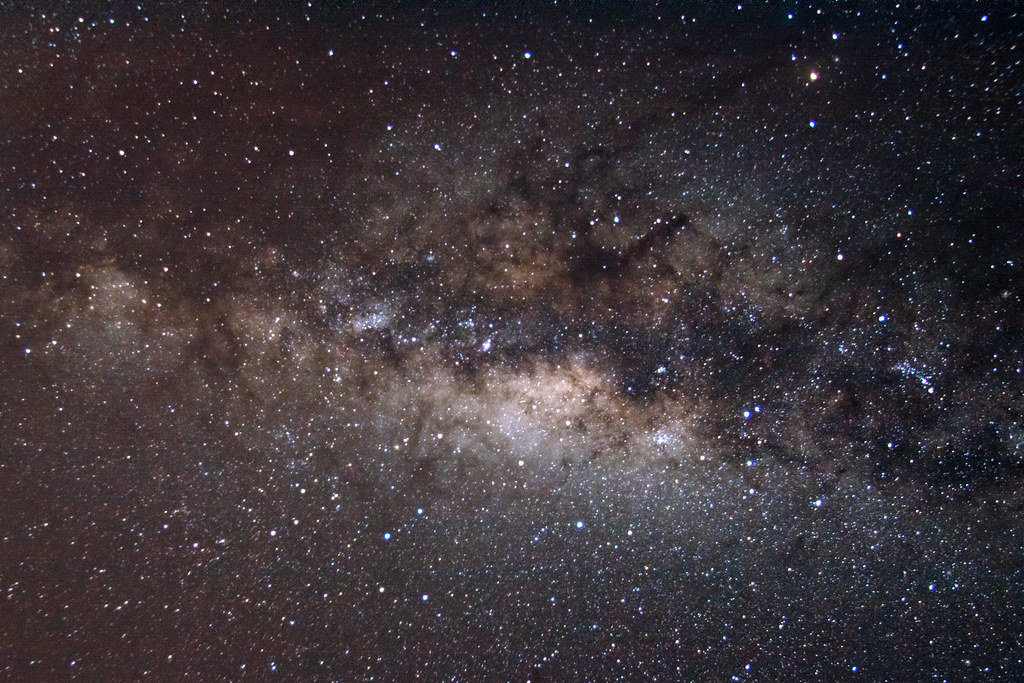
The Milky Way is filled with clouds of interstellar dust and gas that can block or dim starlight, a phenomenon known as extinction.
- Country:
- India
Astronomers have unveiled a detailed new map of the invisible cosmic dust that veils our galaxy, the Milky Way, and dims the light of stars. The breakthrough, led by scientists at the Aryabhatta Research Institute of Observational Sciences (ARIES)—an autonomous institute under the Department of Science and Technology, Government of India—provides fresh insights into the structure of our Galaxy and the regions where the next generation of stars may be forming.
The Role of Interstellar Dust
The Milky Way is filled with clouds of interstellar dust and gas that can block or dim starlight, a phenomenon known as extinction. While dust constitutes only a small fraction of galactic material, its role is enormous—it absorbs light, alters the observed colours of stars, and, most importantly, provides the raw material for star and planet formation.
Understanding how this dust is spread across the Galaxy is therefore critical for mapping stellar nurseries, refining distance measurements to stars, and tracing the dynamic history of the Milky Way.
Mapping with Open Star Clusters
To chart the distribution of this dust, ARIES scientists examined more than 6,000 open star clusters, which are groups of young stars formed from the same molecular cloud. Because these clusters are mostly found close to the Galactic disk—the thin, flat plane of the Milky Way where gas, dust, and new stars are concentrated—they serve as reliable markers for dust mapping.
By analysing how the starlight from these clusters is absorbed and reddened, researchers created a new large-scale model of the "reddening plane" of the Milky Way.
"Open clusters act like streetlights piercing through fog. By observing how much their light is dimmed or reddened, we can reconstruct the thickness and shape of the dust that surrounds us," explained Dr. Y. C. Joshi, lead scientist of the study.
A Wavy, Uneven Dust Layer
The findings reveal that the dust in our Galaxy is not evenly distributed. Instead, it forms a thin, undulating layer that does not align exactly with the central plane of the Milky Way.
-
This reddening plane lies slightly below the Galactic mid-plane and follows a wave-like pattern across different longitudes.
-
The highest concentration of dust is seen toward Galactic longitude 41°, while the least amount of dust is found around longitude 221°.
-
Interestingly, the Sun itself is positioned about 50 light-years (15.7 parsecs) above this dusty layer, giving astronomers a unique vantage point for studying it.
The study also shows that the dust layer's thickness varies—it is denser in regions closer to the Galactic center and thinner in more peripheral regions. This unevenness points to the dynamic and turbulent processes shaping the Milky Way, such as supernova explosions, stellar winds, and gravitational interactions.
Implications for Astronomy
This mapping effort is more than an academic exercise. By providing a clearer picture of the three-dimensional distribution of dust, astronomers can:
-
Better identify star-forming regions in our Galaxy.
-
Correct for dust-related distortions when studying the brightness and colours of stars.
-
Improve measurements of cosmic distances, which are crucial for understanding the size and expansion rate of the Universe.
The confirmation that most dust is packed into a narrow, dynamic band also strengthens the link between dusty regions and stellar nurseries, reinforcing the idea that the Milky Way is a constantly evolving galaxy.
Looking to the Future
While this study maps a significant portion of the Galactic disk, astronomers stress the need for deeper observations of more distant regions. Upcoming global missions will be instrumental in refining the picture:
-
The European Space Agency's Gaia mission, whose next data release will provide even more precise stellar distances and motions.
-
The Vera C. Rubin Observatory's Legacy Survey of Space and Time (LSST), expected to revolutionize large-scale sky surveys with its unprecedented depth and resolution.
Together, these efforts will help build the most complete three-dimensional atlas of the Milky Way's dust, paving the way for new discoveries about the origins and evolution of stars, planets, and galaxies.


 Google News