

New GOOS Report Warns Global Ocean Observing System Is ‘Critical but Fragile’
Oceans absorb more than 90% of excess heat caused by human-driven climate change, shape global weather patterns, and support billions of livelihoods.
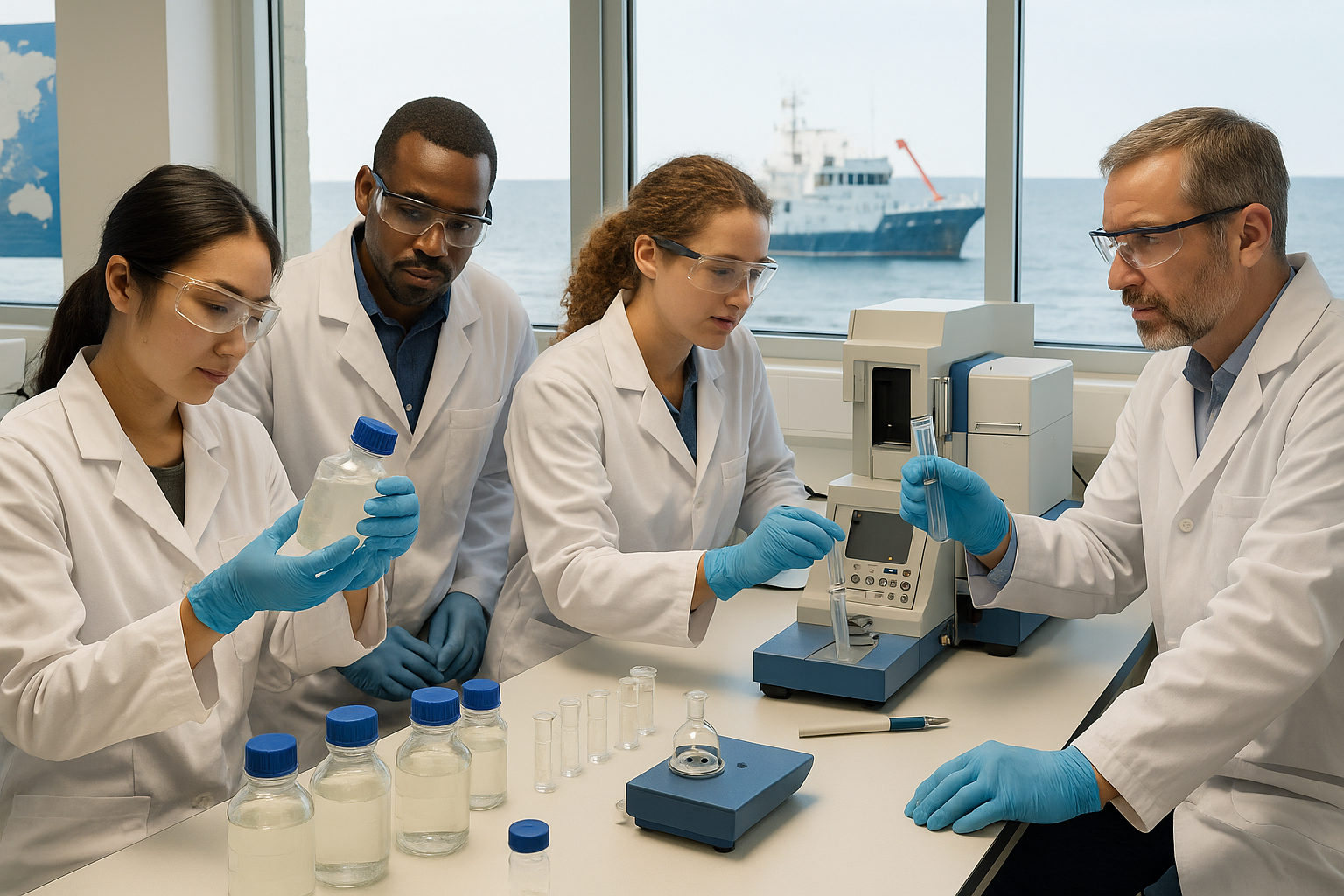
A newly released assessment of the world's ocean monitoring infrastructure reveals both encouraging scientific advances and major vulnerabilities that threaten global climate resilience, early warning systems, marine conservation, and the sustainable ocean economy. The Global Ocean Observing System (GOOS) Status Report 2025, published by UNESCO's Intergovernmental Oceanographic Commission (IOC), warns that despite significant progress, the observing system remains subcritical and increasingly at risk due to uneven coverage, declining equipment, and insufficient long-term investment.
The report underscores that without coordinated global action and stronger partnerships — particularly with the private sector — the world risks losing critical data required for weather forecasting, climate prediction, biodiversity protection, maritime safety, and economic planning.
Ocean Observations: A Foundation of Modern Climate and Weather Science
Oceans absorb more than 90% of excess heat caused by human-driven climate change, shape global weather patterns, and support billions of livelihoods. Yet the ability to monitor the ocean in real time depends on a vast and often invisible global network of instruments: buoys, floats, satellites, research vessels, autonomous vehicles, coastal stations — and even marine wildlife.
"The 'eyes' of thousands of observing platforms feed weather forecasts, early warnings and climate prediction," said Celeste Saulo, Secretary-General of the World Meteorological Organization (WMO). "Without robust data, better decision-making becomes impossible."
A System with Growing Strengths — and Growing Strains
The 2025 GOOS Status Report highlights several promising developments that reflect innovation, improved collaboration, and expanding observational capabilities.
Key advances include:
-
Improved understanding of the Atlantic Meridional Overturning Circulation (AMOC), a critical ocean current system that influences weather, sea level rise, and climate stability across the Atlantic basin.
-
Enhanced El Niño prediction systems, which now integrate expanded ocean data to strengthen early warning capacities in South America.
-
A pioneering project using elephant seals equipped with sensors to gather unique data from the remote Southern Ocean — data previously impossible to obtain.
-
Co-designing South Africa's ocean observing capacity with communities and stakeholders, improving inclusivity and local resilience.
-
A transformative initiative to turn 10,000 commercial vessels into real-time ocean and atmospheric observation platforms, harnessing global shipping routes for unprecedented scale.
These developments illustrate the ingenuity shaping the next generation of ocean monitoring and the global benefits that flow from open-access climate data.
A Critical — But Fragile — System
Despite these achievements, the report paints a sobering picture of growing fragility. Coverage remains inconsistent, particularly in the Southern Hemisphere, polar regions, and deep ocean. Ship-based observations and drifting buoys — essential components of the observing backbone — are declining.
IOC Executive Secretary Vidar Helgesen warned that the erosion of the system jeopardizes global climate resilience.
"Without a resilient and coordinated global observing system, the information we rely on every day becomes uncertain — and so does our future," he said.
The report also notes that much of the system still depends on a small group of countries and research institutions, leaving the network vulnerable to budget cuts, political shifts, and equipment shortfalls.
The Case for Stronger Partnerships and Sustainable Funding
GOOS leaders are urging governments to treat ocean observing as a shared global critical infrastructure — akin to air traffic control or satellite navigation systems — requiring continuous, stable financing and coordinated international stewardship.
"Faced with the fragility of the observing system and decreasing budgets, we must innovate through stronger partnerships," said Mathieu Belbeoch, OceanOPS Manager. "Deepening collaboration with the shipping industry will expand automation and scale of ship-based observations."
GOOS Director Joanna Post emphasized the need for a "new economic mindset" that recognizes long-term investment in ocean observing as essential for climate resilience, disaster preparedness, sustainable fisheries, and the blue economy.
A Modernized, Accessible Global Tool
The 2025 Status Report features a refreshed, interactive design that allows policymakers, researchers, and the public to explore real-time data, global observing coverage, and the societal value of ocean observations. The digital tool aims to demystify ocean science and strengthen evidence-based decision-making.
A Call to Action
GOOS calls on governments, international organizations, philanthropies, and the private sector to strengthen and diversify support for ocean observing systems. Securing resilient, long-term investment is critical for:
-
Accurate climate models
-
Effective weather and extreme event forecasts
-
Marine ecosystem protection
-
Sustainable fisheries and blue economy development
-
Disaster risk reduction and coastal planning
As extreme climate events intensify and ocean conditions change faster than ever recorded, the report stresses that strengthening the world's ocean observing backbone is not optional — it is essential for safeguarding people and the planet.
ALSO READ
-
ADB’s Five-Year Plan Backs Better Services and More Jobs Across Papua New Guinea
-
The Road to Food Security and Climate Resilience Runs Through Forest Restoration
-
AfDB Places KEEPS Construction Under 12-Month Compliance Order After Fraudulent Practice
-
Ten African Nations Raise IFAD Pledges to Put Farmers at the Heart of Rural Growth
-
From $23 Trillion in Assets to Real Projects: Bangkok Summit Tests Development Finance in Asia


 Google News