

IAEA Launches Global Research Drive on Plasma Technologies
The IAEA strongly encourages applications from female researchers and early-career scientists, as part of its commitment to inclusive scientific collaboration.
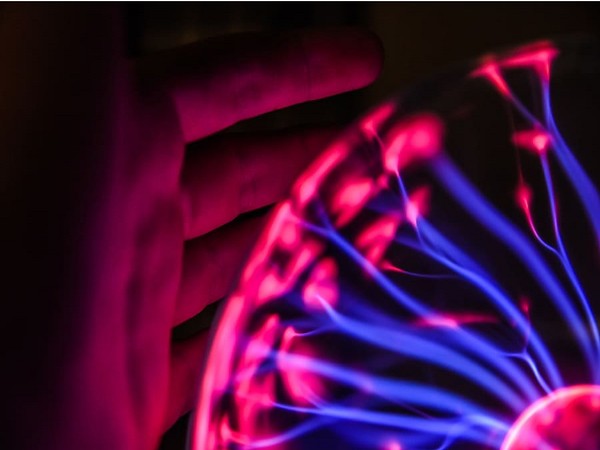
The International Atomic Energy Agency (IAEA) has launched a new five-year Coordinated Research Project (CRP) to advance plasma science and accelerate the use of plasma technologies across healthcare, agriculture, water treatment, environmental protection and industry.
The initiative comes as low-temperature, non-thermal plasma gains traction worldwide for its potential to deliver cleaner, more efficient and highly targeted solutions—from medical therapies and food safety to pollution control and advanced manufacturing.
Turning Rapid Innovation Into Real-World Impact
Recent breakthroughs in plasma sources, diagnostics, modelling and computational tools have dramatically improved scientists' ability to understand and control plasma processes. When combined with artificial intelligence and machine learning, these advances now enable real-time diagnostics, adaptive control and data-driven optimisation of plasma systems.
Despite this progress, many plasma-based applications remain at an early stage of development.
"Laboratory and pilot-scale results often face challenges around reproducibility, scalability and standardisation when moving toward real-world use," the IAEA said. "Addressing these challenges requires coordinated international research and systematic knowledge-sharing."
A Global Network for Plasma Science
The new CRP—titled "Advancement of Plasma Science, Technology and Applications"—will establish an international network of researchers, laboratories and industry partners to strengthen collaboration and accelerate the transition of plasma technologies from research to deployment.
Through coordinated research, technical meetings, workshops, training courses and outreach, the IAEA will support Member States with:
-
Access to global expertise
-
Capacity building and technology transfer
-
Alignment of research methodologies and best practices
The project is designed to engage partners across regions and at different levels of technological development.
Four Integrated Research Pillars
The CRP is structured around four interlinked work packages:
Advancing Fundamental Interfacial Plasma ScienceDeepening understanding of plasma behaviour at interfaces—such as plasma-liquid, plasma-biological and plasma-material—through experiments, modelling and simulation.
Optimising Plasma Processes for ApplicationsImproving efficiency, scalability and reproducibility of plasma devices, including the use of AI, machine learning and smart sensors.
Bridging R&D to DeploymentRaising the technology readiness level of plasma systems, including development of prototype and pilot-scale solutions for real-world use.
Education, Training and Outreach
Strengthening global collaboration between academia, industry and governments, and expanding education on plasma technologies and their societal benefits.
Call for Research Proposals
Research institutions in IAEA Member States are invited to apply for participation through research contracts or agreements. The deadline for submissions is 31 May 2026.
The IAEA strongly encourages applications from female researchers and early-career scientists, as part of its commitment to inclusive scientific collaboration.
By fostering coordinated research and innovation, the IAEA says the project aims to unlock the full potential of plasma technologies to deliver societal, environmental and industrial benefits worldwide.
ALSO READ
-
Nuclear Science Brings Cancer Care, Safer Food and Better Water Data Across Regions
-
From Cancer Care to Nuclear Careers, IAEA Conference Puts Global Progress in Focus
-
Türkiye Uses Nuclear Science to Protect Citrus Harvests and Tackle Fruit Fly Damage
-
IAEA and IDB Join Forces to Expand Nuclear Energy in Latin America and Caribbean
-
IAEA Joins Forces With Six Industry Partners to Close Global Cancer Care Divide


 Google News