



Science News Roundup: China to test out 3D printing technology on moon to build habitats; Japan's ispace prepares for world's first commercial lunar landing and more
The giant spacecraft exploded 23 miles (37 km) in the sky, minutes after liftoff in an uncrewed test flight on Thursday. SpaceX wins approval to add fifth U.S. rocket launch site The U.S. Space Force said on Monday that Elon Musk's SpaceX was granted approval to lease a second rocket launch complex at a military base in California, setting the space company up for its fifth launch site in the United States.
Following is a summary of current science news briefs.
China to test out 3D printing technology on moon to build habitats
China will explore using 3D printing technology to construct buildings on the moon, the official China Daily reported on Monday, as Beijing solidifies plans for long-term lunar habitation. In the 2020 Chinese lunar mission, the Chang'e 5, named after the mythical Chinese goddess of the moon, an uncrewed probe took back to Earth China's first lunar soil samples. China, which made its first lunar landing in 2013, plans to land an astronaut on the moon by 2030.
Japan's ispace prepares for world's first commercial lunar landing
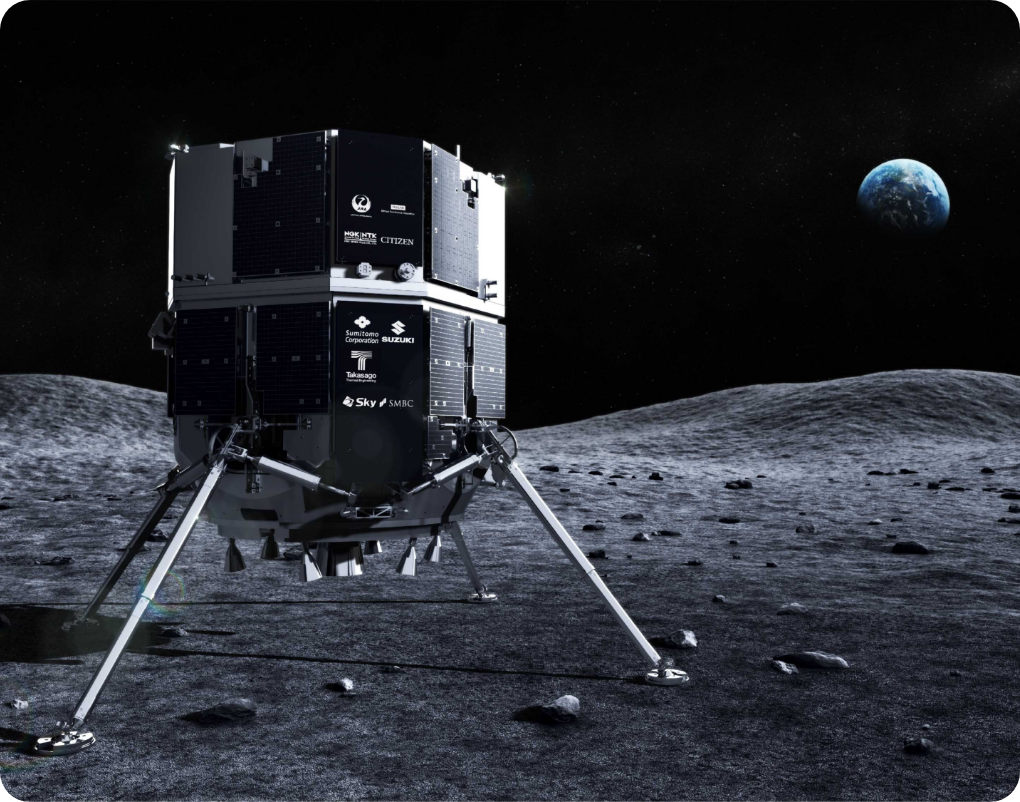
Japanese startup ispace inc is preparing to land its Hakuto-R Mission 1 (M1) spacecraft on the moon early on Wednesday, in what would be the world's first lunar landing by a private company if it succeeds. The M1 lander is set to touch down around 1:40 a.m. Japan time (1640 GMT Tuesday) after taking off from Cape Canaveral, Florida, on a SpaceX rocket in December.
China's Mars rover likely idled by sunlight-blocking dust - designer
China's fully robotic rover on Mars, in longer-than-expected hibernation since May 2022, likely met with excessive accumulation of sand and dust, its mission designer said, breaking months of silence about the status of the vehicle. The motorised rover Zhurong, named after a mythical Chinese god of fire, was expected to have woken up in December after entering a planned sleep mode in May 2022 as falling solar radiation with the advent of winter cut its power generation.
Launchpad upgrades imminent after SpaceX's rocket blast pummeled site
Elon Musk's SpaceX will use for its next rocket launch a water-cooled steel plate that can withstand the world's most powerful liftoff after the debut attempt of its Starship rocket to reach space caused extensive launchpad damage. The giant spacecraft exploded 23 miles (37 km) in the sky, minutes after liftoff in an uncrewed test flight on Thursday.
SpaceX wins approval to add fifth U.S. rocket launch site
The U.S. Space Force said on Monday that Elon Musk's SpaceX was granted approval to lease a second rocket launch complex at a military base in California, setting the space company up for its fifth launch site in the United States. Under the lease, SpaceX will launch its workhorse Falcon rockets from Space Launch Complex-6 at Vandenberg Space Force Base, a military launch site north of Los Angeles where the space company operates another launchpad. It has two others in Florida and its private Starbase site in south Texas.
US, S. Korea to sign space cooperation agreement during summit
NASA and South Korea's science agency will sign a pact on Tuesday intended to boost the two countries' cooperation in outer space, a White House official said, as the two allies meet this week to expand high-tech partnerships and security ties to deter North Korea. The agreement comes as South Korean President Yoon Suk Yeol embarks this week on his country's first state visit to Washington in 12 years for a bilateral summit marking the 70th anniversary of the U.S.-South Korea alliance.


 Google News