

Dollar's losses accelerate, greenback becomes surprise winner in global currency markets
But market watchers believe the outcome of the U.S. midterm, with Democrats taking the House and Republicans keeping control of the Senate, makes any further U.S. policy boost difficult. Trump's policies may also come under greater scrutiny, fueling fresh political uncertainty.
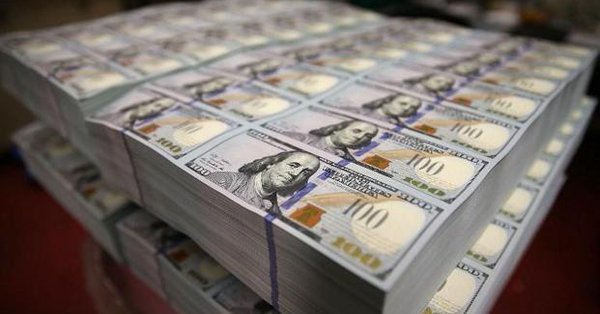
The dollar's losses accelerated on Wednesday with an index falling half a per cent against its main rivals as the outcome of a split U.S. Congress raised expectations that any major U.S. fiscal policy boost to the economy is unlikely for now.
The greenback has been the surprise winner in the global currency markets this year on the back of President Donald Trump's fiscal stimulus and strong economic data which has forced the U.S. Federal Reserve to signal higher interest rates.
But market watchers believe the outcome of the U.S. midterm, with Democrats taking the House and Republicans keeping control of the Senate, makes any further U.S. policy boost difficult. Trump's policies may also come under greater scrutiny, fueling fresh political uncertainty.
Prospects of less fiscal stimulus would also relieve the pressure on the Fed to keep raising interest rates and add downward pressure on U.S. Treasury yields and the dollar. Yields on U.S. debt were down 3 to 5 basis points across the board.
Swap markets currently expect about 65 basis points in cumulative rate hikes until September 2019, though traders say that might fall further if bond yields extend their decline.
"There is a growing assumption that the room for another dose of stimulus for the Trump administration is going to be very limited and that is pushing the dollar lower," said Piotr Matys, an FX strategist at Rabobank in London.
Against a basket of its rivals, the dollar sank 0.5 per cent to 95.758, its lowest level in more than two weeks. The yield on 10-year U.S. Treasury debt was down four basis points at 3.18 per cent.
Despite the prospects of more U.S. political uncertainty in the short term, equity markets rallied on hopes that the reduced likelihood of more fiscal stimulus would bring the end to a multi-year U.S. rate hike cycle.
Gavekal strategists said the U.S. political gridlock may prove better for markets than if Republicans had got another clean sweep.
"It would have provided a fiscal boost, but it may also have driven up interest rates, a big worry for equity investors," they said in a note.
High-yielding currencies such as the Australian dollar and the New Zealand dollar were firm, while perceived safe-haven currencies such as the Japanese yen and the Swiss franc fell.
However, some market participants believed the domestic political uncertainty might embolden Trump to ratchet up trade tensions with China. The offshore yuan weakened 0.1 per cent against the dollar.
"We would argue that if Trump can do less on the domestic front he is more likely to focus on external matters such as trade, which will impact risk sentiment," said Patrick O'Donnell, investment manager at Aberdeen Asset Management in London.
Elsewhere, the euro gained 0.6 per cent to trade at $1.1491 versus the dollar. The single currency changed hands more than one per cent above this year's trough of $1.1301 reached on Aug. 15.
Sterling was the other big winner with the British currency rising half a per cent buoyed by a BBC report that Britain is preparing for a Brexit agreement by the end of November.
ALSO READ
-
Prospects of a New Summit: South Korean Optimism Amid Uncertainty
-
Nomination Turbulence: White House Withdraws Jeffrey Anderson for ICAO Post
-
Potential EU Partnerships Stir International Debate
-
Trump's Rate War with the Fed: A High-Stakes Economic Drama
-
Trump's Bold Move: Meeting with Venezuela's Interim Leader


 Google News