

AfDB President Highlights Japan-Africa Partnership in Agriculture and Energy Transition at 2024 Africa Investment Forum
Japanese Technology and Investment Key to Unlocking Africa's Potential in Agriculture and Green Growth, Dr. Akinwumi Adesina Stresses.
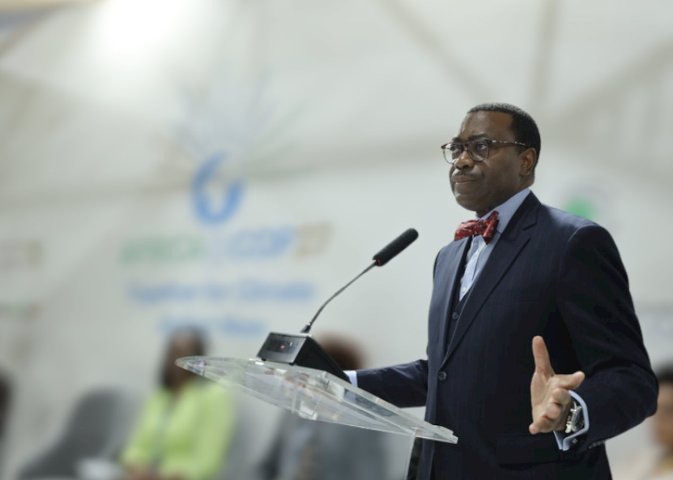
During the Africa Investment Forum 2024 Market Days, African Development Bank (AfDB) President Dr. Akinwumi Adesina emphasized the transformative potential of Africa's agricultural and energy sectors, showcasing how the deepening Japan-Africa partnership could drive innovation and investment. Speaking on 9 December at a plenary session, Dr. Adesina highlighted the continent's untapped resources and the pivotal role of Japanese technology in catalyzing Africa's transition to a sustainable, green economy.
Dr. Adesina delivered a powerful message on the role of agriculture, declaring, "Agriculture is the place to be." He highlighted that Africa holds 65% of the world's remaining arable land, presenting unparalleled opportunities for investment and innovation. With Africa's agricultural market projected to reach $1 trillion by 2030, Dr. Adesina underscored the strategic importance of agriculture in food security and economic development.
His message was reinforced by discussions showcasing how digital solutions, innovative technologies, and new business models are transforming Africa's agricultural landscape. A standout moment was the presentation by Space Shift Inc., which demonstrated the power of satellite technology in crop monitoring in Nigeria. Using AI-powered systems, the company combines optical and radar satellite data to enhance crop growth monitoring, predict harvest timings, and even track farming activities through cloud cover, facilitating better credit scoring and decision-making for farmers.
In addition, AAIC Partners Africa Limited shared their success stories from Rwanda and Tanzania, where they have implemented smart agriculture projects across 1,700 hectares, leveraging IoT and satellite technology to optimize agricultural operations. VunaPay, a digital platform, is revolutionizing agricultural finance by offering instant payments to farmers upon produce delivery, addressing one of the most pressing challenges in the sector.
Green Transition and Renewable Energy Opportunities
The discussions also explored the intersection of green energy and agriculture, with contributions from various Japanese companies playing a critical role. Green Carbon Inc. presented their innovative approaches to generating carbon credits in agriculture, using techniques such as biochar and alternate wetting and drying (AWD) in rice fields to reduce methane emissions by 30-50%.
In the energy sector, Hitachi Energy outlined its commitment to Africa's clean energy transition through innovative projects that provide reliable renewable energy to urban and rural areas alike. With a strong focus on electrification and digitalization, Hitachi is helping integrate clean energy into Africa's power grid while supporting access to energy for underserved populations.
The Uncovered Fund also highlighted its support for startups in climate technology, including projects in the electric vehicle (EV) and battery service sectors, reinforcing the push towards net-zero emissions in Africa. Mizuho, a major global financial institution, has been instrumental in connecting African and Asian financial systems, supporting the transition to clean cooking and hydrogen energy in Africa, essential to improving public health and energy access.
Strategic Partnerships and Long-term Commitment
The Japan International Cooperation Agency (JICA), represented by Jin Wakabayashi, outlined JICA's strategic support for agriculture, food security, and climate resilience. With a focus on private finance, JICA's efforts are aimed at fostering sustainable development by enabling climate-resilient agriculture and improving financial inclusion across the continent. These efforts are complemented by AfDB's collaborations with Japanese institutions such as Mitsubishi, leveraging the Enhanced Private Sector Assistance for Africa (EPSA) facility to drive investment in African agriculture.
Dr. Adesina also emphasized the synergy between AfDB, Japanese institutions, and global corporations, creating an ecosystem that supports the development of agriculture and energy sectors. He cited AfDB's collaboration with MasterCard to roll out the Community Pass program, which aims to provide 100 million farmers across Africa with digital access to financial services and agricultural information.
Action and Urgency: Catalyzing Investments
The discussions also turned to the urgency of translating interest into concrete action. Ken Shibusawa, Vice-chairperson of the Keizai Doyukai, urged his peers to move beyond discussions to actual investment. He stressed that Japan's technological capacity, financial resources, and expertise must be matched by decisive action to harness the opportunities Africa offers. "What we lack is the action," Shibusawa stated, challenging Japanese businesses to realize the cost of inaction and the missed opportunities in Africa.
Japan's Ongoing Commitment to Africa's Growth
In his concluding remarks, Daiho Fujii, Deputy Vice Minister of Finance, Japan, highlighted Japan's long-term commitment to African development. He referenced Japan's pivotal role in establishing private sector mobilization mechanisms like the EPSA, which has provided $9 billion in support of African projects since its inception in 2006. Fujii reaffirmed Japan's support for Africa's sustainable development, particularly in agriculture and green growth, noting that Japan would continue to co-create innovative solutions with Africa to ensure sustainable, inclusive development.
The Road Ahead: TICAD 9 and Strengthening Japan-Africa Relations
Looking ahead to the Tokyo International Conference on African Development (TICAD 9), scheduled for August 2025 in Yokohama, Japan is poised to deepen its cooperation with Africa. The forum marked a significant milestone with 100 Japanese investors participating, up from 80 last year, and highlighted the ongoing momentum in Japan-Africa relations. As AfDB works with its partners to ensure continued investment in agriculture, energy, and infrastructure, Dr. Adesina and other stakeholders are confident that this collaboration will play a pivotal role in unlocking Africa's potential in the coming decades.
In closing, Deputy Vice Minister Fujii emphasized, "If we work together, we can see an Africa where all people enjoy healthy and productive lives." With the combined forces of Japanese innovation and African resourcefulness, the future is promising for agriculture, energy transition, and sustainable growth across the continent.


 Google News