

AfDB’s GONAT Initiative Concludes Chad Workshop on Natural Resource Governance
“Illicit financial flows are one of the major obstacles to development in Africa,” emphasized Eric Ogunleye, Director of the African Development Institute.
- Country:
- Ivory Coast
The African Development Bank Group (AfDB) has successfully concluded the Chad leg of the GONAT (Governance of Natural Resources in Transition and Fragile States) initiative, a flagship program aimed at bolstering the capacity of African nations—particularly those in fragile or transitioning contexts—to combat illicit financial flows (IFFs) and strengthen governance in the extractive resource sector.
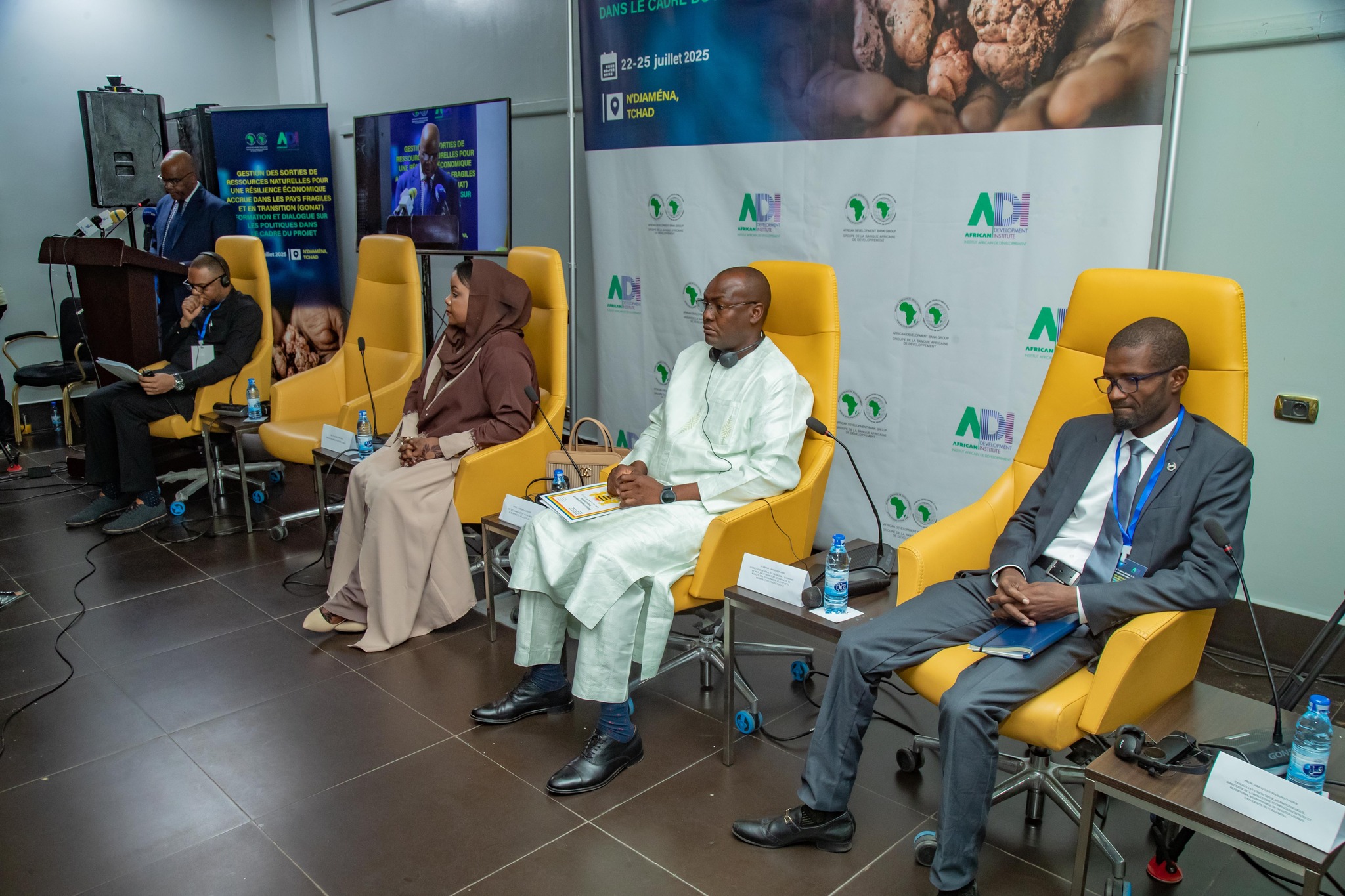
Held from 21 to 25 July 2025 in N'Djamena, the workshop brought together around 50 participants, including government officials from Chad's Ministries of Finance, Economy, Environment, Mines and Geology, along with civil society actors, academics, private sector representatives, and community stakeholders. It was themed "Unlocking Africa's Wealth: Curbing Illicit Financial Flows for Resilient Growth and Development", highlighting the urgent need to protect Africa's natural wealth and harness it for sustainable development.
From Diagnostics to Dialogue: GONAT's Expanding Impact
Launched in 2023, the GONAT initiative began with in-depth diagnostic studies and the development of specialized training modules. The Chad session followed successful workshops in the Central African Republic and Sierra Leone, and is part of a broader series of in-country engagements. Upcoming sessions are planned for the Democratic Republic of Congo and Mozambique in August 2025.
GONAT is jointly implemented by the AfDB's African Development Institute (ADI) and the African Natural Resources Management and Investment Centre (ECNR), with a focus on helping countries curb IFFs, manage resource-backed lending, and build transparent, accountable institutions in natural resource management.
Illicit Financial Flows: A Persistent Drain on African Economies
The workshop underscored the enormous financial losses caused by IFFs. According to AfDB's African Economic Outlook, Africa loses an estimated $90 billion annually—roughly 4% of the continent's GDP—due to illicit financial activities, including trade mispricing, tax evasion, corruption, and illegal resource extraction. These losses directly impact government revenue, weakening the ability of states to fund essential infrastructure, health, and education services.
"Illicit financial flows are one of the major obstacles to development in Africa," emphasized Eric Ogunleye, Director of the African Development Institute. "Addressing this challenge requires coordinated action across institutions, informed policymaking, and capacity building."
Chad's Stakeholders Embrace Reform and Capacity Building
Participants included high-level policymakers such as:
-
Mme Kadidja Hassane Abdoulaye, Secretary of State for Petroleum, Mines and Geology
-
Mr. Ahmat Abderahim Abbo, Secretary General for Economy and Planning
-
Dr. Solomane Koné, Director of ECNR at AfDB
-
Dr. Innocent Onah, Chief Natural Resources Officer, ECNR
-
Prof. Abdallah Mahamat-Nour, hydrogeologist and Director of the Hydro-Geosciences Laboratory at the University of N'Djamena
Their discussions emphasized the importance of transparency, citizen participation, and international cooperation in addressing the resource curse and ensuring equitable development.
Focus on Resource-Backed Lending: Risks and Reforms
The workshop also addressed resource-backed lending—a financing method where loans are secured by future revenues from commodities like oil and minerals. While this approach provides immediate liquidity, it also introduces risks such as debt distress, loss of fiscal autonomy, and vulnerability to commodity price shocks.
Participants examined global case studies and were introduced to tools and legal frameworks that can guide governments in negotiating more transparent and sustainable lending agreements aligned with the Sustainable Development Goals (SDGs).
Training Topics and Practical Sessions
The five-day program included interactive technical sessions, case study analysis, policy dialogue, and group work. Key topics included:
-
Detection and tracking of IFFs using trade data, banking surveillance, and customs cooperation
-
Legal and fiscal strategies to ensure accountability in extraction contracts
-
Best practices for public disclosure in the extractive sector
-
Frameworks for natural resource revenue management
-
Multi-stakeholder coordination mechanisms for policy implementation
Participants also discussed Chad's progress toward ratifying international transparency mechanisms such as:
-
The Extractive Industries Transparency Initiative (EITI)
-
The Kimberley Process (for conflict-free diamonds)
-
The Yaoundé Declaration on combating IFFs
A Call for Inclusive and Gender-Sensitive Governance
In an important intervention, Nguema Nakoye Mannta, a field officer from Chad's Ministry of Environment, emphasized the need for gender-inclusive approaches to natural resource governance. "Achieving sustainable and equitable development requires the meaningful involvement of women at all levels," she noted, reinforcing the role of social inclusion in governance reform.
Workshop Recommendations: Charting a Roadmap for Chad
The workshop concluded with a set of actionable recommendations tailored to Chad's context:
-
Use research and data to guide evidence-based policy in the natural resource sector
-
Reform mining laws and regulatory institutions to improve transparency and investor confidence
-
Build institutional technical capacity across government agencies
-
Create multi-stakeholder commissions to audit and track resource flows
-
Enhance public disclosure of contracts and revenue from extractive industries
-
Adopt digital cadastre systems to improve land and resource mapping
-
Encourage local ownership and community participation in resource governance
-
Incorporate natural resource education into university and professional curricula
Towards Phase Two: A More Strategic GONAT for Chad
Looking ahead, Mme Kadidja Hassane Abdoulaye urged the AfDB to consider a second phase of GONAT focused on strategic areas critical for Chad's resource sector. These include geological surveys, digitization of cadastres, fiscal monitoring, and institutional capacity-building.
"Strengthening national systems and human capital is essential for turning resource wealth into sustainable development," she concluded.
A Turning Point for Chad's Natural Resource Governance
The successful conclusion of the Chad GONAT workshop marks a critical step in regional capacity building, reinforcing AfDB's role as a thought leader in natural resource governance. As GONAT moves forward, its in-country engagements are laying the groundwork for resilient growth, economic transparency, and sustainable resource utilization across Africa.
ALSO READ
-
Côte d’Ivoire Secures $24 Million to Restore Forests and Support Rural Communities
-
AfDB Places KEEPS Construction Under 12-Month Compliance Order After Fraudulent Practice
-
Central Africa Faces $35.6 Billion Funding Gap as Growth Forecasts Signal Steady Gains
-
Benin’s Growth Surges as $2.43 Billion Annual Funding Need Shapes Its Economic Future
-
Sudanese Families Flee to Chad as Violence Surges and Refugee Support Falls Behind


 Google News