

Government Moves to Remove $600m in Trade Barriers to Boost Export Growth
Willis said NTBs—such as restrictive labelling rules, certification requirements, inspection delays, and quotas—often impose high compliance costs and slow market access.
- Country:
- New Zealand
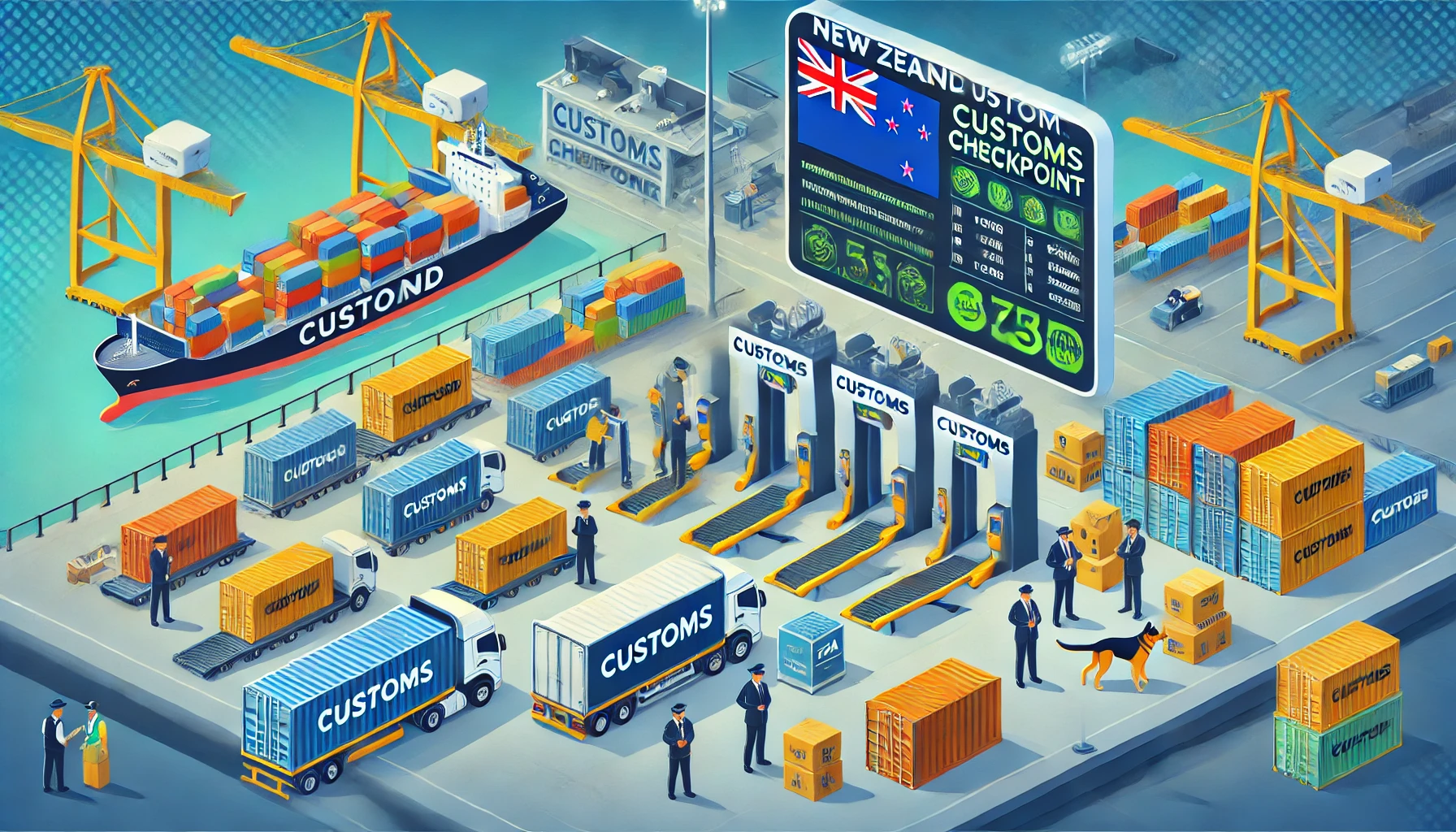
The Government has announced a major push to strengthen New Zealand's export performance by removing non-tariff barriers (NTBs) that currently affect around $600 million worth of Kiwi exports. Economic Growth Minister Nicola Willis and Trade and Investment Minister Todd McClay revealed the updates at an event in Auckland, highlighting the Government's commitment to backing exporters, opening new markets, and driving economic expansion.
Willis said NTBs—such as restrictive labelling rules, certification requirements, inspection delays, and quotas—often impose high compliance costs and slow market access. Removing them, she said, translates directly into more competitive export conditions.
"Non-Tariff Barriers slow growth. Reducing these barriers returns significant value to exporters, supports the 1 in 4 Kiwi jobs tied to trade, and puts more money into the back pockets of thousands of hard-working New Zealanders," Willis said.
Restoring Confidence and Driving Economic Momentum
The announcement comes at a time of growing business optimism. Willis cited the latest ANZ Business Outlook, which shows New Zealand business confidence at an 11-year high, with firms reporting stronger recent performance and improving employment expectations.
"Market access, predictable trade rules, and investment certainty are all crucial to business confidence and growing a strong economy," she said. "This momentum is exactly what we want to support with practical action."
Key Trade Barriers Removed Over the Past Year
The Government outlined several major NTBs lifted or mitigated in the past year, delivering immediate value to exporters:
-
Cosmetics and Skincare Access to China – Removal of a long-standing regulatory barrier now gives NZ exporters access to China's $200 million cosmetics and skincare market, opening major new commercial opportunities.
-
Deer Velvet Arrangement with China – A newly signed and implemented agreement has generated $64.5 million in export growth in the year to December 2024.
-
Improved Flow of Goods Through Mexico – Work with Mexican authorities has streamlined port clearances, supporting exporters reliant on Mexican transit routes.
-
Expanded Access to Korea – Additional market entry for dairy products (worth $5–10 million) and blueberries (worth $5 million), strengthening New Zealand's agricultural footprint in the region.
These achievements underpin today's update to the Going for Growth: Global Trade and Investment Pillar, which sets out the next phase of reducing barriers, enhancing certainty, and unlocking growth across high-value sectors.
Aiming to Double Exports in 10 Years
Trade and Investment Minister Todd McClay said the Government's focus is on "practical action" that delivers commercial results for businesses. Every NTB resolved, he said, brings New Zealand closer to the Government's goal of doubling the value of exports within a decade.
Since taking office, the Government has:
-
Concluded, signed, and brought into force the NZ–UAE Comprehensive Economic Partnership Agreement
-
Completed negotiations with the Gulf Cooperation Council (GCC)
-
Launched Free Trade Agreement (FTA) negotiations with India, one of the world's fastest-growing markets
-
Completed 17 trade missions, unlocking more than $2 billion in potential export value
"Exports have exceeded $100 billion for the first time in our history, with food and fibre contributing a record $60 billion," McClay said.
Export Growth Surges Across Major Markets
New Zealand's export performance has seen strong growth across key markets, especially the European Union and the United Kingdom.
-
Total export value increased over 10% to $21.7 billion in the June quarter compared to the same period last year.
-
Exports for the year ending June 2025 reached $108.8 billion, up $98.4 million on the previous year.
McClay said these results reinforce the importance of strong trade relationships and diversified global access. "New Zealand is a trading nation and when our exporters do well, New Zealand does well," he said. "It is only through strong trade relationships and market access that we can support jobs, lift incomes and fund the public services New Zealanders rely on."
Supporting Exporters to Compete and Grow
Both ministers emphasised that removing trade barriers is one of the most cost-effective ways to increase export value and support local businesses—particularly small and medium-sized exporters that struggle with high compliance costs in foreign markets.
With today's update, the Government is signalling a continued drive to expand trade access, reduce red tape, and ensure New Zealand exporters remain competitive on the global stage.
ALSO READ
-
Trump and Xi Set for High-Stakes Summit: Trade, Taiwan, and Technology in Focus
-
US Tariff Announcement Delay Amidst Xi-Trump Summit
-
Raiffeisen's Russian Dilemma: A Financial Linchpin Under Fire
-
Raiffeisen Bank Faces Renewed Scrutiny Over Russian Trade Allegations
-
Canadian Trade Minister Heads to India for Pivotal Economic Talks


 Google News