

Africa Bets Big on Green Hydrogen: AfDB Launches $20M Programme to Fast-Track Clean Energy Projects
Backed initially by the German government and approved at the end of 2025, the programme will provide up to $20 million in pre-investment financing to support three to five high-impact projects across Africa.
- Country:
- Ivory Coast
In a major push to position Africa at the forefront of the global clean energy transition, the African Development Bank (AfDB) has launched a new Green Hydrogen Programme under its Sustainable Energy Fund for Africa (SEFA), opening the door for private sector developers to access critical early-stage financing.
The initiative marks one of the most significant continent-wide efforts to accelerate the development of green hydrogen and its derivatives, widely seen as a cornerstone of future low-carbon energy systems and industrial decarbonisation.
Unlocking Africa's Green Hydrogen Potential
Backed initially by the German government and approved at the end of 2025, the programme will provide up to $20 million in pre-investment financing to support three to five high-impact projects across Africa.
The funding is designed to address one of the biggest barriers facing green hydrogen development: the high cost and complexity of early-stage project preparation, which often prevents promising projects from reaching financial close.
"Green hydrogen represents a transformative opportunity for Africa," said Dr Daniel Schroth, Director of Renewable Energy and Energy Efficiency at AfDB. "It can decarbonise hard-to-abate sectors while creating entirely new industrial value chains and driving socio-economic development."
Bridging the Gap from Concept to Bankability
Unlike traditional project financing, the SEFA programme focuses on pre-investment support, helping projects move from concept to bankable investment-ready stages.
Funding will be provided primarily through reimbursable grants, supporting a wide range of critical development activities, including:
-
Feasibility studies and resource assessments
-
Front-end engineering design (FEED)
-
Procurement and construction planning
-
Transaction advisory and financial structuring
This approach aims to de-risk projects and attract larger pools of private capital, which are essential for scaling green hydrogen infrastructure.
Industry estimates suggest that green hydrogen projects often require hundreds of millions to billions of dollars in capital, making early-stage validation and structuring a crucial step in unlocking investment.
A Strategic Play in the Global Energy Transition
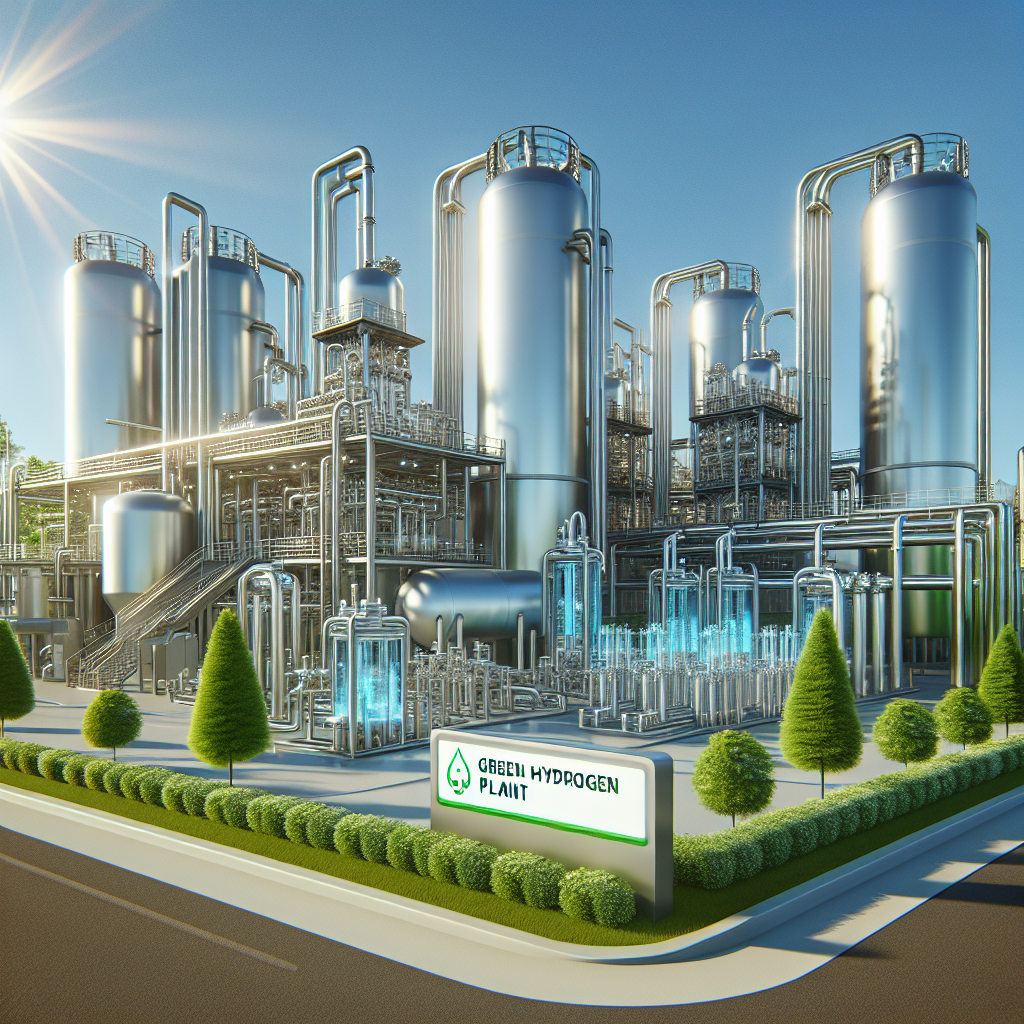
Green hydrogen—produced using renewable energy to split water into hydrogen and oxygen—is gaining global momentum as a clean alternative for sectors that are difficult to electrify, including:
-
Heavy industry (steel, cement, chemicals)
-
Long-haul transport (shipping, aviation)
-
Power storage and grid balancing
Africa is uniquely positioned to become a global green hydrogen hub, thanks to its:
-
Abundant solar and wind resources
-
Strategic proximity to European and Asian markets
-
Growing renewable energy capacity
Countries such as Morocco, Namibia, Egypt, and South Africa have already announced large-scale hydrogen ambitions, with projects targeting export markets as well as domestic industrial use.
Competitive Selection to Identify High-Impact Projects
The programme will adopt a competitive Call for Proposals, ensuring that funding is directed toward the most promising and scalable initiatives.
Only three to five top-ranked projects will be selected, based on criteria such as:
-
Technical feasibility and innovation
-
Commercial viability
-
Development impact and job creation potential
-
Alignment with national and regional energy strategies
All selected projects will undergo rigorous due diligence before funding is finalised.
Application Timeline and Process
The application window opens on 10 April 2026 at 09:30 GMT, with submissions closing on 11 May 2026 at 17:00 Abidjan time.
Developers must submit proposals through the official SEFA platform, where detailed eligibility criteria and application guidelines are available.
Driving Industrialisation and Job Creation
Beyond decarbonisation, the programme is expected to play a key role in industrial development and employment generation.
Green hydrogen value chains—spanning production, storage, transport, and downstream applications—have the potential to:
-
Create thousands of skilled jobs
-
Stimulate local manufacturing and services
-
Enhance energy security and export revenues
For many African economies, this represents an opportunity to move beyond raw resource exports toward higher-value industrial ecosystems.
Building Momentum in an Emerging Sector
While still in its early stages globally, green hydrogen is attracting increasing investment, with billions of dollars committed to pilot projects and infrastructure worldwide.
However, the sector faces significant challenges, including:
-
High production costs
-
Technology and infrastructure gaps
-
Regulatory uncertainty
The AfDB's SEFA initiative aims to bridge these gaps by providing targeted, catalytic funding that enables projects to reach the scale needed for commercial viability.
A Turning Point for Africa's Clean Energy Leadership
The launch of the Green Hydrogen Programme signals a growing recognition that Africa can play a central role in shaping the future of global energy.
By combining natural resource advantages, strategic investment, and policy support, the continent has the potential not only to meet its own energy needs sustainably but also to become a major exporter of clean fuels.
As the global race for green hydrogen accelerates, initiatives like SEFA's programme could prove decisive in determining which regions emerge as leaders in this transformative industry.


 Google News