

AfDB-Backed Road Project to Transform Rural Eswatini
Speaking at the launch, Prime Minister Dlamini said the government wants every part of Eswatini to benefit from tarred roads that improve safety and create economic opportunities.
- Country:
- Eswatini
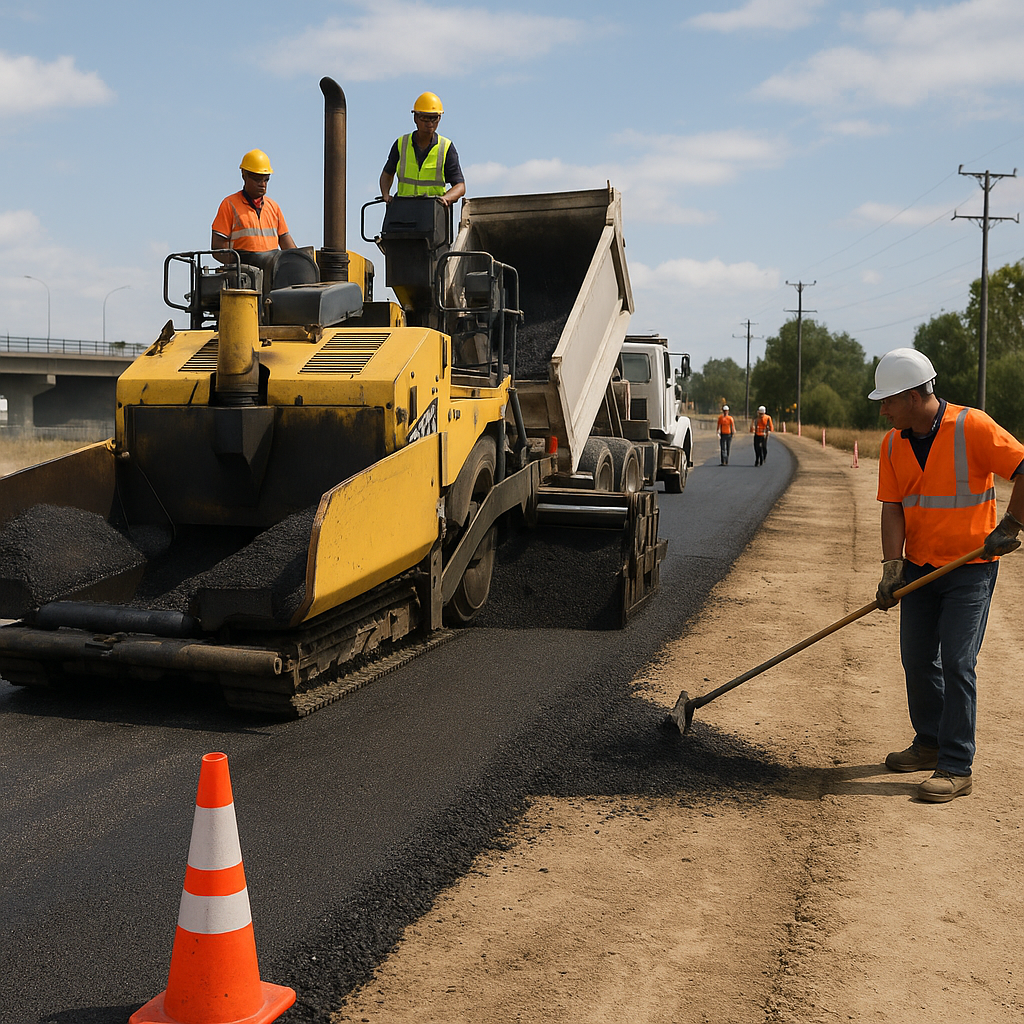
Communities across rural Eswatini are set to benefit from improved transport links and new economic opportunities as construction begins on two major roads funded by the African Development Bank (AfDB) and the Government of Eswatini.
The project includes the 80.2-kilometre Siphofaneni–Sithobela–Maloma–Nsoko (MR14) road and the 25.7-kilometre Maloma–Siphambanweni (MR21) road. Once completed, the roads are expected to cut travel times and transport costs by at least 50 percent, making it easier for people and businesses to move goods and access essential services. The roadworks form the first phase of the $175.71 million Eswatini Road Infrastructure Improvement Programme, with the African Development Bank providing $140.6 million, or 80 percent of the funding, while the Government of Eswatini is contributing $35.1 million.
Prime Minister Russell Dlamini officially launched the project in early July, describing it as the beginning of a broader plan to expand modern road infrastructure throughout the country.
Roads expected to unlock economic opportunities
The new roads pass through the Lubombo and Shiselweni regions, where unemployment among young people and women has reached 54.3 percent. Poor transport infrastructure has limited access to markets, increased the cost of doing business and slowed economic development in these areas for many years.
The upgraded network is expected to improve connections with national and regional markets while complementing projects such as the Mkhondvo-Ngwavuma Water Augmentation Programme. Better transport links are also expected to encourage agricultural production, attract private investment and strengthen regional trade under the African Continental Free Trade Area (AfCFTA).
Speaking at the launch, Prime Minister Dlamini said the government wants every part of Eswatini to benefit from tarred roads that improve safety and create economic opportunities. He added that the investment would help integrate strategic infrastructure such as the Mpakeni Dam and strengthen Eswatini's position within the Southern African Development Community (SADC).
Communities to gain skills and social infrastructure
The programme extends beyond road construction by investing in local skills development and community facilities.
Around 200 young people, including 80 women, will receive construction skills training, while 50 participants will be offered entrepreneurship training to help create new businesses and employment opportunities.
The project will also finance community infrastructure such as schools, clinics, local markets and small water supply systems, improving living conditions for residents along the route.
Additional investments include an axle load control programme, a new weighbridge and the development of future public-private partnership (PPP) and performance-based road maintenance contracts aimed at strengthening local contractors and ensuring long-term road sustainability.
Long-term partnership supports national development
African Development Bank Deputy Director General for Southern Africa Moono Mupotola said the Bank plans to invest $1.03 billion in Eswatini over the next five years under its 2025–2030 Country Strategy Paper.
She said the strategy focuses on building climate-resilient infrastructure, improving transport, water, sanitation and energy services, while strengthening private-sector competitiveness to create jobs and diversify the economy.
Mupotola noted that the African Development Bank has partnered with Eswatini since 1972, approving 71 loans and grants across key sectors including agriculture, transport, water, energy, governance and finance. The Bank's active portfolio in the country has more than doubled over the past five years, increasing from $226.7 million to $527 million across ten ongoing operations.
The road programme is expected to play a key role in connecting underserved communities, improving access to markets and services, and laying the foundation for more inclusive economic growth across rural Eswatini.
ALSO READ
-
Côte d’Ivoire Secures $24 Million to Restore Forests and Support Rural Communities
-
AfDB Places KEEPS Construction Under 12-Month Compliance Order After Fraudulent Practice
-
Central Africa Faces $35.6 Billion Funding Gap as Growth Forecasts Signal Steady Gains
-
Benin’s Growth Surges as $2.43 Billion Annual Funding Need Shapes Its Economic Future
-
Free AI Training Opens Doors for African Public Officials to Build Smarter Services


 Google News