

NZ and Estonia Deepen Education Ties as Ministers Share High-Performance Insights
The visit provided what Stanford described as a “valuable opportunity to learn from one another’s successes, lessons, and practices” in building world-class education systems.
- Country:
- New Zealand
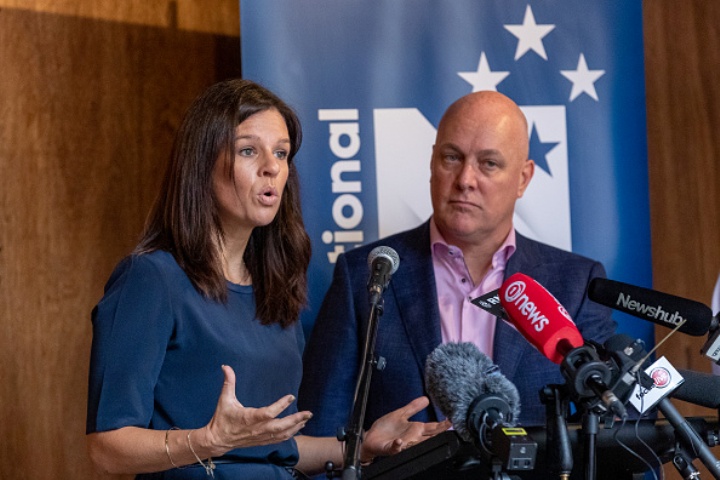
Education Minister Erica Stanford has welcomed Estonia's Minister for Education and Research, Dr Kristina Kallas, to New Zealand for a week of meetings, school visits, and policy discussions aimed at strengthening cooperation between two countries undertaking ambitious education reform. The visit provided what Stanford described as a "valuable opportunity to learn from one another's successes, lessons, and practices" in building world-class education systems.
Estonia is widely viewed as a global education leader, consistently ranking among the top performers in the OECD Programme for International Student Assessment (PISA) for reading, mathematics, and science. Stanford said New Zealand stands to gain from understanding the underlying strategies behind those results.
"Estonia consistently ranks among the top performers in the OECD's PISA study," she said. "The opportunity to meet in New Zealand with Minister Kallas forms part of my work to engage with international experts and thought leaders, from high-performing education systems, to bring evidence-based best practice into every school and every classroom."
Learning from Estonia's Strong Academic and Digital Achievements
Stanford said she was particularly interested in how Estonia achieves strong academic results while maintaining equity and universal access to digital technology—a defining feature of the Estonian school system. Estonia has been recognised internationally for providing comprehensive digital tools to students, supporting teacher capability, and embedding digital literacy across the curriculum.
"I'm particularly interested in how Estonia achieves student success in reading, maths, and science, and how their high-performing education system achieves strong academic achievement with equity and access to digital technology," she said.
Minister Kallas, who travelled to New Zealand to understand the Government's own education reforms, told media that several European countries are watching New Zealand's shift towards a knowledge-rich curriculum with strong interest. She also highlighted that such curriculum models have been central to Estonia's success for many years.
Focus on Artificial Intelligence and Future Skills
The two ministers also attended the Teaching and Learning Symposium hosted by the Auckland University of Technology (AUT). There, Minister Kallas presented Estonia's landmark AI-Leap (TI-Hüpe) programme—a national initiative integrating artificial intelligence literacy into schooling.
The programme aims to develop students' higher-order thinking skills and prepare them to work alongside AI technologies throughout their academic and professional lives.
Stanford said New Zealand shares Estonia's commitment to ensuring students are prepared for an increasingly digital future. "AI presents an opportunity for New Zealanders, and the Government is committed to helping Kiwis harness it in their jobs and industries where appropriate. This includes new subjects we are introducing at the secondary level," she said.
Engaging with New Zealand Schools and Education Leaders
During her visit, Minister Kallas spent time in schools across Auckland and Wellington, meeting students, teachers, principals, and senior officials from:
-
The Ministry of Education
-
New Zealand Qualifications Authority (NZQA)
-
Education Review Office (ERO)
These engagements provided opportunities to observe classroom practice, discuss curriculum development, and examine the impacts of recent reforms on teaching and learning.
Strengthening Scientific and Research Collaboration
Given the shared interests of both countries in science, research, and innovation, Minister Kallas also met with the Prime Minister's Chief Science Advisor and Universities New Zealand, including representatives from university research committees. Discussions focused on expanding collaboration in areas such as digital education, research partnerships, and emerging technologies.
A Partnership Grounded in Shared Ambition
Stanford described the meetings as "insightful and valuable," noting Estonia's impressive progress in education reform. "I acknowledge the outstanding work Minister Kallas and Estonia are doing in their education system," she said.
The visit marks a strengthening of the relationship between New Zealand and Estonia as both countries pursue modern, evidence-based, and future-focused education systems. The exchange underscores a growing commitment to international collaboration aimed at lifting student achievement and preparing young people for a rapidly changing world.


 Google News