

UNESCO chief participates in ceremony of Holocaust remembrance day
Ms Azoulay said, “The United Nations and UNESCO were founded in the wake of the Second World War to make sure that the international community could prevent these horrors from ever being repeated.”
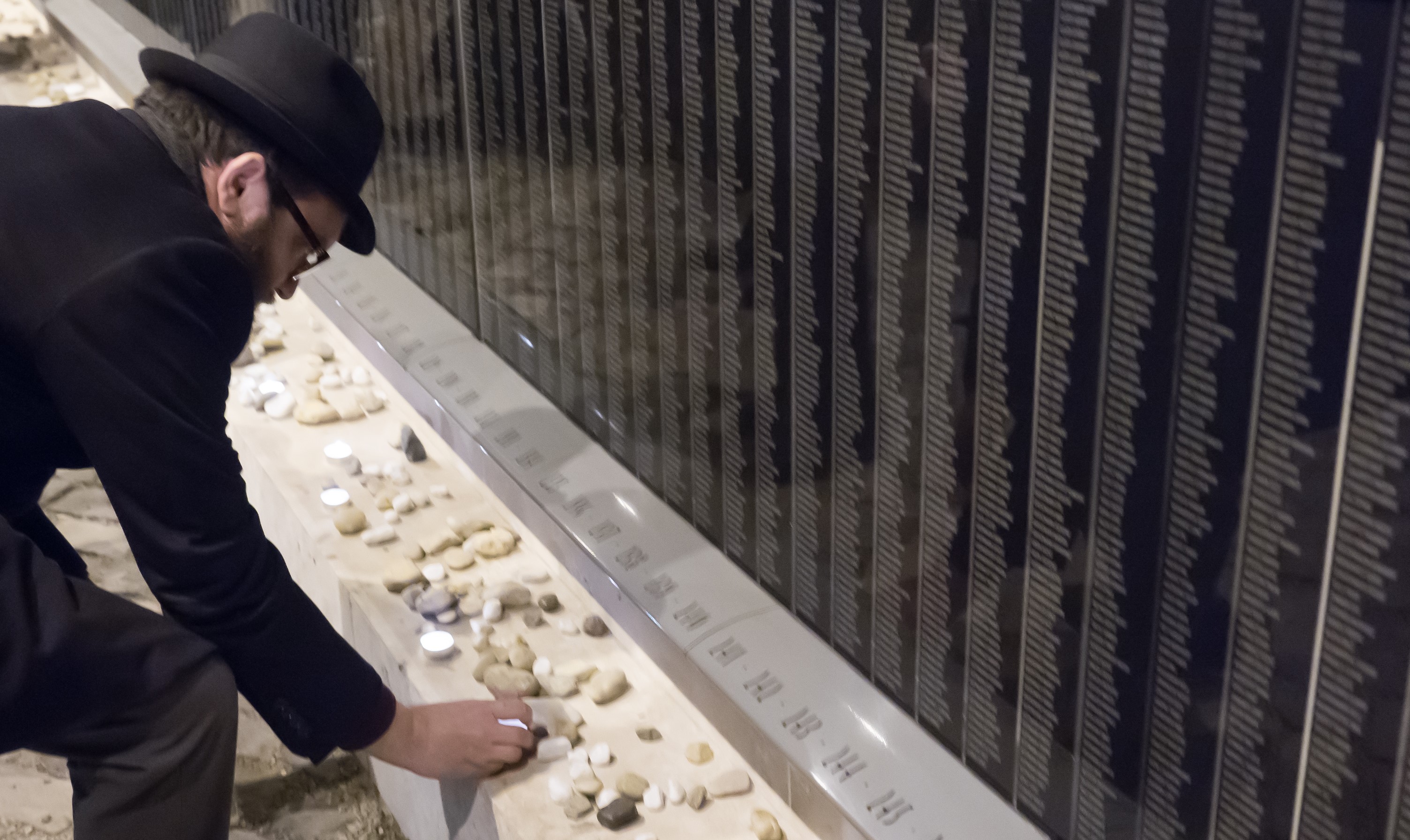
On 27 January, UNESCO Director-General Audrey Azoulay participated in the official ceremony of the International Day of Commemoration in Memory of the Victims of the Holocaust. The day marks the 76th anniversary of the liberation of Auschwitz-Birkenau concentration and extermination camp by the Soviet Army, on which we remember all victims and survivors of the Holocaust, including the 1.1 million victims killed in Auschwitz and the 6 million Jews murdered across Europe.
The ceremony was the first to be jointly organized by the United Nations and UNESCO, in cooperation with the International Holocaust Remembrance Alliance, and was opened by the Ms Azoulay and the UN Secretary-General, António Guterres. H. E. Angela Merkel, Chancellor of the Federal Republic of Germany, delivered a keynote address.
In her keynote address, Chancellor Angela Merkel remarked: "What happened there and in many other places where atrocities were committed during the National Socialist period is and remains beyond belief. I am deeply ashamed of the Shoah, of that betrayal of all civilised values, perpetrated under the National Socialist regime."
"We honour the victims of the Holocaust by remembering them and by learning from their plight. That is our everlasting responsibility – for today's and future generations."
During the ceremony, the Honourable Irwin Cotler, the Canadian Special Envoy on Preserving Holocaust Remembrance and Combatting Antisemitism, announced that the Government of Canada will be joining with UNESCO in prioritizing the combatting of antisemitism and genocide prevention education.
Ms Azoulay said, "The United Nations and UNESCO were founded in the wake of the Second World War to make sure that the international community could prevent these horrors from ever being repeated."
"This is the conviction that drives our work: only by looking inhumanity in the face, only by having faith in humans and the power of education, can we fight the root causes of antisemitism and hatred."
Ms Azoulay also announced a new collaboration with Facebook to connect people at the top of relevant search results with the UNESCO and World Jewish Congress website aboutholocaust.org. The website, now available in 19 languages, will provide reliable and easily accessible information on the genocide of the Jewish people.
The ceremony was broadcast on UNTV and components of the events were produced by CNN, including an interview between CNN international correspondent Clarissa Ward and Holocaust survivor Dr Irene Butter and her granddaughter Shireen Nassar.
In the interview, Dr Butter reflected, "There is a trend towards authoritarianism and discrimination against certain kinds of people so we have to be vigilant and we can't just talk to people who hold these opinions and these viewpoints, we must confront it."
"We have [a] responsibility to be active citizens and to confront hatred and to confront the violations of our democracy and in that way, it can be preserved and protected. And that's my hope: never to be a bystander and every person can make a difference."
On the same day, the United Nations and UNESCO, in partnership with the International Holocaust Remembrance Alliance (IHRA), hosted an online discussion on Holocaust denial and distortion. Moderated by CNN International journalist Hala Gorani, the discussion included interventions by Historian Deborah Lipstadt, Kindertransport refugee and media personality Hella Pick, IHRA expert on antisemitism Robert Williams, best-selling author and lawyer Philippe Sands, and Marian Turski, President of the Jewish Historical Institute Association and Vice-President of the International Auschwitz Committee.
Robert Williams said, "[Holocaust distortion] could be something as obvious as excusing or minimizing the pure facts of the Holocaust, to something that is a little less obvious, such as misusing Holocaust-related images or venerating certain historical figures."
"By rehabilitating the reputation for [those responsible for the Holocaust], you actually open the door to more pernicious and dangerous forms of hate, distortion and denial."
The panel discussion follows the launch of UNESCO's #ProtectTheFacts campaign to raise awareness of Holocaust distortion – both how to recognise it and how to counter it, in partnership with the European Commission, the IHRA and the United Nations.
This online programme of events was organized on the occasion of the International Day of Commemoration in Memory of the Victims of the Holocaust, which is commemorated annually by UNESCO on 27 January. UNESCO's activities in this context are organized within the framework of the Organization's programme on education about the Holocaust and genocide.
ALSO READ
-
Ethiopia’s Open Schools Project Closes With New Digital Tools and Lessons for Learning
-
Tanzania’s Youth Skills Moment: Can WorldSkills Turn Practical Talent Into Economic Opportunity?
-
Tanzania’s Young Talent Takes Centre Stage as Skills Competition Opens New Doors
-
AI in Courts Could Open Doors to Justice or Leave Vulnerable People Further Behind
-
Pope Leo XIV Calls for Peace and Safer AI for Young People at UNESCO Visit


 Google News