

EU must stop helping to return people to hellish conditions in Libya: Amnesty
The number of people intercepted at sea and returned to Libya in the last five years is over 82 000.
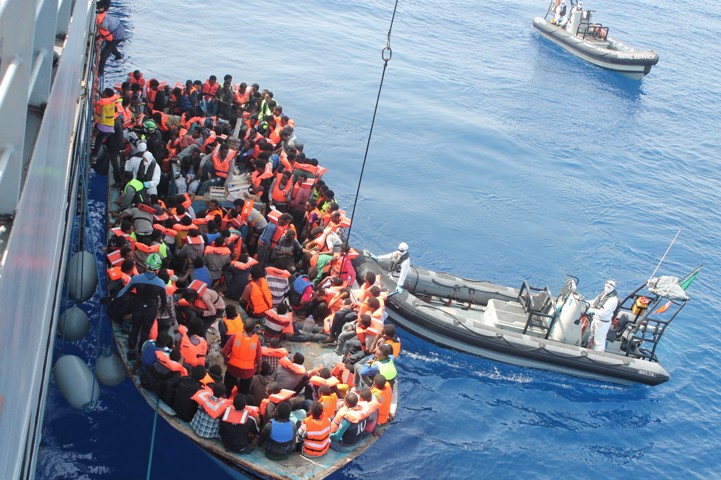
The European Union must stop helping to return people to hellish conditions in Libya, Amnesty International said today as the bloc marks five years of formal cooperation to intercept refugees and migrants attempting to cross the Mediterranean. The number of people intercepted at sea and returned to Libya in the last five years is over 82 000.
Men, women and children returned to Libya face arbitrary detention, torture, cruel and inhuman detention conditions, rape and sexual violence, extortion, forced labour and unlawful killings. Instead of addressing this human rights crisis, the Libyan Government of National Unity (GNU) continues to facilitate further abuses and entrench impunity, as illustrated by its recent appointment of Mohamed al-Khoja as director of the Department for Combating Illegal Migration (DCIM). Al-Khoja was previously in effective control of the Tariq al-Sikka detention centre, where extensive abuses have been documented.
"EU leaders' cooperation with Libyan authorities is keeping desperate people trapped in unimaginable horrors in Libya. Over the past five years, Italy, Malta and the EU have helped capture tens of thousands of women, men and children at sea, many of whom ended up in horrific detention centres rife with torture, while countless others were forcibly disappeared." Matteo de Bellis, Researcher on Migration and Asylum at Amnesty International
"It is high time to put an end to this callous approach, which shows a complete disregard for people's lives and dignity. Instead, rescue efforts must ensure people are taken to a place of safety, which, as reiterated by the UN Secretary-General just days ago, cannot be Libya."
The EU started assisting the Libyan Coast Guard in 2016, and interceptions began the same year. Cooperation increased with the adoption of a Memorandum of Understanding between Italy and Libya on 2 February 2017 and the adoption of the Malta Declaration signed by EU leaders in Valletta just a day later.
The agreements provide the bedrock for continuing cooperation that outsources the patrolling of the central Mediterranean to Libyan coastguards by providing speedboats, a maritime coordination centre, and training. The agreements were followed by the establishment of a large sea area where the Libyan Coast Guard is responsible for coordinating search and rescue operations. These arrangements, overwhelmingly funded by the EU, have since enabled Libyan authorities to disembark people intercepted at sea in Libya, despite it being unlawful to return anyone to a place where they face serious abuse.
Migrants and refugees both in and outside of detention in Libya are systematically subjected to a litany of abuses by militias, armed groups and security forces with impunity. On 10 January 2022, militias and security forces fired live ammunition at refugees and migrants camped in front of the Community Day Centre of UNHCR in Tripoli, and arbitrarily arrested hundreds. They are held in overcrowded and unsanitary conditions in the Ain Zara detention centre in Tripoli, where guards subject them to further abuses and deny them adequate food and water. The migrants and refugees had been staging a sit-in outside the Community Day Centre building since October 2021 calling for protection in response to a previous raid by militias and security forces that saw thousands rounded up and many others left homeless.
"Italy and the EU must stop aiding these appalling abuses and start ensuring that people at risk of drowning in the central Mediterranean are rescued promptly and treated humanely," said Matteo de Bellis.
"The EU and its Member States must suspend any cooperation leading to the containment and human rights abuses of people in Libya, and instead focus on opening urgently needed legal pathways for the thousands trapped in Libya in need of international protection." Matteo de Bellis.
(With Inputs from APO)
ALSO READ
-
Lebanon’s Small Business Owners Build Skills and Market Links With EU and ILO Support
-
Poltava University Reopens With Safer, Greener Spaces for Nearly 3,000 Campus Users
-
UNDP Urges Recovery From Day One as 160 Million People Risk Being Trapped in Crisis
-
UNESCO and EU Put Trusted News and Free Expression at the Heart of Mediterranean Pact
-
Tripoli Entrepreneurs Need Better Funding, Skills and Support to Help Businesses Grow


 Google News