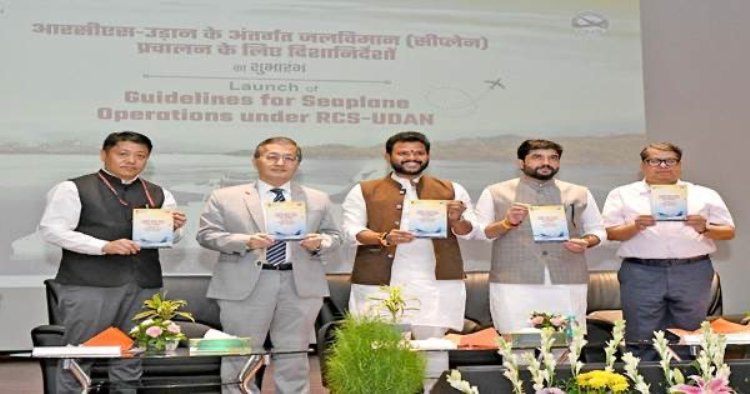
In a significant move to bolster connectivity and economic growth, Union Minister for Civil Aviation, Shri Kinjarapu Rammohan Naidu, unveiled the new Guidelines for Seaplane Operations at an event held at the Indian Aviation Academy in New Delhi. The guidelines are set to integrate seaplane operations into India's aviation sector, opening new avenues for transportation and job creation while symbolizing the country's commitment to growth and innovation.
Integration of Seaplane Operations
Minister Rammohan Naidu highlighted the potential of India's 7,517 km coastline and extensive network of rivers and lakes to support seaplane operations. He noted that the new guidelines would facilitate seaplane operations under the Regional Connectivity Scheme (RCS) by utilizing the Non-Scheduled Operator Permit (NSOP). The extension of Viability Gap Funding (VGF) to seaplane operations aims to provide initial support to operators, ensuring a balance between fostering growth and maintaining safety and security.
The Minister also announced that demonstration flights by the manufacturer DeHavilland will be conducted soon. He emphasized the need for a favorable policy environment and encouraged research into technologies such as electric seaplanes to reduce carbon emissions and align with India's climate commitments.
UDAN 5.4 Launch
In conjunction with the seaplane guidelines, the Union Minister launched the 5.4 version of the UDAN scheme. This new phase will invite fresh bids for routes previously canceled, aiming to improve connectivity on unserved routes. The UDAN scheme is part of the government's broader effort to enhance regional connectivity and economic development.
Focus on Safety and Innovation
The seaplane guidelines, inspired by the successful implementation of NSOP operations for helicopters and small aircraft, provide a structured approach to ensure safe and efficient operations. The guidelines outline the responsibilities of all stakeholders and emphasize the development of water aerodromes and multimodal transport hubs to connect seaplanes with other transportation modes.
Union Minister of State for Civil Aviation and Ministry of Cooperation, Shri Murlidhar Mohol, expressed that the new guidelines will not only enhance connectivity but also boost tourism, economic growth, and integration of remote areas. The guidelines represent a strategic framework to ensure safe, secure, and efficient seaplane operations.
Government and Industry Support
Civil Aviation Secretary, Shri Vumlunmang Vualnam, praised the proactive approach of the Ministry, highlighting that leveraging the NSOP framework for seaplane operations aligns with successful practices for helicopters and small aircraft. The guidelines aim to create a safe and structured environment for the growth of seaplane operations while continuing to develop water aerodrome infrastructure.
The event was attended by key figures including Director General of DGCA, Shri Vikram Dev Dutt, and senior officials from the Ministry of Civil Aviation, as well as stakeholders from state and union territory governments, NSOP and SoP operators, OEMs, seaplane manufacturers, and media representatives.
The launch of these guidelines and the UDAN 5.4 scheme marks a new chapter in India's aviation landscape, promising to enhance regional connectivity and support the growth of the seaplane industry.




 Google News