

Building a Resilient Economy: ILO Chief Urges Unified Action on Jobs, Rights, Growth
Speaking during the high-profile International Monetary Fund (IMF) and World Bank Spring Meetings held in Washington D.C., Houngbo warned that the world stands at a crucial crossroads demanding urgent, decisive action.
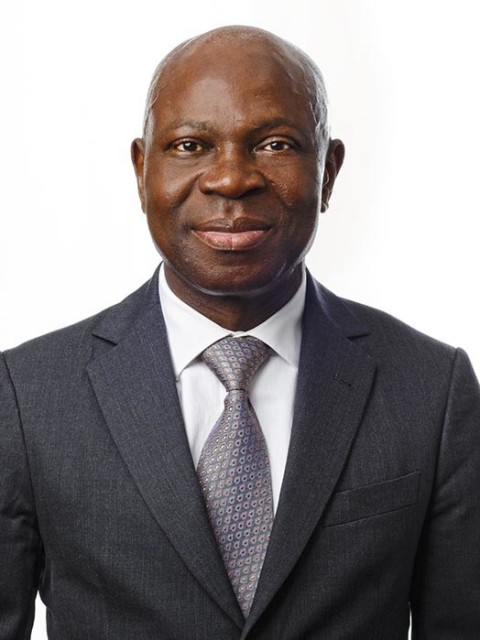
In a powerful call to global policymakers, Gilbert F. Houngbo, the Director-General of the International Labour Organization (ILO), emphasized the need for an integrated strategy connecting job creation, labour rights, and economic growth to shape a more resilient and equitable global economy. Speaking during the high-profile International Monetary Fund (IMF) and World Bank Spring Meetings held in Washington D.C., Houngbo warned that the world stands at a crucial crossroads demanding urgent, decisive action.
A Critical Moment for the Global Economy
Highlighting the precarious state of the current global economic landscape, Houngbo asserted, "The global economy stands at a critical juncture, and the moment for decisive action is now." He stressed that without rethinking the priorities of economic policymaking, the world risks exacerbating inequality, poverty, and social unrest.
Houngbo pointed out that persistent decent work deficits, such as the lack of job security, social protections, and equitable opportunities, are threatening both individual livelihoods and global prosperity. "Our world is filled with persistent decent work deficits. Among them is the virtual absence of social protection for workers in the informal economy," he stated.
Rising Demographic Pressures and Economic Uncertainties
Addressing the demographic challenges ahead, Houngbo highlighted that approximately 1.2 billion young people are expected to enter the labour market in the coming decades. The implications are profound: economies worldwide must prepare to create sufficient quality employment opportunities to absorb this influx. "The connection between quality employment and prosperity can hardly be more evident or more urgent," Houngbo remarked.
He also raised concerns about the impact of shifting global trade patterns, warning that changes in trade policies can trigger complex and uneven effects across different economic sectors, regions, and skill levels. "ILO research shows that when trade patterns change, resource reallocation reverberates across global supply chains, with both job creation and displacement effects that vary across industries," he explained.
Overcoming Policy Fragmentation: A New Vision
Houngbo criticized the traditional fragmented approach to economic policy, where job creation, labour rights, and economic growth are treated as separate or even competing priorities. "This fragmented perspective has led to policy approaches that ultimately undermine progress across all three dimensions," he stated.
Instead, he called for an integrated macroeconomic strategy where decent work is not a byproduct, but a central goal. "Monetary and fiscal policies must evolve to recognize employment outcomes as key objectives alongside macroeconomic stability," he urged.
Moreover, Houngbo stressed the critical importance of strategic sectoral investment. Investments in sectors like the green economy, healthcare and care services, education, and digital infrastructure not only address long-term societal needs but also act as buffers against external economic shocks.
Social Protection as an Economic Stabilizer
Reaffirming the economic value of robust labour rights and social protection systems, Houngbo stated, "Social protection systems maintain consumption during downturns, prevent poverty, reduce inequality, and provide crucial income security for workers navigating increasingly volatile labour markets."
According to Houngbo, extending comprehensive social protections can serve as a macroeconomic stabilizer, helping nations weather future economic storms while promoting equitable growth.
The Global Coalition for Social Justice: A New Frontier
In 2023, the ILO launched the Global Coalition for Social Justice, an ambitious, inclusive multilateral initiative aimed at fostering collaboration among governments, international institutions, civil society, and the private sector. Houngbo described the Coalition as "a collaborative space for action, dialogue, and advocacy in which partners shape opportunities for concrete actions and tangible outcomes."
With more than 300 partners already engaged, the Coalition complements growing collaborations between the ILO and major financial institutions such as the IMF and the World Bank. "Since 2019, the ILO and IMF have deepened their partnership on sustainable financing for social protection," Houngbo emphasized. "Similarly, cooperation between the ILO and World Bank is reinforcing social protection systems while enhancing employment policies."
A Call for Social Justice as the Cornerstone of Economic Policy
Concluding his address, Houngbo reiterated that the ILO's integrated approach — linking jobs, rights, and economic growth — offers a solid framework for confronting global challenges now and in the future. "By recommitting to social justice as the cornerstone of economic policy, we can establish decent work as the path to prosperity for all," he declared.
Houngbo's message at the Spring Meetings echoed a broader global sentiment that post-pandemic recovery, climate resilience, and digital transformation must be underpinned by policies that prioritize people, fairness, and dignity. The road ahead may be complex, but with unified and forward-looking action, the promise of a fairer global economy remains within reach.


 Google News