

High compliance rate by employers in implementing minimum wage: Thulas Nxesi
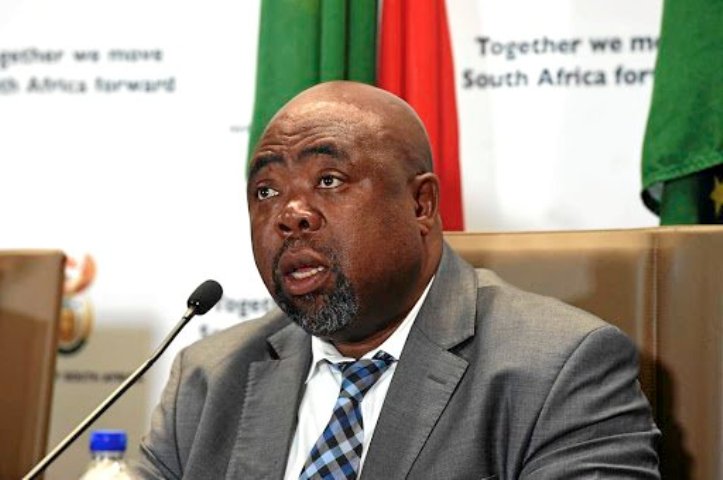
Nxesi said this when he briefed media ahead of tabling the department’s budget vote speech in the Old Assembly Chamber on Wednesday.
- Country:
- South Africa
Employment and Labour Minister Thulas Nxesi says indications are that there is a high compliance rate by employers in implementing the recently introduced National Minimum Wage.
Nxesi said this when he briefed media ahead of tabling the department's budget vote speech in the Old Assembly Chamber on Wednesday.
"…There was a considerable debate – and opposition – around the recently introduced National Minimum Wage, which was initially set at R20 per hour. This is not enough to lift people out of poverty entirely but is a good start and indications are that some six million workers will benefit.
"Inspections, to date, indicate a high compliance rate, with only 7% of employers failing to pay the prescribed rate," he said.
The National Minimum Wage, which prescribes a minimum wage of R20 per hour, or R3 500 per month, came into effect on 1 January.
While the department's Director-General Thobile Lamati indicated that the non-compliance by employers cuts across all sectors, he said in cases where inspectors have issued non-compliance notices, these will be referred to the Commission for Conciliation, Mediation, and Arbitration.
Nxesi said the department will meet with non-complying employers to understand their difficulty in implementing the minimum wage and if it is found that they can't afford to do so, they will be allowed to apply for some form of exemption.
Those who can afford to do so, however, will be issued with a non-compliant notice.
Nxesi said, meanwhile, that prophesies that wholesale retrenchments would follow the introduction of the National Minimum Wage has not come true.
"An expected massive spike in CCMA cases has not occurred. By the end of September, the National Minimum Wage Commission will publish research into the impact of the change on employment, poverty levels and wage differentials. We will meet again then to discuss their findings," he said.
Preserving jobs through UIF, Compensation Fund
Over the next five years, the newly-reconfigured department will shift its focus and use tools such as the Unemployment Insurance Fund and the Compensation Fund to preserve jobs.
This as the Fourth Industrial Revolutions is set to cause a disruption in the labor market.
"First, where we can, we will leverage the resources of the department and of our entities, which are our labor market instruments – the UIF and the Compensation Fund – to preserve jobs and to invest in job-creating initiatives," Nxesi said.
The department will seek to collaborate with other departments and agencies to create jobs and to ensure citizens get the skills required in the market place.
"The President has made the point that the focus now must be on preparing our youth for the many digital jobs that are coming in the wake of the Fourth Industrial Revolution," the Minister said.
The department will open six specialized youth centers to complement the existing 126 labor centers around the country.
He said the new centers, as well as the labor centers, would serve as one-stop shops for prospective employers and for youth to access career guidance, psychometric assessment, validation of qualification, training for the needs of the labor market and ultimately, job placements.
(With Inputs from South African Government Press Release)


 Google News