

Government aims to establish electronic database system: J.P. Nadda
- Country:
- India
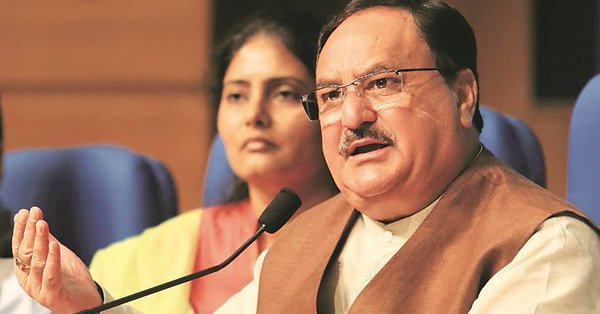
Union Health Minister J.P. Nadda on Thursday said the government is aiming to establish an electronic database system across all the districts in India.
"We are aiming at establishing an electronic database in all its districts by the year 2020, to reduce the burden of paper-based data collection, recording, and storage," Nadda stated while speaking at '2nd International Conference on Primary Health Care (PHC) towards UHC (United Health Care) and SDGs (Sustainable Development Goals),' organised at Astana in Kazakhstan.
Currently, the Health Ministry have three common applications in use across the country at Health and Wellness Centers -- for Reproductive Child Health (RCH), Non Communicable Diseases (NCD) and TB.
"Over time we will progress towards an interoperable Comprehensive Primary Health care application," he mentioned.
The minister said that other digital Health IT initiatives include an Inter-operable Electronic Health Records (EHR) System, Patient Feedback System (MeraAspatal), Personal Health Record Management System (PHRMS), National Identification Number (NIN) for both public and private health facilities (it is an unique identification number for health facilities).
Hospital Information System (HIS) is also being implemented for computerized registration and capturing EHR (Electronic Health Record)/ EMR (Electronic Medical Record) of patients in public health facilities up to PHC level.
"Online Registration System (ORS) is a framework to link various hospitals for online registration and appointments, online diagnostic reports and enquiring availability of blood online," he added.
The Health Minister also spoke on the theme 'The Future of Primary Health Care' further adding that the govt in making improvements in maternal, child health and communicable diseases.
"India has focused on improved and outreach and primary health care services and established referral linkages including transport and strengthened secondary care services, that has largely focused on maternal, new-born, nutrition, child health and communicable disease," Nadda noted.
ALSO READ
-
New Zealand Gives NZ$300,000 to Help Developing Countries Build Safer Food Trade
-
Philippines Moves From Promises to Protection in a New 2030 Fight Against Modern Slavery
-
Free AI Training Opens Doors for African Public Officials to Build Smarter Services
-
Caribbean Tourism Powers Local Economies, but Workers Need More Than Visitor Growth
-
IAEA and IDB Join Forces to Expand Nuclear Energy in Latin America and Caribbean


 Google News