

Suriname Becomes First Amazon Nation to Earn WHO Malaria-Free Certification
To receive WHO malaria-free certification, a country must prove at least three consecutive years with zero indigenous cases of the disease.
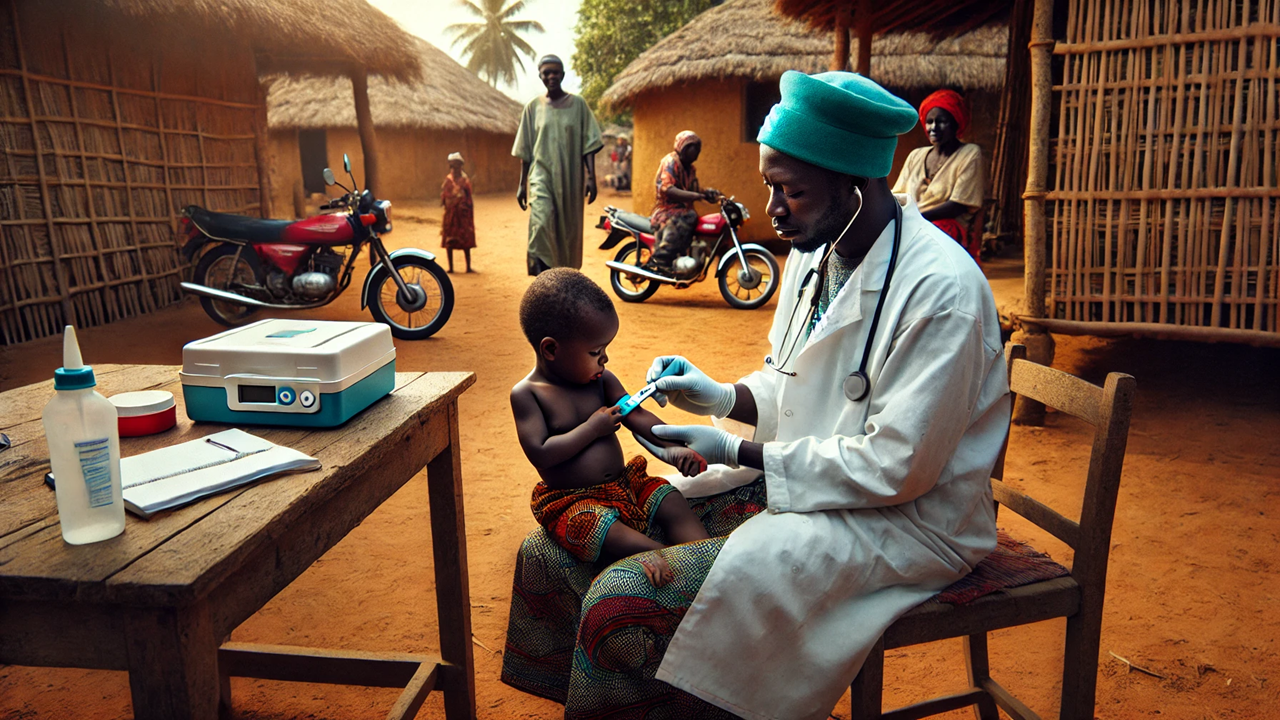
In a historic public health triumph, Suriname has officially been certified malaria-free by the World Health Organization (WHO), making it the first country in the Amazon region to achieve this status. This landmark announcement recognizes nearly 70 years of sustained efforts by the Surinamese government, health workers, and communities to eliminate one of the world's most deadly diseases across one of its most complex ecosystems.
With this achievement, Suriname joins a prestigious list of 46 countries and one territory that have eliminated malaria, including 12 in the Americas, setting a precedent for other nations across the Amazon basin and beyond.
A Milestone of Global Significance
"This certification is a powerful affirmation of the principle that everyone—regardless of nationality, background, or migration status—deserves universal access to malaria diagnosis and treatment," said Dr Tedros Adhanom Ghebreyesus, WHO Director-General.
Suriname's success is being hailed as a model of health equity and determination. According to Dr Jarbas Barbosa, Director of the Pan American Health Organization (PAHO), it reflects years of targeted action, especially in remote regions:
"Suriname did what was needed to eliminate malaria—detecting and treating every case quickly, investigating to prevent spread, and engaging communities."
What "Malaria-Free" Means
To receive WHO malaria-free certification, a country must prove at least three consecutive years with zero indigenous cases of the disease. Suriname recorded its last locally transmitted case of Plasmodium falciparum in 2018, and the last Plasmodium vivax case in 2021.
The certification also requires countries to demonstrate robust systems for diagnosis, treatment, prevention, and surveillance to guard against future reintroductions.
"Being malaria-free means our population is no longer at risk," said Dr Amar Ramadhin, Suriname's Minister of Health. "But we recognize the need for continued vigilance to prevent reintroduction and to sustain our gains."
Suriname's Journey: From Coastal Eradication to Forest Frontlines
Suriname's malaria fight began in the 1950s with DDT-based spraying campaigns in coastal areas. By the 1960s, malaria had been eliminated along the coast, but the dense, forested interior—home to many Indigenous and Maroon communities—remained vulnerable.
Malaria control in the interior was decentralized in 1974 to Medische Zending, a faith-based primary health care provider that trained local residents to deliver diagnosis and treatment within their own communities—an approach that would prove critical in hard-to-reach regions.
However, the resurgence of gold mining, especially by mobile and often undocumented migrant laborers, sparked a surge in malaria cases. By 2001, Suriname recorded over 15,000 cases—the highest malaria burden in the Americas at the time.
Strategic Interventions: Technology, Equity, and Community Engagement
With support from the Global Fund, PAHO, and the U.S. Government, Suriname undertook a suite of reforms and interventions from 2005 onwards:
-
Expanded diagnostic capacity through rapid diagnostic tests and improved microscopy.
-
Widespread distribution of insecticide-treated bed nets, targeting high-risk groups.
-
Introduction of artemisinin-based combination therapy (ACT), including the use of primaquine for radical cure.
-
Focus on mobile and migrant populations by recruiting and training "Malaria Service Deliverers"—community health workers from within mining camps who offered free diagnosis and treatment.
Universal access to malaria services was ensured regardless of legal status or location, and screening was intensified at border crossings to prevent cross-border transmission.
Sustained Political Will and Cross-Border Collaboration
Suriname's success would not have been possible without high-level political commitment and strategic partnerships. Key pillars included:
-
Establishment of the National Malaria Elimination Taskforce and a Malaria Elimination Fund.
-
Ongoing collaboration with neighboring malaria-endemic countries—Brazil, Guyana, and French Guiana—to coordinate responses.
-
Participation in Elimination 2025, a WHO initiative targeting countries with high malaria-elimination potential.
"Malaria elimination in Suriname demonstrates what is possible in complex ecosystems like the Amazon," said Dr Barbosa. "It reinforces PAHO's goal to eliminate over 30 communicable diseases in the Americas by 2030."
Implications for Health, Economy, and Tourism
Becoming malaria-free doesn't only protect lives—it also yields economic dividends. Reduced disease burden leads to lower healthcare costs, increased workforce productivity, and growth in tourism. Suriname, with its lush rainforests and rich cultural heritage, stands to benefit from increased international travel and investment.
Yet the government acknowledges that elimination is not the end of the road. Maintaining malaria-free status requires constant surveillance, education, and community readiness to prevent resurgence.
A Roadmap for the Region
Suriname's story offers a blueprint for malaria elimination in similarly complex environments. By combining political leadership, community-driven healthcare, and innovative partnerships, the country overcame logistical, cultural, and ecological challenges.
It underscores the importance of adapting malaria strategies to local contexts, addressing social determinants of health, and ensuring no one is left behind—even in the most remote or marginalized communities.
Suriname's malaria-free certification is not just a national victory—it's a beacon of hope for the entire Amazon basin and other malaria-endemic countries. It shows that with commitment, inclusion, and innovation, even the most stubborn public health challenges can be overcome.
As the world continues to pursue malaria eradication, Suriname has proven that elimination is achievable—even in the heart of the rainforest.


 Google News