

Following resignation of Sudan’s Prime Minister, Guterres condemns violence targeting protestors
The United Nations’ Secretary-General condemned on Monday the continued violence targeting protestors in Sudan, following the 25 October military takeover.
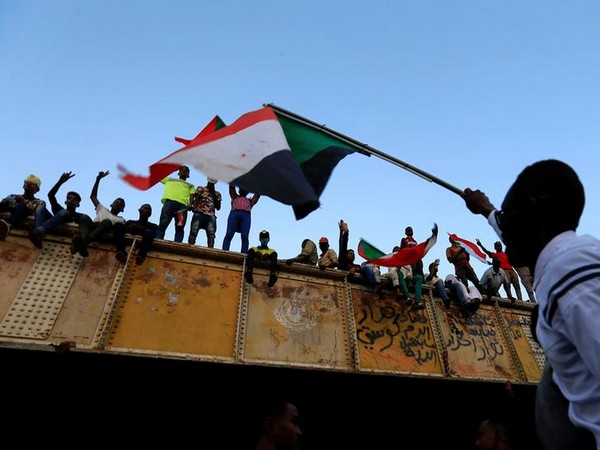
The United Nations' Secretary-General condemned on Monday the continued violence targeting protestors in Sudan, following the 25 October military takeover.
In his statement, António Guterres called upon the Sudanese security forces to exercise the utmost restraint and fulfil their obligations in relation to the rights to freedom of assembly and expression.
Mr. Guterres also took note of the resignation of Prime Minister Abdalla Hamdok. According to news agencies, Mr. Hamdok resigned after another day of mass protests that rocked the capital of the country, Khartoum.
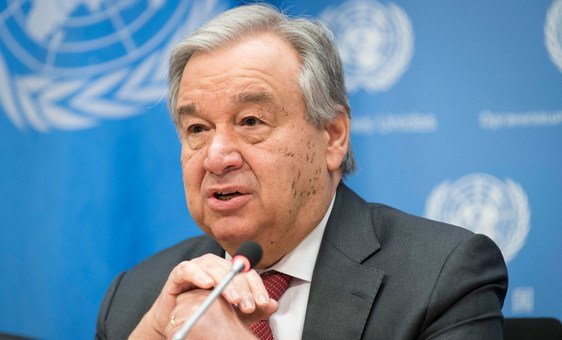 The Secretary-General, seen here in archive photo, said the UN UN remains ready to support efforts to reach a lasting solution, by UN Photo/Mark Garten
After being detained during the 25 October military takeover, along with senior officials and political activists, the Prime Minister had been reinstated after a deal was reached to share power with the army.
Lasting solution
Mr. Guterres said he regrets that "a political understanding on the way forward is not in place, despite the gravity of the situation."
The Secretary-General encouraged all stakeholders to continue engaging in meaningful dialogue in order to reach an inclusive, peaceful and lasting solution.
"Sudanese aspirations for a transition that leads to a democratic dispensation are critical. The UN remains ready to support these efforts", he said.
The Special Representative of the Secretary-General for Sudan, Volker Perthes, also noted the Prime Minister's decision to step down.
In his statement, Mr. Perthes said he respects the decision and commends the accomplishments made under his leadership, as well as the significant achievements he made during the first phase of the transitional period.
Progress at risk
The Special Representative remains, however, concerned by the ongoing political crisis following the military coup of 25 October, which risks further derailing progress made since the December revolution.
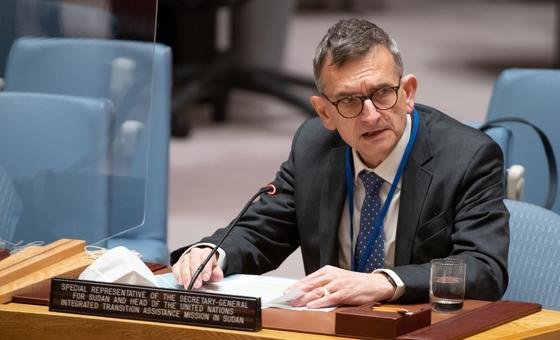 Volker Perthes, Special Representative for Sudan and Head of the UN Integrated Transition Assistance Mission in Sudan (UNITAMS), briefs Security Council members on the Sudan and South Sudan., by UN Photo/Eskinder Debebe
Mr. Perthes is "deeply concerned" by the number of civilians killed and injured in the ongoing protests.
He also urges the security forces to abide by their obligations under international law and strictly uphold the rights of protestors to freedom of expression and peaceful assembly.
"Perpetrators of violence must be brought to justice", he says.
For him, "the aspirations of the Sudanese people for a democratic path and completing the peace process should be the cornerstone of all efforts to solve the current crisis."
"The lack of trust among Sudanese actors needs to be overcome through a meaningful and inclusive dialogue", he added.
The Special Representative concluded by saying that the UN Integrated Transition Assistance Mission in Sudan (UNITAMS) stands ready to facilitate this process.
Prior to the crisis, military and civilian leaders were sharing power in a government spearheading Sudan's transition to democracy following the April 2019 ouster of President Omar Al-Bashir, who had ruled for 30 years.
Visit UN News for more.


 Google News