

Amidst US govt shutdown euro, yen surge; USD slips
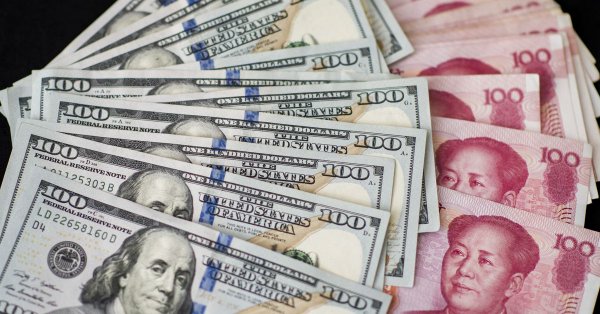
The euro and the Japanese yen gained in thin trading on Monday as concerns about a partial government shutdown in the United States weighed on investor sentiment and the dollar, although Chinese plans to cut trade tariffs helped lift the mood. Trading volumes were thin with most global markets preparing to shut for Christmas, while Japan was closed for a holiday.
After a bruising few weeks in which worries about sputtering global growth have knocked markets lower, investors were reluctant to take on many new risks at the end of the year.
A less dovish than expected Federal Reserve meeting last week has heightened fears the U.S. central bank will be raising interest rates into a weakening U.S. economy. A partial U.S. government shutdown, which President Donald Trump's chief of staff said could continue to Jan. 3, when the new Congress convenes and Democrats take over the House of Representatives, has added to investor's nerves.
The Japanese yen, perceived as a safe place to put money in times of uncertainty, rose as much as 0.3 per cent against the dollar to 110.81 before settling at 111.09. The yen's gains in the last six days total more than 2 per cent.
The Swiss franc, another currency viewed as a safe-haven, rose versus the dollar but was unchanged against a broadly stronger euro. The mood did benefit, however, from China unveiling plans to remove import and export tariffs in 2019 on a range of goods, soothing fears about an ongoing trade dispute with the United States.
"It's very quiet out there but we are seeing some positive developments," said Alvin Tan, an FX strategist at Societe Generale. The euro rose 0.1 per cent $1.1389 while against a basket of its rivals, the dollar slipped 0.2 per cent to 96.808.
The Australian dollar, highly sensitive to economic developments in China - its largest trade partner - rose half a per cent to as high as $0.7069 as investors welcomed Chinese plans to remove trade tariffs. China's offshore yuan gained 0.3 per cent to 6.9069.
Scandinavian currencies fell, with the Norwegian crown hitting its lowest in a decade at 10 crowns per euro thanks to the plummeting price of Norway's biggest export, oil, and global growth concerns. The Swedish crown also dropped.
Despite the dollar's struggles on Monday, analysts note that end-of-month portfolio rebalancing by investors usually boosts the greenback, particularly in months where U.S. stocks have performed poorly.
"If this effect were to hold again, and the risk-off tone carried on into the end of the year, we might see a further bump up in the dollar perhaps even to the YTD highs reached in mid-December," MUFG analyst Fritz Louw wrote in a note to clients.
Sterling rose 0.2 per cent versus the dollar to $ 1.2656, although analysts said that its recent recovery was more to do with dollar weakness than more positive sentiment towards the pound.


 Google News