

Africa’s Water Data Revolution: Bridging the Gap for Transboundary Water Management
The World Bank’s Water Data Revolution report highlights a groundbreaking initiative aimed at closing the data gap for transboundary water management in Africa. Leveraging remote sensing technology, cloud-based analytics, and interactive water accounting dashboards, the program is strengthening regional collaboration and promoting sustainable water governance. By empowering River Basin Organizations (RBOs) with data-driven decision-making tools, the initiative paves the way for more effective water management strategies across the continent.
 CoE-EDP, VisionRI
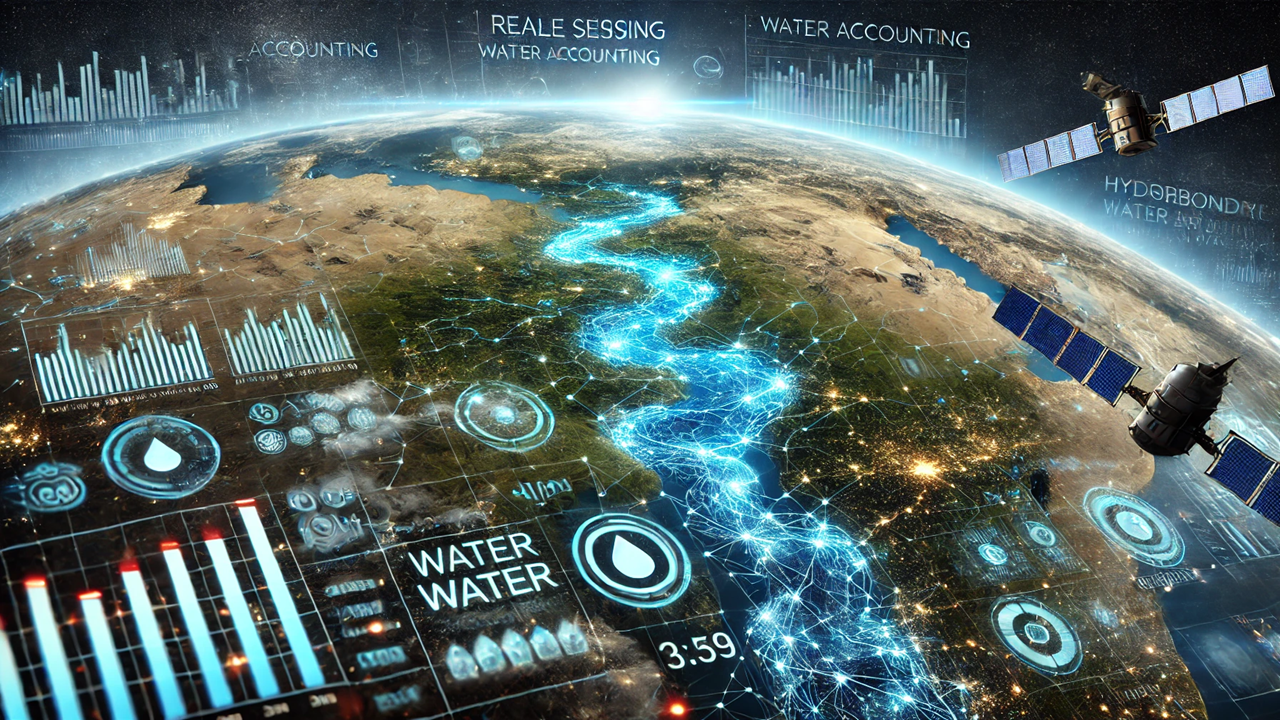
Water is one of Africa's most valuable yet contested resources. As the continent grapples with a rapidly growing population, industrial expansion, and increasing climate variability, the pressure on shared water bodies intensifies. However, outdated monitoring systems and fragmented data collection practices have long hindered efforts to manage transboundary waters effectively. In response, the World Bank's Water Data Revolution (WDR) initiative, supported by the Cooperation in International Waters in Africa (CIWA), is setting a new benchmark for water governance by leveraging cutting-edge technology and capacity-building initiatives to bridge Africa's critical water data gap.
The Data Challenge: Why Africa Needs a Water Data Revolution
More than 90% of Africa's freshwater resources lie within transboundary river basins, spanning multiple national borders. Yet, many of these countries struggle with outdated or incomplete water data. The high costs of data collection, lack of standardized monitoring systems, and political complexities have further impeded collaborative water management efforts. Climate change adds another layer of urgency, as droughts, floods, and shifting rainfall patterns threaten water security.
As the saying goes, "You can't manage what you can't measure." Without accurate and accessible water data, policymakers and water managers are left making critical decisions in the dark, exacerbating resource conflicts and inefficiencies. The WDR initiative was launched in 2021 to change that narrative by integrating remote sensing, cloud computing, and water accounting dashboards to provide real-time, decision-ready information for better water management.
Technology and Innovation at the Heart of the Solution
Remote Sensing & Cloud-Based Analytics
Historically, water data collection relied heavily on ground-based monitoring stations—a costly and geographically limited approach. Remote sensing (RS) technology, however, is revolutionizing this field by offering wide spatial coverage, real-time tracking, and historical trend analysis. With cloud computing, organizations can now store, process, and analyze water data on a global scale—a game-changer for countries with limited resources.
Water Accounting Dashboards
Developed in partnership with the International Water Management Institute (IWMI), the Water Accounting Plus (WA+) dashboards allow decision-makers to monitor and analyze water balance components, track water usage trends, and predict future availability. These dashboards have been piloted in three major African river basins:
Volta Basin (VBA)
Incomati and Maputo Basin (INMACOM)
Zambezi Basin (ZAMCOM)
The dashboards serve as interactive tools for policymakers, water managers, and regional organizations, enabling them to make data-driven decisions that optimize water allocation and sustainability efforts.
Building Regional Capacity for Data-Driven Water Governance
Pillar A: Assessing Data Needs & Identifying Gaps
To tailor solutions to real-world challenges, the WDR team conducted a comprehensive assessment across 15 River Basin Organizations (RBOs) and 3 Regional Organizations (ROs). The findings revealed critical gaps in technical expertise, financial resources, and institutional capacity, underscoring the need for affordable and scalable water data solutions.
Pillar B: Capacity Building Through Training & Workshops
Recognizing the importance of human capital, the initiative launched a series of training sessions covering:
Remote sensing applications
Data collection and analytics
Water accounting methodologies
Cloud-based monitoring tools
By equipping RBOs with hands-on training, the program ensures that technical knowledge remains within local institutions, promoting long-term sustainability.
Pillar C: Scaling Up Smart Water Management Solutions
The final pillar focused on the development and deployment of water accounting dashboards, allowing RBOs to monitor water balance, track climate impacts, and make real-time policy adjustments.
The Road Ahead: Strengthening Cooperation & Data Transparency
Leveraging Public Domain Data for Greater Transparency
A major breakthrough of the initiative is its push for open-access water data. Traditionally, hydrological data has been fragmented, restricted, or politically sensitive. By promoting public domain datasets, the initiative removes financial barriers, fosters transparency, and strengthens cross-border cooperation.
Fostering Trust and Regional Collaboration
By establishing standardized data-sharing practices, WDR enhances regional trust and accountability. The initiative proves that when countries share reliable, real-time water data, they can prevent resource conflicts, optimize water distribution, and build resilience against climate challenges.
A Watershed Moment for Africa's Future
The Water Data Revolution marks a significant turning point in Africa's approach to transboundary water governance. By combining remote sensing technology, interactive dashboards, and strategic capacity-building, the initiative is not just filling data gaps—it's empowering nations to make smarter, more informed water management decisions.
As the program expands, it sets a precedent for regional cooperation, sustainable development, and climate resilience. The World Bank's Water Data Revolution report underscores the importance of data-driven governance, proving that transparent, accessible, and real-time water data is the key to a sustainable future for Africa's shared water resources.
- FIRST PUBLISHED IN:
- Devdiscourse


 Google News