

Amit Shah Reviews Progress of Key National Cooperative Bodies Driving India's Agricultural Transformation
Shri Amit Shah lauded the collective progress of these three cooperatives and reaffirmed the government’s commitment to their growth.
- Country:
- India
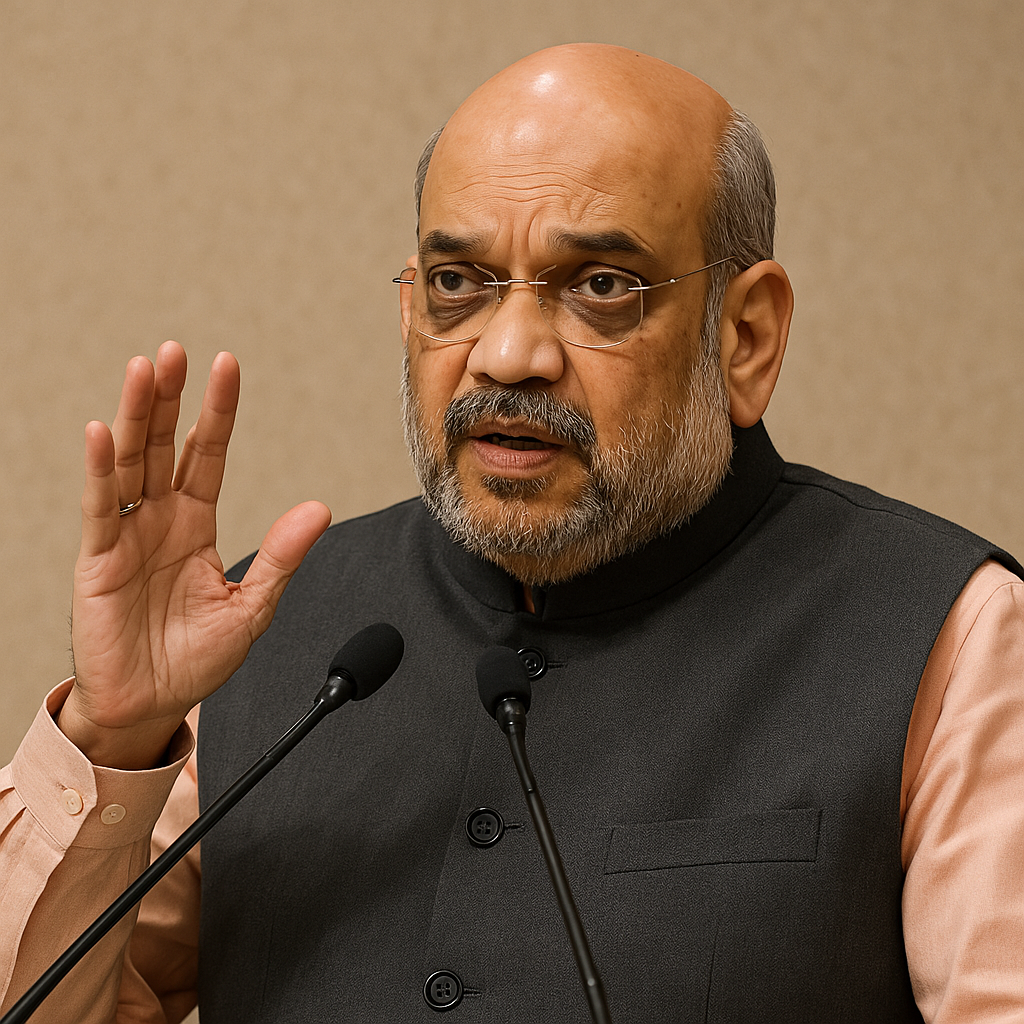
Union Home Minister and Minister of Cooperation Shri Amit Shah chaired a high-level review meeting in New Delhi to evaluate the progress and future roadmap of three major national cooperative institutions: National Cooperative Exports Limited (NCEL), National Cooperative Organics Limited (NCOL), and Bharatiya Beej Sahkari Samiti Ltd (BBSSL). These organizations were established in 2023 under the Ministry of Cooperation with approval from the Union Cabinet. The meeting was attended by senior officials from the Ministry and Managing Directors Shri Anupam Kaushik (NCEL), Shri Vipul Mittal (NCOL), and Shri Chetan Joshi (BBSSL).
Vision and Strategic Role of the Cooperatives
Addressing the gathering, Shri Amit Shah emphasized that under the visionary leadership of Prime Minister Shri Narendra Modi, these institutions have been established to operate as umbrella bodies for cooperative exports, organic agricultural promotion, and seed quality enhancement. These entities function in a 'Whole of the Government' approach, ensuring collaboration with key ministries and departments for a unified execution strategy.
The overarching objective of these cooperatives is to fulfill the Prime Minister's vision of "Sahakar Se Samriddhi" – Prosperity through Cooperation – by empowering rural communities and promoting sustainable agricultural practices.
NCEL: Expanding the Global Footprint of Indian Cooperatives
National Cooperative Exports Limited (NCEL) has rapidly scaled up operations in its first year. Shri Amit Shah highlighted its significant growth, which includes:
-
Membership of over 10,000 cooperative institutions in FY 2024-25.
-
Turnover of ₹4,283 crore and a net profit of ₹122 crore.
-
Exports to 28 countries, featuring products like:
-
Basmati and non-basmati rice
-
Marine products, especially shrimp
-
Coarse cereals and wheat
-
Fruits, vegetables, spices, animal products, and plantation crops
-
The Union Minister announced an ambitious export target of ₹2 lakh crore for NCEL, encouraging the cooperative to:
-
Explore untapped export products such as aromatic rice from Tripura, organic cotton, and coarse grains.
-
Establish export partnerships for fresh vegetables to the Gulf region and specialized potatoes.
-
Open NCEL offices in Africa and Myanmar to facilitate pulse imports.
-
Create a dedicated web portal to allow cooperative members to access global demand insights and list their supply capabilities.
He also directed that all cooperative institution exports be routed through NCEL, potentially yielding ₹20,000–30,000 crore in turnover with profits reinvested in the sector.
NCOL: Branding India's Organic Strength through Bharat Organics
National Cooperative Organics Limited (NCOL) is leading the charge in promoting certified organic products under the 'Bharat Organics' brand. In its zero year of commercial operations (FY 2025-26), NCOL has:
-
Given membership to 7,000+ cooperatives
-
Procured 1,200 metric tonnes of organic produce
-
Engaged over 2,000 farmers
-
Achieved a turnover of ₹10.26 crore
NCOL supplies to major brands including Amul and Bigbasket, and soon, Reliance Retail is set to stock its products. Presently, 22 Bharat Organics products—ranging from cereals and pulses to spices and sweets—are available in the Delhi-NCR region, with plans to expand into other metro cities.
A distinguishing feature of NCOL is its consumer-centric transparency model. Every product batch undergoes pesticide residue testing in line with Organic India standards, with test results accessible to consumers via QR codes on the packaging—an industry-first innovation.
Shri Amit Shah praised these efforts and set a turnover target of ₹300 crore for FY 2025-26. He also emphasized:
-
Formation of state-level certified organic farmer groups
-
Their integration into national-level platforms for greater visibility and coordination
BBSSL: Revolutionizing India's Seed Sector
The Bharatiya Beej Sahkari Samiti Ltd (BBSSL) is instrumental in enhancing India's agricultural productivity through better seed infrastructure. Shri Amit Shah directed BBSSL to focus on:
-
Establishing a tissue culture facility to provide high-quality banana plants across India's top 10 producing states
-
Promoting crop varieties with:
-
High yield
-
Low maturity cycle
-
Minimal water requirements (particularly for tur, urad, and maize)
-
He also highlighted the recent launch of a state-of-the-art BBSSL Centre at Kalol in Gujarat, which will serve as a hub for R&D in seeds and plant varieties.
Further directives included:
-
Developing sugarcane varieties with high sugar content and low water demand
-
Creating Lachka fodder seed varieties for distribution through NDDB and Amul networks
-
Supporting seed development for processing varieties, especially potatoes for French fries
-
Coordinating with the Ministry of Agriculture to ensure timely availability of breeder seeds
Shri Amit Shah reiterated that strengthening India's seed sector through BBSSL is critical to the broader aim of agricultural transformation and ensuring self-sufficiency in food production.
A Unified Push Toward Cooperative-Led Growth
Shri Amit Shah lauded the collective progress of these three cooperatives and reaffirmed the government's commitment to their growth. These institutions are not only reshaping India's rural and agrarian economy but also positioning the country as a global leader in organic farming, quality seed production, and agri-exports.
The review meeting marked a milestone in the journey towards a self-reliant, cooperative-driven India, reflecting the government's dedication to inclusive development through innovation, policy alignment, and institutional empowerment.


 Google News