

Farming Revival in DRC: Rural Hope Rises with African Development Bank Support
The goal is to further entrench gains and ensure that rural DRC communities remain on a path of self-reliance and prosperity.
- Country:
- Ivory Coast
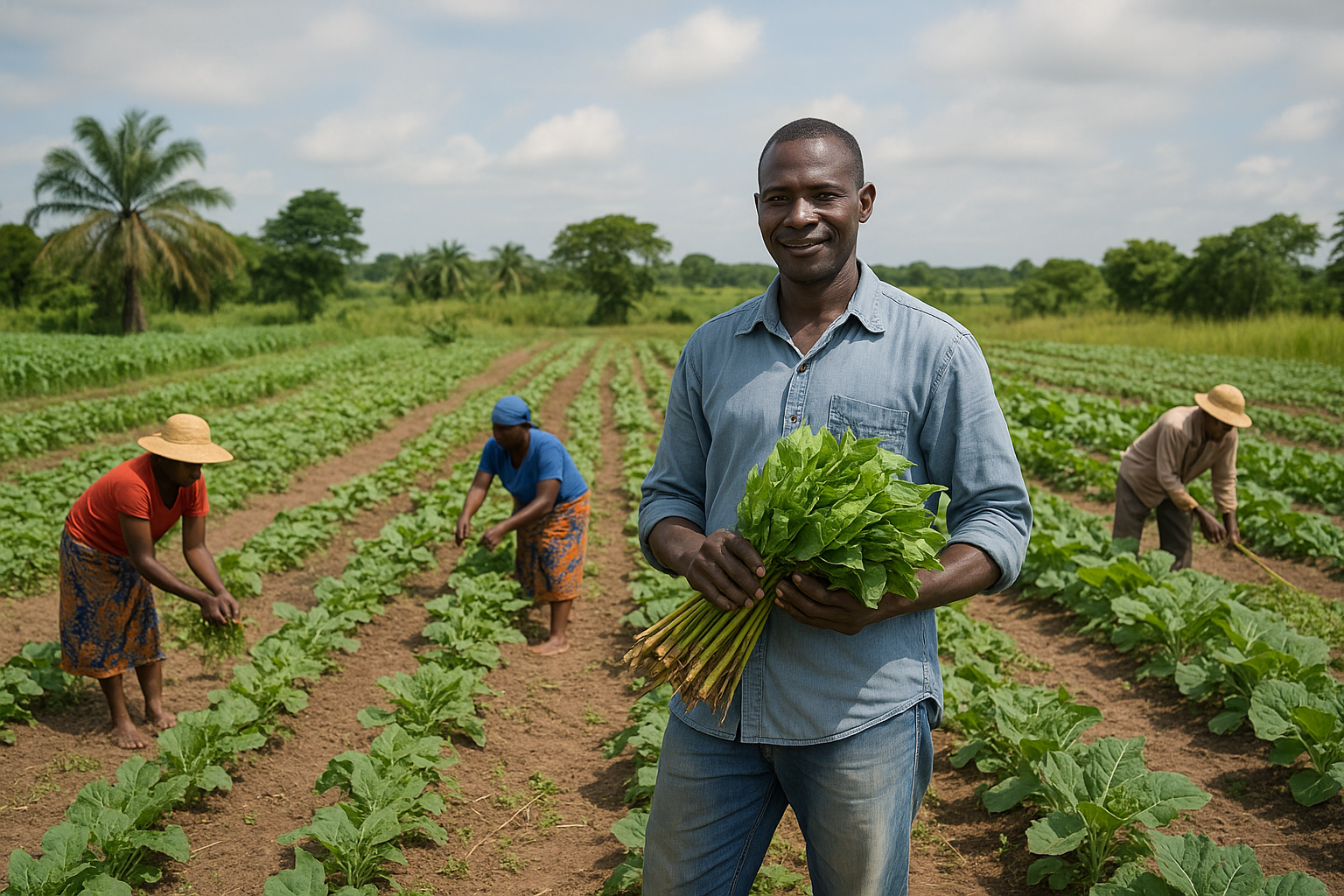
In the tranquil morning haze, as sunlight spills across the vast fields of Kwilu, Kasai, and Tshopo provinces, something profound is taking root beyond the crops: a quiet revolution in agriculture. For generations, the rural communities in these regions of the Democratic Republic of the Congo (DRC) have been caught in a cycle of subsistence farming, low yields, and vulnerability. Today, they are reclaiming their land and future, empowered by the Emergency Food Production Project (PURPA)—a transformative initiative backed by the African Development Bank (AfDB).
Breaking the Cycle of Agricultural Marginalization
Historically, these fertile regions have suffered from a lack of access to high-quality seeds, fertilizers, modern farming tools, and training. The result: minimal yields, poor nutrition, income instability, and chronic vulnerability to climate shocks.
But under the umbrella of the African Emergency Food Production Facility, the PURPA project has emerged as a game-changer. Its mission: to rapidly revive food production in the most vulnerable areas, restore farming livelihoods, and reinforce food sovereignty.
Unprecedented Distribution of Seeds and Inputs
The scale of intervention is nothing short of remarkable:
-
325 tonnes of rice, 388 tonnes of maize, and 1.4 million linear metres of cassava cuttings have been distributed, surpassing original targets.
-
Over 49,749 farming households have benefited—many led by women, who play a central role in household food security.
-
334 tonnes of fertilizers have been deployed to boost productivity and soil health.
As fields flourish once more, farmers speak with renewed confidence. "For the first time in years, we are expecting a harvest that not only feeds our families but allows us to sell in the market," says Yvette Nsumbu, a mother of five from Kasai.
Empowering Research, Women, and Cooperatives
A cornerstone of the project is the revitalisation of agricultural research institutions, notably the Kiyaka research station in Kwilu. This centre is now producing localised improved seed varieties:
-
Over 100 tonnes of maize seed
-
33 tonnes of rice seed
-
2.55 million cassava cuttings
These resources ensure long-term sustainability, helping communities reduce dependence on imported or external seed stock.
Training and empowerment have also been prioritized:
-
300 agribusiness managers and administrative staff—30% of them women—trained in modern seed production, farm management, and agricultural business strategies.
-
Farmers' field schools are now cultivating hands-on skills, strengthening cooperatives, and improving gender inclusivity in agricultural leadership.
The Fruits of a New Farming Future
The immediate and long-term benefits of PURPA are becoming increasingly visible:
-
Food security is improving—fewer lean periods, better nutrition, and more consistent meal access.
-
Incomes are rising, particularly among smallholder families and women.
-
Youth are returning to villages, reversing rural exodus trends, and embracing agriculture as a viable career path.
-
Market linkages are expanding, creating stronger local economies.
"This is more than emergency relief," says Dr. Kalala Lusembo, an agriculture coordinator in Tshopo. "It's a foundation for a more resilient and self-sustaining agricultural economy."
Looking Ahead: From Relief to Resilience
A final major distribution round—leveraging seed and fertilizer outputs from local research centres—is scheduled in the coming months. The goal is to further entrench gains and ensure that rural DRC communities remain on a path of self-reliance and prosperity.
Authorities in all three provinces report a visible slowdown in rural migration, as youth and working-age adults now find meaningful economic prospects at home.
Agriculture as a School of Resilience
The PURPA initiative is no longer just an emergency response—it's a school of resilience where innovation, tradition, and community converge. Solidarity between villagers, scientists, and policymakers has ignited a local renaissance that proves development doesn't always come from outside—it can flourish right where people till the soil.
For the people of Kwilu, Kasai, and Tshopo, farming is no longer about survival—it is about growth, dignity, and legacy. With continued support and strengthened local governance, these communities are writing a new story in the fields—one of sovereignty, security, and lasting transformation.
ALSO READ
-
AfDB and ECCAS Shape Five-Year Integration Plan for Central Africa
-
Africa Pushes to Close the $42 Billion Financing Gap Facing Women
-
Congo Ebola Outbreak Reaches Critical Point After First 100 Days
-
Africa Pushes for More Land Restoration Finance at COP17
-
DR Congo Gets 70,000 Ebola Vaccine Doses as Bundibugyo Outbreak Continues


 Google News