

MoHUA Intensifies Push for Visible Urban Cleanliness Under SBM-Urban 2.0
MoHUA has now directed States and Urban Local Bodies (ULBs) to prioritize neglected areas, dark spots, and dumpsites, ensuring their transformation within a set timeframe.
- Country:
- India
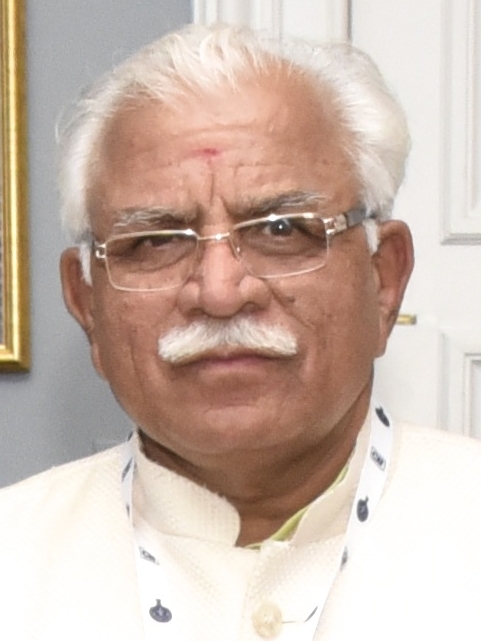
The Ministry of Housing and Urban Affairs (MoHUA) convened a high-level virtual meeting with all States and Union Territories to review progress under the Swachh Bharat Mission-Urban 2.0 (SBM-U 2.0). Chaired by Union Minister Shri Manohar Lal, and attended by MoS Shri Tokhan Sahu and MoHUA Secretary Shri S. Katikithala, the discussions centered on scaling up visible cleanliness in cities and accelerating the transformation of Cleanliness Target Units (CTUs) across the country.
Cleanliness Target Units: Engines of Urban Transformation
During the Swachhata Hi Seva 2024 campaign, more than 8 lakh CTUs were successfully transformed, setting the momentum for city-wide cleanliness drives. MoHUA has now directed States and Urban Local Bodies (ULBs) to prioritize neglected areas, dark spots, and dumpsites, ensuring their transformation within a set timeframe.
Shri Manohar Lal described CTUs as "engines of change" for both cleanliness and urban development. A time-bound clearance framework has been drafted, focusing on:
-
Regular reviews and aggressive monitoring at the State level
-
Citizen participation through the Swachhata App for mapping and tracking CTUs
-
Beautification of reclaimed lands to prevent waste re-accumulation
-
Collaboration with private and community stakeholders for adoption of CTUs
All mapped CTUs will be available on the Swachhata Hi Seva portal (swachhatahiseva.gov.in) to enhance transparency and accountability.
Role of the Swachhata App and Citizen Mobilization
The Swachhata App, already used by over 2 crore registered citizens, is at the core of this drive. The app captures geotagged images and details of CTUs and auto-assigns them to ward officials for resolution. Citizens are notified at both submission and closure stages, with a 7-day feedback window to confirm resolution or reopen complaints.
Shri Manohar Lal reiterated Prime Minister Narendra Modi's call to action for swachhata, stating:
"CTU cleaning is about converting eyesores into areas of pride, restoring dignity of public spaces, and ensuring cleanliness is not just on paper but visible and experienced in the daily lives of citizens."
Focus on Legacy Waste and Solid Waste Management
MoS Shri Tokhan Sahu highlighted that with just 12 months left for the completion of SBM-U 2.0, States must move swiftly to meet all targets, particularly in Solid Waste Management (SWM) and Legacy Waste remediation. Legacy dumpsites have been classified as high-intensity CTUs, requiring significant time and resources for complete transformation.
The Ministry encouraged ULBs to partner with PSUs, private companies, CSR groups, NGOs, and startups for CTU adoption, leveraging innovation and financial support for sustainable solutions.
Launch of Swachh Shehar Jodi (SSJ) Guidelines
In a new initiative to strengthen capacity building, MoHUA launched the Swachh Shehar Jodi (SSJ) guidelines. Based on the "Each One Teach One" model, 72 top-performing cities under Swachh Survekshan 2024-25 will mentor 72 lower-performing cities within the same State. The program institutionalizes structured mentorship, peer learning, and collaborative action to replicate successful models of urban sanitation.
Accelerating Garbage-Free Cities Vision
Within just two months, MoHUA has conducted two rounds of review meetings with States, focusing on:
-
Solid Waste Management (SWM) projects
-
Legacy Waste remediation
-
Setting up Compressed Biogas (CBG) plants
The Ministry urged States to undertake daily reviews, aggressive monitoring, and fast-tracking of waste processing facilities, in line with the larger goal of creating Garbage-Free Cities under SBM-U 2.0.
Towards Cleaner, Healthier Cities
By combining citizen participation, technology integration, and structured mentorship, MoHUA aims to ensure that urban cleanliness is not only achieved but sustained. The transformation of CTUs will serve as visible proof of progress, while initiatives like SSJ will spread best practices across the country.
As India approaches the final year of SBM-U 2.0, the government has reaffirmed its commitment to achieving a future where every city is cleaner, greener, and more livable.


 Google News