

Kubayi Reports Progress on State Capture Cases with R3.9bn Recovered
The Minister explained that the NPA, together with its specialised units, is working to ensure perpetrators are not only prosecuted but also forced to return ill-gotten gains.
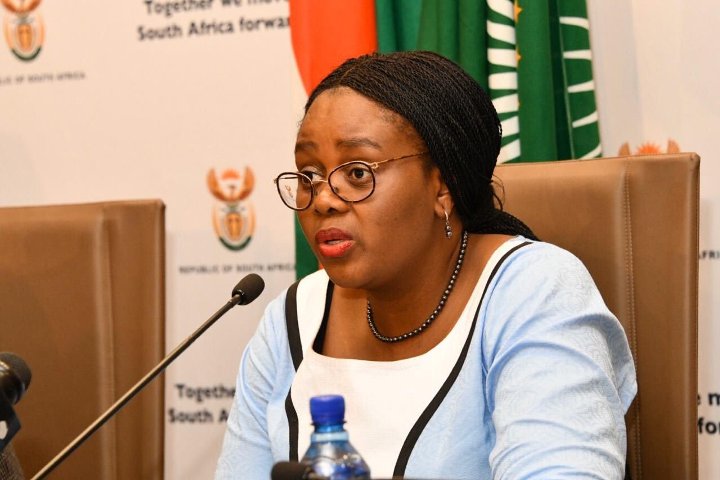
- Country:
- South Africa
Justice and Correctional Services Minister Mmamoloko Kubayi has outlined government's progress in holding perpetrators of State Capture corruption accountable, stressing that the perception of inaction is unfounded. Addressing the University of Johannesburg's Combatting Corruption Summit on Friday, Kubayi said that both the National Prosecuting Authority (NPA) and its Investigating Directorate Against Corruption (IDAC) have made tangible progress, with more than R3.9 billion recovered and dozens of cases before court.
Responding to Perceptions of Inaction
"There is a perception that our government is reluctant to implement the recommendations of the State Capture Commission. Nothing could be further from the truth. We are implementing," Kubayi insisted.
The Minister explained that the NPA, together with its specialised units, is working to ensure perpetrators are not only prosecuted but also forced to return ill-gotten gains. The Asset Forfeiture Unit (AFU) has already recovered R3.9 billion in stolen assets, she confirmed.
Progress on Recommendations and Cases
Since Chief Justice Raymond Zondo submitted the State Capture Commission's report to President Cyril Ramaphosa in 2022, IDAC has been tasked with responding to 120 recommendations. Kubayi provided a detailed breakdown:
-
82 recommendations (20 cases): Still under investigation.
-
23 recommendations (9 cases): Currently before court, with charges laid.
-
4 recommendations (2 cases): Finalised.
-
11 recommendations (5 cases): Under consideration for authorisation.
-
1 recommendation (1 case): Declined for prosecution.
In addition to these, IDAC identified 57 further cases derived from the Commission's evidence but not listed as direct recommendations:
-
28 cases are already before court.
-
23 cases remain under investigation.
-
6 cases are awaiting authorisation.
"This means that at least 37 high-profile cases are active, with another 20 under investigation. The NPA is working across multiple fronts to ensure accountability," Kubayi said.
Institutional Strengthening and Reforms
Beyond prosecutions, government has begun implementing systemic reforms recommended by the Commission:
-
Establishment of IDAC as a permanent anti-corruption unit.
-
Creation of the Special Tribunal to expedite corruption-related cases.
-
A review of the Protected Disclosures Act, aimed at incentivising whistleblowing.
-
Allocation of resources to strengthen the NPA's capacity.
-
Recruitment of specialised expertise through Section 38 appointments to boost skills in financial crime investigations and prosecutions.
Kubayi acknowledged that while progress has been made, "many perpetrators must still be held accountable," and warned that government will be intensifying efforts to strengthen its anti-corruption institutions.
Call for a Whole-of-Society Effort
The Minister also appealed to ordinary South Africans to play their part in combating corruption and crime, warning against protecting wrongdoers within families and communities.
"All of us have a role to play, not only as leaders or officials in the justice cluster. Sometimes the perpetrators are our neighbours, our children, or our relatives—shielded from justice. We must say: it stops here," she said.
Restoring Public Trust
Kubayi stressed that government's anti-corruption drive is not only about punishing wrongdoers but also about restoring public trust in state institutions and strengthening democracy.
"Through IDAC, the AFU, and reforms in law enforcement, we are building momentum. The progress made so far shows that we are serious about implementation, even though much remains to be done," she concluded.


 Google News