

UN Rights Chief Urges Kyrgyzstan to Abandon Plans to Reinstate Death Penalty
In a detailed statement, Volker Türk underscored that rights under the Covenant and its Protocol are permanent and non-reversible.
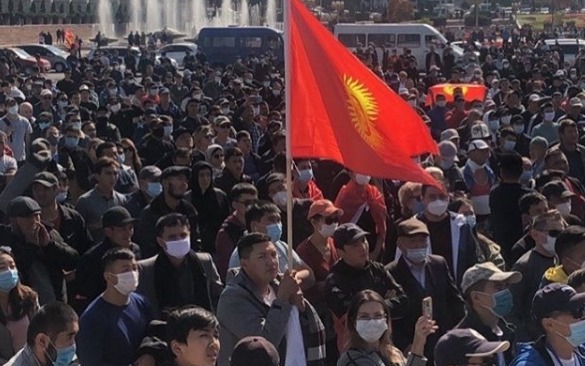
The UN High Commissioner for Human Rights, Volker Türk, has issued a strong appeal to Kyrgyzstan's authorities to immediately halt efforts to bring back the death penalty, describing the move as a serious breach of international law and a setback to global human rights progress.
Kyrgyzstan abolished the death penalty in 1998, making the ban permanent in 2010 after ratifying the Second Optional Protocol to the International Covenant on Civil and Political Rights (ICCPR)—a key international treaty that binds signatories to abolish capital punishment entirely.
However, in the wake of the rape and murder of a young girl in late September, Kyrgyz officials have proposed a constitutional amendment to allow the death penalty for specific crimes, including the rape of a child and the rape and murder of a child or adult. The proposal also includes withdrawing from the ICCPR's Second Optional Protocol. A referendum on these changes could be held in the coming weeks, with subsequent parliamentary approval required for implementation.
"Rights Once Granted Cannot Be Revoked"
In a detailed statement, Volker Türk underscored that rights under the Covenant and its Protocol are permanent and non-reversible.
"The rights enshrined in the Covenant and the Second Optional Protocol, once afforded, then belong permanently to the people in the territory of the State party and cannot be taken away, no matter the justification that is offered," Türk said.
He emphasized that no justice system is flawless, warning that reinstating the death penalty would eventually lead to the execution of innocent people.
The UN Human Rights Committee, which oversees the ICCPR's implementation, has consistently maintained that the abolition of the death penalty is legally irrevocable. The treaty itself provides no provisions for withdrawal, meaning States cannot legally reintroduce capital punishment once it has been abolished.
Breach of International Obligations
Kyrgyzstan's proposal, Türk said, would represent a clear violation of international commitments. By attempting to reintroduce executions, the country would be acting against the spirit of the treaties it voluntarily ratified and the pledges it has made to the international community.
He noted that Kyrgyzstan has previously supported UN resolutions calling for worldwide abolition and even encouraged other nations to join the Second Optional Protocol.
"Kyrgyzstan has for a number of years been part of the growing—and very welcome—international consensus for the universal abolition of the death penalty," Türk stated. "The current draft initiatives run counter to this progress."
Currently, around 170 countries have either abolished or placed a moratorium on the death penalty, signaling a strong global trend toward permanent abolition.
Justice Without Execution: A Victim-Centered Approach
While acknowledging the heinous nature of the crimes cited by Kyrgyz authorities, Türk stressed that reinstating the death penalty is not an effective deterrent against serious crimes.
"The offences cited by the authorities are appalling, and justice must be duly served," he said. "But there is no evidence that the death penalty plays a significant role in deterring such acts."
Instead, the UN human rights chief urged Kyrgyzstan to invest in a stronger justice system, one that ensures effective legal protection, swift investigation, and victim-centered care. He called for well-resourced, trauma-informed services for survivors of violence, along with stronger community-based prevention efforts.
Global Context and Human Rights Implications
Kyrgyzstan's move, if implemented, would make it one of the few countries in Central Asia to reverse decades of human rights progress. Neighboring states, including Kazakhstan and Uzbekistan, have in recent years taken steps toward abolition, aligning with broader international human rights norms.
The UN's warning highlights growing concern that populist pressures and emotional responses to crime are threatening to erode international human rights standards. Türk's statement serves as both a legal reminder and moral appeal, urging Kyrgyz authorities to uphold the country's obligations under international law and maintain its reputation as a leader in human rights reform in the region.


 Google News