

Lamola: SA Ready for G20 Handover Despite US Absence at Leaders’ Summit
The Minister stressed that while the United States’ absence was unusual, it would not halt proceedings nor undermine the integrity of the G20 as an institution.
- Country:
- South Africa
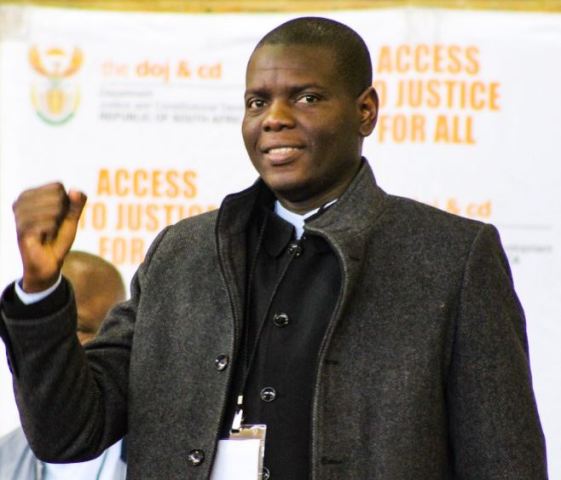
South Africa is prepared to undertake the ceremonial handover of the G20 Presidency to the United States, despite the unexpected announcement by US President Donald Trump that no American government representatives will attend the upcoming G20 Leaders' Summit in Johannesburg. This was confirmed by Minister of International Relations and Cooperation Ronald Lamola, who briefed the media at the Johannesburg Expo Centre, NASREC, on Monday.
The Minister stressed that while the United States' absence was unusual, it would not halt proceedings nor undermine the integrity of the G20 as an institution.
A Ceremonial Handover That Must Proceed
Lamola clarified that the handover of the Presidency is largely symbolic, meant to uphold tradition and signal continuity in the G20 process.
"We are ready to hand over to the US, but… the handover is really ceremonial," Lamola explained. "If they don't come, we will just issue the declaration, and the US will decide how they want to continue in the next year."
He warned that allowing the absence of a single member to stall the process would set a damaging precedent for global governance. "It is important that a declaration must be adopted by countries that are present, because the institution cannot be bogged down by someone absent," he said.
Lamola added that if G20 progress depended on universal attendance, future hosts could justify similar walkouts or absences for political reasons — a scenario that would erode the forum's global credibility.
G20 Leaders' Declaration: Solidarity, Equality and Sustainability
The upcoming Johannesburg Leaders' Declaration will centre around South Africa's Presidency theme: Solidarity, Equality and Sustainability.
This agenda reflects the country's emphasis on:
-
Bridging global divides
-
Strengthening multilateralism
-
Mobilising support for developing economies
-
Addressing climate and debt crises
-
Enhancing inclusive growth
South Africa has used its Presidency to elevate African priorities, encourage reform of global financial systems, and ensure voices from the Global South are represented in global economic governance.
Surge of Delegations: 42 Countries Confirmed
Despite the absence of the United States at leadership level, global participation remains strong. Lamola confirmed that 42 countries will take part in various capacities:
-
20 G20 member states (excluding the US)
-
16 invited guest countries
-
6 countries representing Regional Economic Communities in Africa, the Caribbean, and East Asia
He also revealed that Russia, Mexico, Argentina, and China will be represented at ministerial or deputy-ministerial levels instead of by Heads of State. "We don't see this as a snub or undermining of Africa," he said, noting that such delegations are normal in multilateral diplomacy.
With thousands of international attendees, Johannesburg is poised to become the centre of global political and economic engagement for the two-day Summit on 22–23 November 2025.
G20 Social Summit Also on Track
Lamola said preparations for the G20 Social Summit, which begins on 18 November at Birchwood Hotel in Boksburg, are progressing well. The Social Summit is one of the flagship events of South Africa's G20 Presidency, designed to bring civil society voices directly into G20 processes.
Attendance is expected to reach 5,000, including:
-
4,050 representatives from civil society and engagement groups
-
Youth leaders, women's organisations, labour groups, grassroots activists, and social justice coalitions
The Social Summit reflects South Africa's commitment to people-centered global governance, strengthening democratic participation, and ensuring policy decisions are informed by communities affected by global challenges.
Gratitude to Johannesburg Residents
Lamola acknowledged that hosting a global event of this scale has resulted in road closures, heightened security, and other disruptions across the city.
He thanked residents of Johannesburg and Gauteng for their patience, assuring them that government has worked to minimise inconvenience at key routes and ports of entry.
The Minister noted that large-scale events often catalyse improvements in municipal services — upgrades that can continue benefiting communities long after the summit has concluded.
G20 as a Catalyst for Service Delivery
Lamola addressed concerns that service delivery improvements seen across Johannesburg — such as road repairs, infrastructure upgrades, and enhanced security operations — would be abandoned after the summit.
He countered these fears by pointing to South Africa's stable electricity supply, which has held for over a year, despite earlier public doubts.
"I've heard the criticism that some of the service delivery initiatives will be discontinued after the G20," he said. "Look at electricity. We were told load shedding would return after elections — yet more than a year later, there has been none."
He said the G20 had helped "turn the corner" on service delivery, strengthening capacity and coordination across the City of Johannesburg and national departments.
A Summit That Must Proceed
Despite political complexities and the conspicuous absence of the incoming G20 President, South Africa remains committed to ensuring a successful summit that reinforces global cooperation.
Lamola emphasised that South Africa's Presidency has been rooted in principle, guided by its commitment to multilateralism, equity, and sustainable development.
As the world looks toward Johannesburg for the Leaders' Summit, South Africa stands ready — not only as host, but as a champion of solidarity and global unity.


 Google News