

Navi Mumbai’s Textile Recovery Facility Sets National Benchmark for Circular Economy and Green Jobs
Textiles—from sarees and denim to uniforms and household fabrics—constitute a significant share of urban waste but have traditionally lacked structured recovery systems.
- Country:
- India
In a pioneering step toward sustainable urban waste management, Navi Mumbai has emerged as a national leader with India's first Municipal Textile Recovery Facility (TRF)—a model that is transforming textile waste into economic opportunity while advancing circular economy principles.
Launched under the Swachh Bharat Mission–Urban 2.0, the initiative by the Navi Mumbai Municipal Corporation (NMMC) addresses a largely overlooked challenge: India's rapidly growing textile waste stream, estimated at 7.8 million metric tonnes annually.
Turning Waste into Value
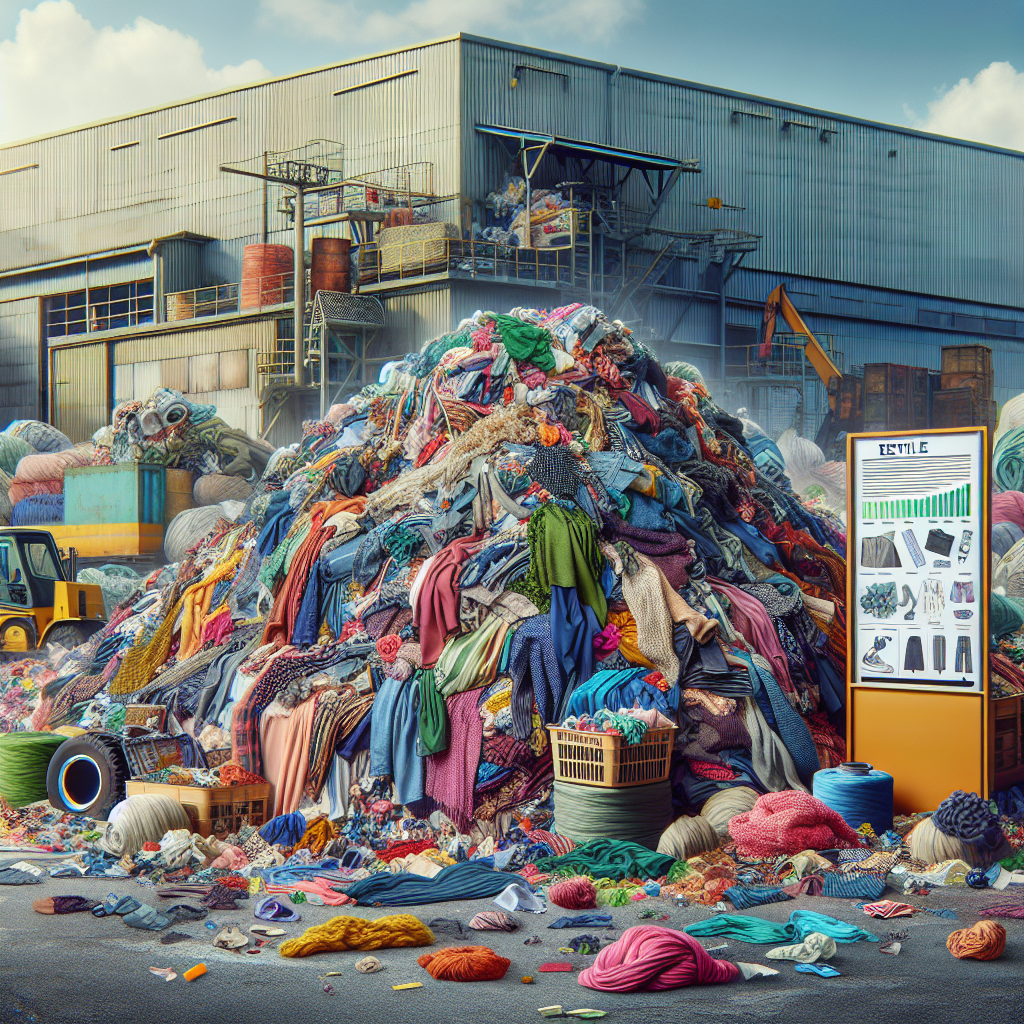
Textiles—from sarees and denim to uniforms and household fabrics—constitute a significant share of urban waste but have traditionally lacked structured recovery systems. The Navi Mumbai TRF changes this by creating an integrated ecosystem that combines collection, scientific processing, digital tracking, and livelihood generation.
Unlike conventional waste centres, the TRF operates as a circular economy hub, ensuring that discarded textiles are:
-
Reused
-
Recycled
-
Upcycled
-
Responsibly disposed
Decentralised Collection Driving Citizen Participation
The initiative begins at the community level, with 140 branded textile collection bins installed across housing societies in all eight municipal wards—set to expand to 250 bins in the next phase.
This decentralised model has:
-
Improved accessibility for citizens
-
Encouraged household-level participation
-
Created a structured pipeline for textile recovery
Technology-Driven Sorting and Traceability
At the Belapur facility—set up in a repurposed urban health centre—textiles undergo scientific sorting and classification.
Key innovations include:
-
KOSHA handheld fibre scanners for real-time identification of materials such as cotton, polyester, silk and wool
-
Categorisation into reusable, recyclable, upcyclable, downcyclable and reject streams
-
Development of a digital MIS platform to track materials from donation to final product
This integration of technology ensures:
-
Greater accuracy in sorting
-
Enhanced transparency
-
Data-driven decision-making
Women-Led Livelihood Revolution
At the heart of the TRF model is a strong social impact component—women's economic empowerment.
-
300+ women trained through structured programmes
-
150+ women actively employed
-
Monthly earnings ranging between ₹9,000 and ₹15,000
Women from Self-Help Groups (SHGs) are engaged in:
-
Sorting and grading textiles
-
Repairing and refurbishing materials
-
Creating upcycled products such as bags, garments, mats and home décor
This has transformed textile waste management into a green livelihood engine, elevating homemakers into skilled participants in the circular economy.
Measurable Environmental and Economic Impact
The TRF has already demonstrated significant results:
-
30 metric tonnes of textile waste collected
-
25.5 MT scientifically processed
-
41,000+ items handled, averaging nearly 500 items daily
-
Outreach to 1.14 lakh+ families
-
Over 75 awareness workshops conducted
-
Engagement with 350+ housing societies
Additionally:
-
400+ upcycled product prototypes developed
-
Successful pilot of paper production from rejected textile waste
These outcomes highlight the scalability and replicability of the model for other Indian cities.
Building Markets and Awareness
To sustain the ecosystem, the TRF actively participates in exhibitions and public events, with over 30 showcases conducted to:
-
Promote recycled products
-
Build consumer awareness
-
Create market linkages for SHG-produced goods
This ensures that upcycled products are not just created—but also monetised effectively.
Overcoming Urban Implementation Challenges
The initiative faced initial hurdles, including:
-
Resistance to bin placement
-
Low awareness of textile segregation
-
Technical challenges in sorting mixed fibres
These were addressed through:
-
Phased rollout strategies
-
Continuous citizen engagement
-
Inter-agency collaboration
-
Adoption of advanced fibre-scanning technology
Scaling the Model for Urban India
Encouraged by its success, NMMC is planning a permanent, high-capacity TRF facility in Koparkhairane, which will further expand processing capabilities and operational scale.
The initiative aligns with:
-
Swachh Bharat Mission–Urban 2.0
-
Smart Cities Mission
-
Sustainable Development Goal 12 (Responsible Consumption and Production)
A Blueprint for Circular Cities
The Navi Mumbai Textile Recovery Facility demonstrates that waste streams traditionally viewed as residual can be transformed into drivers of economic growth, environmental sustainability, and social inclusion.
As Indian cities grapple with rising waste volumes and resource constraints, this model offers a replicable blueprint—one that combines technology, community participation, and livelihood generation to build resilient, circular urban systems.


 Google News