

RS members on same page on ending manual scavenging
- Country:
- India
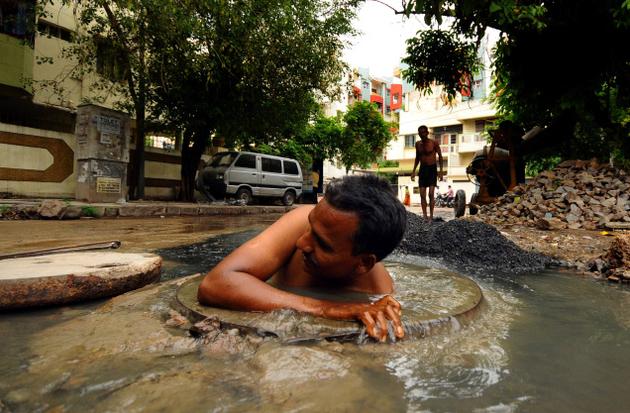
An RJD member Manoj Jha Friday moved a resolution seeking to give statutory status to National Commission for Safai Karamcharis (NCSK) and take steps to avoid casualties due to manual scavenging. Moving a private members' resolution, Jha said, "It is not just my resolution. This is listed with a collective consciousness." Elaborating further, he said there are instances of deaths during the cleaning of municipal sewerage and private septic tanks which indicates that the law 'Prohibition of Employment as Manual Scavengers and their Rehabilitation Act 2013 (PMSRA)' is not being implemented properly.
He states that the government (states and centre) are the biggest employers of these manual scavengers, particularly, through contractors. He drew the attention of the House to, what he said, the workers working without safety gazettes like gumboots etc, which poses a threat to their lives and causes one death in four days.
He also told the House that sometimes misreporting about the reason of the death of these workers result in lower compensation in case of casualty. He said manual scavenging reduces average life by 10 years.
The resolution says that the NCSK has been functioning as a non-statutory body since 2004 when the National Commission for Safai Karamcharis Act, 1993 lapsed. It recommends that the government take cognizance of the continued illegal employment of persons for manual scavenging and much more concerted effort be taken to root out the inhuman practice and to remedy its devastating effect on the families of those engaged in this work.
It also sought amendment in the PEMSRA to increase compensation for persons employed in manual scavenging in violation of the law and who die in the sewer drains and septic tanks, and provide substantial grants for the rehabilitation of persons 'liberated' from manual scavenging since 2013. It also demanded that a corpus fund be created by the Central Government as an emergency response to provision for payment of compensation to the families who lose their members cleaning sewers and septic tanks.
The resolution also says incentives be given to sanitation workers for further studies and skill development and special scholarships be instituted for children of sanitation workers. It also stated that the provisions of the PEMSRA be routed through and monitored by the National Commission for Scheduled Castes as the specific duties of the National Commission for Safai Karamcharis can be better discharged by the National Commission for Scheduled Castes which has a broader mandate and more powers as a constitutional body.
Under the resolution, it was demanded that a national institution be constituted to modernise sanitation and sewer system and to mechanise all the sewer and septic cleaning work all over the country. It sought a national level enquiry to be held to inquire into the poor implementation of the PEMSRA with specific terms of reference of the enquiry including, inter-alia, close scrutiny of caste profile of the sanitation workers engaged in / rehabilitated from practising manual scavenging.
Participating in the debate Satyanarayan Jatiya (BJP), Amee Yajnik (Congress), Vishambhar Prasad Nishad (SP), Vijila Sathyananth (AIADMK and Prasanna Acharya supported the bill and sought strict implementation of laws in the country to avoid death due to manual scavenging. Sanjay Singh of AAP and Shiv Pratap Shukla of BJP also spoke on the issue and supported it.
Ravi Prakash Verma of SP asked the government to consider the deceased manual scavengers as Cleanliness Warriors. He also sought inclusion of the industrial sludge in this category. D Raja of CPI asked the government to direct the Niti Aayog to call a meeting on manual scavenging as it was a shameful practice.
Vinay P Sahasrabuddhe of BJP, Husain Dalwai of INC and Vikas Mahatme of BJP also spoke.
ALSO READ
-
South Korean Stance on Middle East Conflict
-
France's Bold Budget Battle: A €54 Billion Deficit Dilemma
-
Unleashing Market Forces: The Path to Reviving Britain's High Streets
-
Argentina Targets Companies with Falklands Bill Amid Tensions
-
Government Dismisses Claims of External Influence on UPI MDR Policy


 Google News