

Deadly Drone Strikes in North Darfur Kill 20, Undermine Humanitarian Aid Access
The ongoing conflict has displaced more than 8.5 million people and left 25 million in need of aid, according to recent UN estimates.
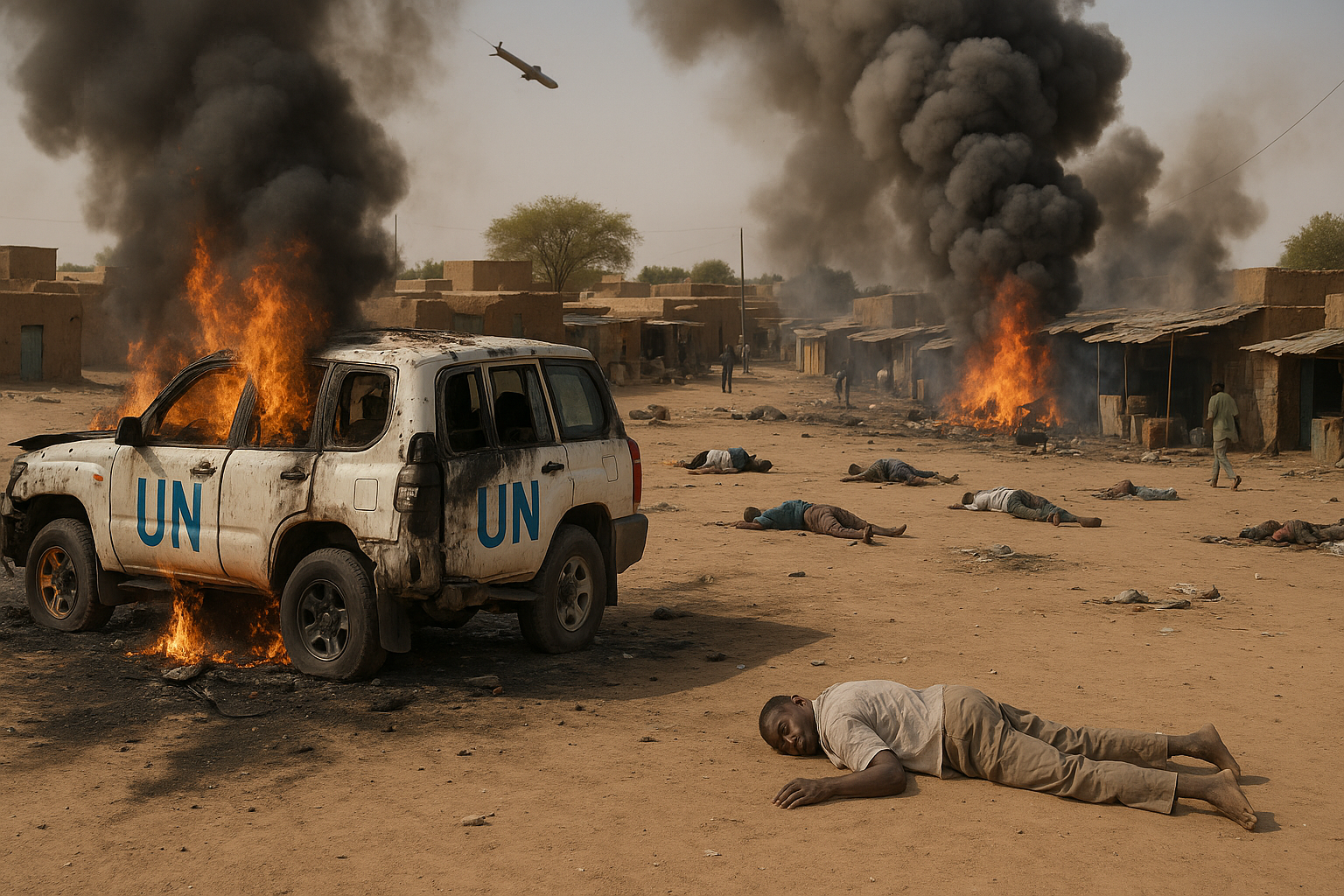
A devastating aerial attack this week on a United Nations humanitarian convoy in Al Koma, North Darfur, has drawn international outrage, highlighting the escalating risks faced by humanitarian personnel and the deepening crisis in El Fasher. The strike, which occurred on Monday, was reportedly carried out by an unmanned aerial vehicle (UAV) and resulted in the deaths of five UN convoy members. It also directly disrupted the delivery of life-saving food and nutrition supplies to civilians trapped in the war-torn region.
This attack — coupled with another UAV strike that killed at least 15 civilians at a crowded local market — underscores a growing pattern of violence targeting humanitarian and civilian infrastructure in Sudan's ongoing internal conflict. The latter strike has been attributed to the Sudanese Armed Forces (SAF), although investigations are still underway.
Violation of International Humanitarian Law
The assault on the UN convoy constitutes a grave violation of international humanitarian law, which explicitly prohibits attacks against humanitarian personnel, objects, and civilian infrastructure. The deliberate targeting of a clearly marked humanitarian mission not only contravenes legal norms but also sends a chilling signal to the entire humanitarian sector operating in Sudan.
"This strike on a humanitarian convoy is not only unlawful — it is morally indefensible," said a senior UN official in Khartoum. "Aid workers risk their lives to serve others, and such acts make it virtually impossible to maintain the flow of life-saving supplies to people who are already suffering."
Crisis in El Fasher and Northern Darfur
The attack came as aid workers attempted to deliver emergency supplies to El Fasher, a city currently under siege by armed groups and experiencing rapidly worsening humanitarian conditions. With over 500,000 civilians at risk, including children and the elderly, access to essentials such as food, water, and medical care is increasingly limited.
The UN Office for the Coordination of Humanitarian Affairs (OCHA) has warned that starvation is looming, and the health system is on the verge of collapse. The blocked convoy carried not only nutritional kits and grains but also medical supplies, now delayed indefinitely.
Second Strike Targets Civilians at Al Koma Market
Just days prior, another UAV strike — reportedly launched by the Sudanese Armed Forces — hit a bustling market in Al Koma, killing at least 15 civilians and wounding dozens more. The attack occurred during peak business hours, causing panic and destruction in an area previously considered a relatively secure zone.
Eyewitnesses described scenes of chaos and carnage, with market stalls reduced to rubble and first responders struggling to rescue survivors amidst a lack of medical supplies and equipment.
Pattern of Civilian Targeting and Escalating Tensions
These incidents are part of a broader and deeply troubling trend in Sudan's escalating civil conflict, which began in April 2023 between the SAF and the Rapid Support Forces (RSF). Both sides have been accused of indiscriminate violence, including bombing civilian neighborhoods, looting, sexual violence, and obstructing aid delivery.
The United Nations and humanitarian groups have consistently documented attacks on hospitals, schools, and marketplaces — all of which are protected under international law. Despite repeated calls for ceasefires and humanitarian corridors, violations continue unabated, and accountability remains elusive.
Call for Accountability and Protection of Humanitarian Operations
International actors, including the UN High Commissioner for Human Rights, have demanded prompt, impartial investigations into both UAV strikes and called for meaningful accountability for those responsible.
"Impunity must not be tolerated. These are not battlefield errors — they are calculated actions that destroy lives and undermine the fabric of humanitarian work," said a statement from the UN Human Rights Office.
Global humanitarian organizations are urging both the SAF and the RSF to:
-
Immediately cease all attacks on civilian and humanitarian targets.
-
Ensure safe and unimpeded access for aid deliveries.
-
Protect civilians, including in besieged urban areas.
-
Cooperate fully with independent investigations.
Wider Humanitarian Implications
The ongoing conflict has displaced more than 8.5 million people and left 25 million in need of aid, according to recent UN estimates. Humanitarian operations, already underfunded and stretched thin, are now facing unprecedented security risks.
Several aid organizations are re-evaluating their presence in the region, citing fears for the safety of staff and the feasibility of reaching vulnerable populations. Meanwhile, famine warnings are growing louder, particularly in the Darfur region, where blocked aid routes and resource scarcity are driving communities to the brink of collapse.
The aerial attacks on a humanitarian convoy and civilian market in North Darfur represent not only violations of law but a moral crisis that could further derail Sudan's fragile future. As the international community watches, the fate of millions hangs in the balance — awaiting food, safety, justice, and above all, peace.


 Google News