

UN experts hail Kenya court ruling protecting farmers’ rights to save seeds
The experts noted that Kenya’s law reflected a broader global trend, with similar restrictive provisions incorporated into seed and plant variety protection laws in many countries.
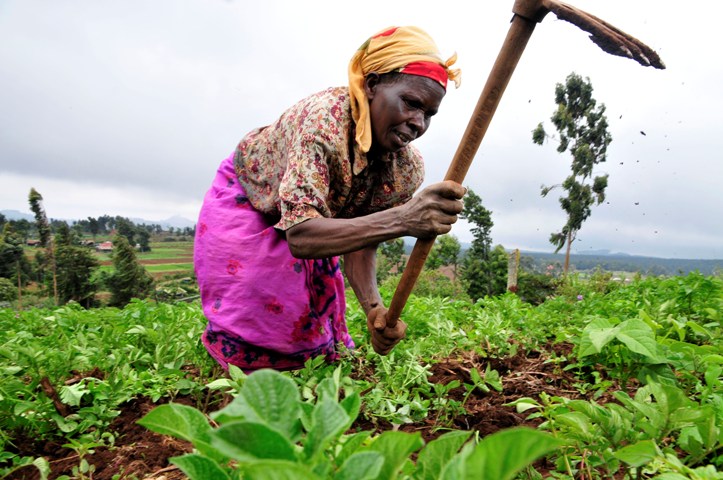
United Nations human rights experts have welcomed a landmark ruling by the High Court of Kenya that declared unconstitutional key provisions of the country's Seed and Plant Varieties Act, which had criminalised the saving, use, exchange and sale of Indigenous and farm-saved seeds.
The ruling marks a major victory for peasants, Indigenous Peoples and small-scale farmers, affirming that traditional seed practices are protected under human rights law and are essential to food security, biodiversity and cultural heritage.
"This judgment rightly recognises that seed sharing is not a crime, but a fundamental element of peasants' identity, resilience and contribution to national food systems," said the UN Working Group on the rights of peasants and other people working in rural areas.
The High Court found that the contested provisions of the law, which granted exclusive marketing and property rights over seeds to breeders and commercial seed companies, violated farmers' rights to life, livelihood and food. Under the former framework, farmers faced penalties including potential imprisonment of up to two years for saving or exchanging seeds, practices that have been central to Kenyan agriculture for generations.
In its judgment, the Court emphasised that age-old systems of seed saving and sharing form the backbone of Kenya's food security and are deeply embedded in the country's cultural traditions. Criminalising these practices, it ruled, undermined both human rights and sustainable food systems.
"This decision is a significant affirmation that the human rights of peasants and the imperatives of food security and biodiversity must prevail over overly restrictive intellectual property regimes," the Working Group said.
The experts noted that Kenya's law reflected a broader global trend, with similar restrictive provisions incorporated into seed and plant variety protection laws in many countries. These laws are often modelled on the 1991 Convention of the International Union for the Protection of New Varieties of Plants (UPOV), which prioritises breeders' rights and has been criticised for marginalising Indigenous and peasant seed systems.
"The Kenyan ruling sends a clear and timely message that human rights obligations cannot be subordinated to commercial seed monopolies or narrow interpretations of plant breeders' rights," the Working Group said.
The decision aligns closely with the United Nations Declaration on the Rights of Peasants and Other People Working in Rural Areas (UNDROP), particularly Article 19, which explicitly recognises the right to seeds. This includes the right of peasants to save, use, exchange and sell farm-saved seed or propagating material.
The experts recalled their earlier Briefing Paper on the Right to Seeds, which clarifies that states have an obligation to ensure seed laws, certification systems and intellectual property frameworks are designed and implemented in ways that respect, protect and fulfil peasants' rights. It also stresses that peasant-managed seed systems must be legally recognised and actively supported as part of national food strategies.
"Courts play a critical role in ensuring that national laws comply with international human rights standards," the Working Group said. "Where legislative frameworks have criminalised traditional seed systems or restricted peasants' customary practices, judicial review provides an essential safeguard to restore the primacy of human rights and the right to food."
The UN experts praised the perseverance and courage of Kenyan peasants, Indigenous communities and civil society organisations who brought the case before the courts, often in the face of significant political and economic pressure.
"Their determination offers inspiration to peasant movements worldwide," the experts said. "When courts uphold human rights, they protect not only the livelihoods of small-scale farmers and Indigenous Peoples, but also the future of diverse, resilient and food-sovereign systems."
The Working Group said the ruling should serve as a precedent for other countries reviewing seed laws and plant variety protection regimes, urging governments and courts worldwide to adopt human-rights-based approaches that prioritise food security, biodiversity and farmers' rights over narrow commercial interests.


 Google News