

IFAD Issues SEK 750 Million Sustainable Bond to Back Rural Transformation
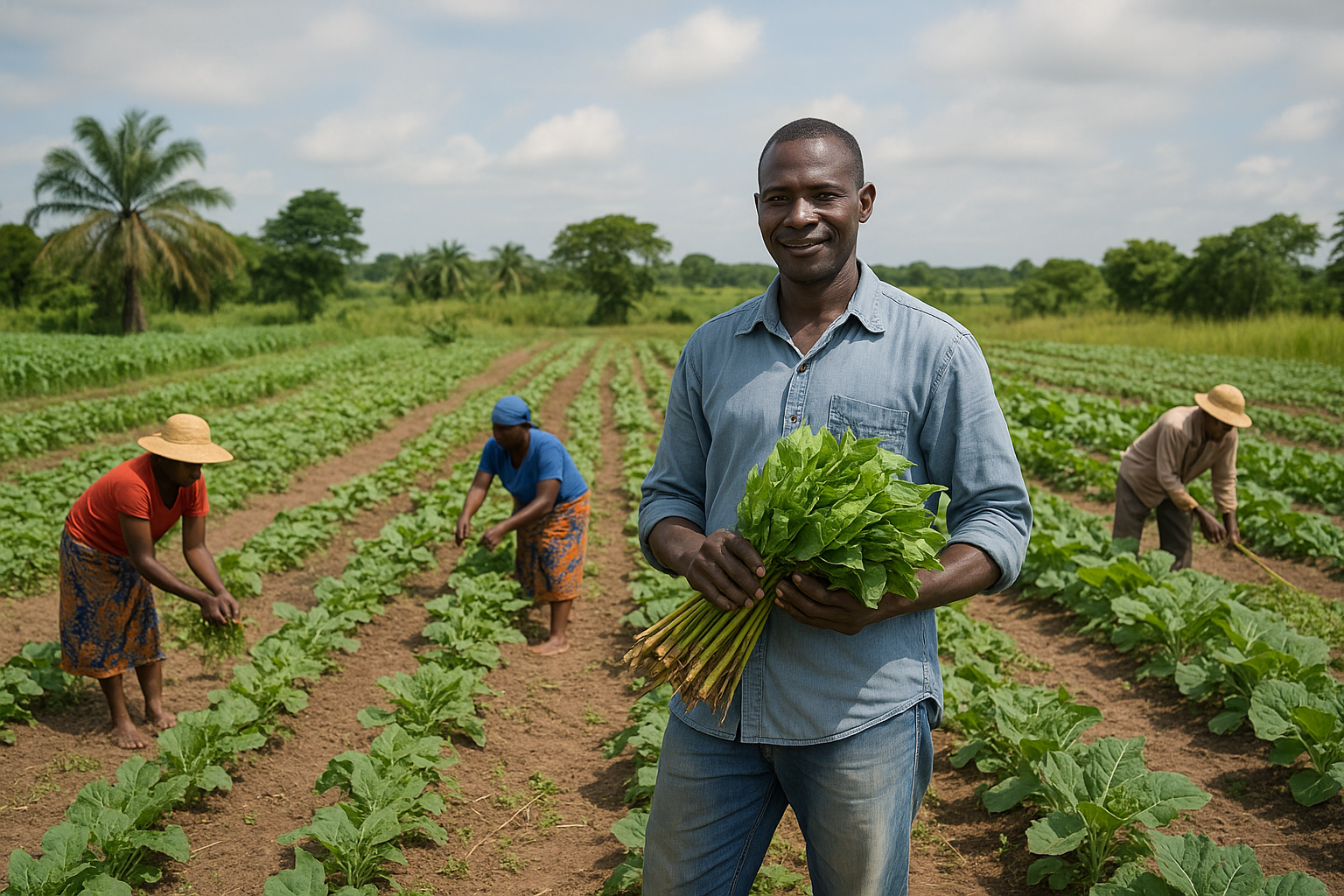
IFAD investments target small-scale farmers, helping improve livelihoods, strengthen food security and build resilience to climate and economic shocks.
The International Fund for Agricultural Development (IFAD) has begun the year with a strong signal to sustainable finance markets, issuing its thirteenth sustainable bond under its Sustainable Development Finance Framework through a SEK 750 million private placement.
The bond was purchased by Skandia, acting as lead investor for the third time, alongside two new investors — AP3 and Kammarkollegiet — reflecting growing institutional demand for high-impact, ESG-aligned investments.
Financing Rural Development and Food Security Worldwide
Proceeds from the bond will support IFAD's development projects across low- and middle-income countries, with a focus on transforming rural areas to become more productive, resilient and prosperous. IFAD investments target small-scale farmers, helping improve livelihoods, strengthen food security and build resilience to climate and economic shocks.
"We are particularly happy to start the year with this club deal, partnering once again with Skandia and welcoming two reputable new investors," said Natalia Toschi, Head of Funding at IFAD. "This transaction reflects IFAD's strategy of building long-term partnerships while attracting new investors with ESG priorities at the core of their investment approach."
Strong ESG Alignment Attracts Institutional Investors
Skandia highlighted the alignment between IFAD's development mandate and long-term financial stability.
"By investing in IFAD, we contribute to sustainable development where social impact and financial stability go hand in hand," said Alexander Onica, Head of Fixed Income and Currency Management at Skandia. "Small-scale farmers play a crucial role in global food security, and investments that create development opportunities are essential for reducing poverty and building stable societies."
AP3, part of Sweden's national pension system, is a long-standing advocate of responsible investment, while Kammarkollegiet — a state authority under Sweden's Ministry of Finance — supports transparency, democratic governance and sustainable development.
Delivering Measurable Impact on the Ground
IFAD invests in small-scale farmers to improve agricultural practices, access markets and technologies, and integrate into value chains through links with rural agribusinesses.
Recent impact analysis shows that IFAD-financed projects increased farmers' production, income and market access by more than one third. Between 2022 and 2024, these investments helped create nearly 390,000 jobs, contributing to economic growth, food security and social stability.
Why Rural Investment Matters
Around three billion people live in rural areas of developing countries, and small-scale farmers produce about half of the world's food. Yet nearly 80 per cent of the world's poorest people live in rural communities.
Strategic investments in the "first mile" of food systems deliver strong economic and social returns — boosting productivity, reducing poverty, and strengthening resilience in the face of climate and market shocks.
With this latest sustainable bond issuance, IFAD continues to mobilize capital at scale to support rural people and ensure global food systems are more inclusive, resilient and sustainable.
ALSO READ
-
Thailand’s $750 Million Nature Bond Puts Biodiversity at the Heart of Public Finance
-
ADB Backs Indonesia With $650 Million to Expand Markets and Safer Digital Finance
-
Clean Energy’s $2 Trillion Funding Challenge Puts People and Nature in the Spotlight
-
World Bank’s $1.5 Billion Sustainable Development Bond Draws Strong Global Demand
-
Nigeria Launches $5 Billion AgriConnect Plan to Back Farmers and Create 2.5m Jobs


 Google News