

Biden's Bold Move: New Security Pact with Ukraine at G7 Summit
U.S. President Joe Biden is set to sign a new security agreement with Ukraine during his trip to Italy for the G7 Summit, signaling long-term American support. The move aims to pressure Russia and China while strengthening Ukraine's defense capabilities. The G7 leaders will discuss numerous global challenges and sanctions against Russia.
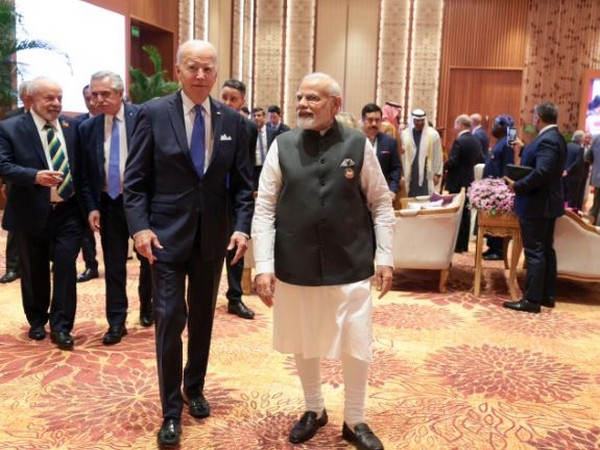
U.S. President Joe Biden will sign a new security agreement with Ukraine on Thursday to pledge America's long-term support to the country, during his trip to Italy to meet with the Group of Seven leaders, a top U.S. official said.
Biden departed for Italy on Wednesday to increase pressure on Russia over its war against Ukraine and on China for its support of Moscow and excess industrial capacity. The agreement will make clear "our support will last long into the future... particularly in the defense and security space," White House national security adviser Jake Sullivan told reporters aboard Air Force One.
"By signing this we'll also be sending Russia a signal of our resolve. If Vladimir Putin thinks he can outlast the coalition supporting Ukraine, he's wrong," Sullivan said. Fifteen countries have signed the security agreement, which will strengthen Ukraine's "defensive deterrence capability," he added.
The White House had said earlier Biden will meet again with Ukrainian President Volodymyr Zelenskiy at the summit, followed by a joint press conference. The G7 leaders arrive at the summit confronting myriad woes at home even as they seek solutions for many of the world's most pressing problems.
Biden, 81, spent Tuesday evening at his home in Wilmington, Delaware, after a 12-member jury convicted his son Hunter Biden of lying about his drug use to illegally buy a gun in 2018, making him the first child of a sitting U.S. president to be convicted of a crime. The trial followed the May 30 criminal conviction of Republican former President Donald Trump, the first former U.S. president to be found guilty of a felony. Biden and Trump are running against each other in the November presidential election and are neck-and-neck in the polls.
The heads of the world's most developed democracies will address multiple challenges during the June 13-15 meeting, including wars in Ukraine and the Middle East, trade imbalances with China, threats posed by artificial intelligence and development challenges in Africa. The leaders will also announce new sanctions and export controls against Russia that target entities and networks helping Putin's forces fight the war in Ukraine, White House spokesperson John Kirby said on Tuesday.
"We're going to continue to drive up costs for the Russian war machine," Kirby said. Washington plans to widen sanctions on the sale of semiconductor chips and other goods to Russia, with the goal of targeting third-party sellers in China, sources familiar with the plans said late on Tuesday.
The administration will announce it is broadening existing export controls to include U.S.-branded goods, not just those made in the United States, the sources said. It will identify certain Hong Kong entities it says are shipping goods to Moscow. Shoring up funding for Ukraine will be a top priority at the G7 meeting, with U.S. and European officials eager to lock in solutions, ahead of a possible Trump re-election and the uncertainty it would raise over future U.S. support for Kyiv.
The Group of Seven nations and the European Union are considering how to use profits generated by Russian assets immobilized in the West to provide Ukraine with a large up-front loan to secure Kyiv's financing for 2025. "We will announce new steps to unlock the value of the immobilized Russian sovereign assets to benefit Ukraine and to help them recover from the destruction that Mr. Putin's army has caused," Kirby said.
Biden will press other G7 leaders to agree to an innovative plan to use future interest on some $281 billion of Russian central bank funds to back up a $50 billion loan to Ukraine. G7 leaders also face electoral challenges, with polls indicating British Prime Minister Rishi Sunak will likely lose power in a national vote next month, and the leaders of France and Germany reeling from heavy defeats in recent European elections.
ALSO READ
-
Naftogaz Sets Out Cleaner Energy Future With EIB Support and 2050 Net Zero Target
-
KSrelief and UNDP Launch $5M Lifeline for Ukraine’s War-Affected Hospitals
-
Poltava University Reopens With Safer, Greener Spaces for Nearly 3,000 Campus Users
-
UNDP Urges Recovery From Day One as 160 Million People Risk Being Trapped in Crisis
-
Ukraine Faces Another Bitter Winter as UN Inquiry Warns of Deepening Civilian Harm


 Google News