



NASA's forthcoming mission will figure out why Venus dried out and Earth didn't
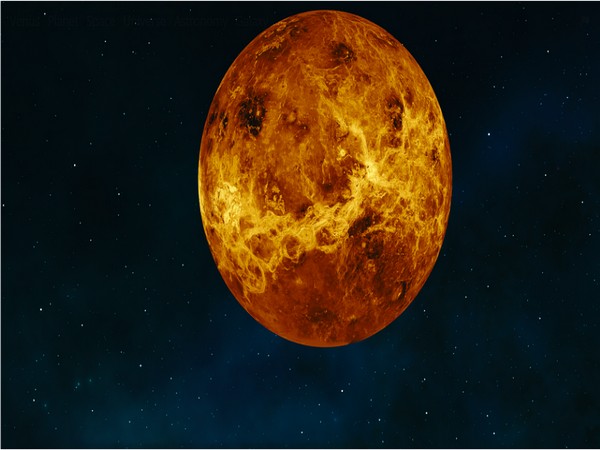
Water is one of the key reasons why Earth is habitable. Scientists believe that Earth's twin planet - Venus - was once much wetter than it is today, but it dried out for unknown reasons. NASA's upcoming mission, Endurance, will measure Earth's life-supporting secret and figure out why is our water still around?
"It's one of the most fundamental questions in all of science: Why are we here? And it's what Endurance is after," said Glyn Collinson, a space scientist at NASA's Goddard Space Flight Center in Greenbelt, Maryland, and principal investigator for NASA's Endurance mission. Collinson and his team will launch their experiment through Earth's magnetic north pole.
According to NASA, the Endurance mission will attempt to measure Earth's global electric potential - how much Earth's electric field “tugs” at electrically charged particles in our air?
This electric potential is expected to be very weak, making it difficult to measure - and one reason Earth can support life. It will be the first measurement of Earth's global electric potential.
The mission will measure electrons escaping from Earth's atmosphere. These electrons escape Earth at a specific, predictable speed, but they should be slowed ever so slightly by Earth's global electric potential.
Back in 2016, the European Space Agency's Venus Express mission detected a 10-volt electric potential surrounding the planet. Like a planet-wide vacuum cleaner, this electric potential could siphon away ingredients of water, like the positively charged oxygen that gets split from its hydrogen atoms by intense sunlight. Researchers believe, over time, this electric potential may have played a role in draining Venus’ water away to space.
#MaytheFourth be with NASA scientist Glyn Collinson as he readies the Endurance rocket for launch! 🚀 Learn about the ambitious mission from Collinson, reporting from the launch site in Ny-Ålesund, Svalbard, Norway.More about the mission: https://t.co/R4qCYSd9nA pic.twitter.com/7vod8OEqRJ
— NASA Sun & Space (@NASASun) May 4, 2022
- READ MORE ON:
- NASA Endurance mission
- Life on Venus
- Earth Venus life support


 Google News