

Heads up! Strawberry Moon set to delight skygazers on June 14
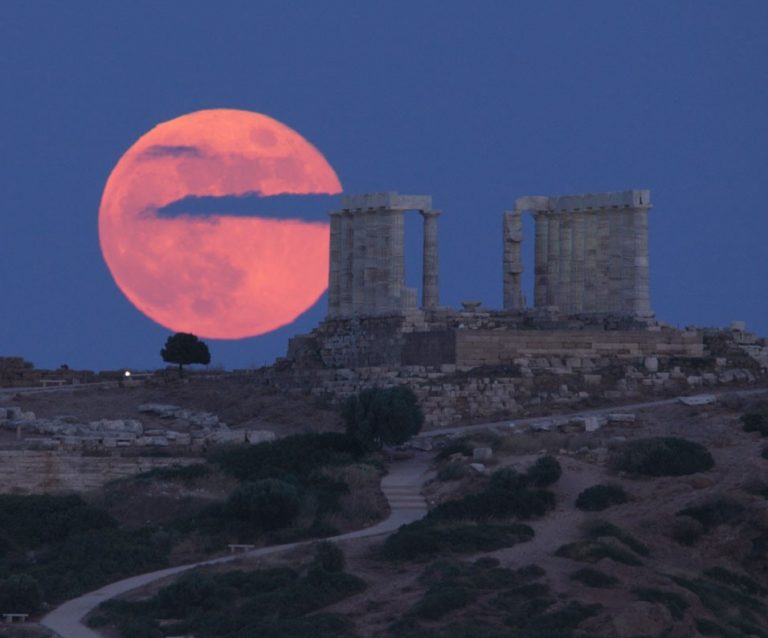
June's Full Moon, also known as Strawberry Moon or Supermoon, will appear Tuesday morning, June 14, 2022, at 7:52 a.m. EDT. According to NASA, the Moon will appear full for about 3 days centered on this time, from Sunday night through Wednesday morning.
For the unversed, the last full Moon of Spring or the first Full Moon of Summer is called Strawberry Moon. It gained its name from the time of year when berries ripen. Whilst the Moon doesn't completely appear red, it does appear a reddish color when rising or setting.
Other celestial events to watch before the Full Moon:
From Thursday, June 9 to early Friday morning, June 10, 2022, the bright star Spica will appear about 7 degrees to the lower left of the waxing gibbous Moon. The Moon will appear about 45 degrees above the south-southwestern horizon as evening twilight ends at 9:44 p.m. EDT.
On Sunday night, June 12, into Monday morning, June 13, 2022, the bright star Antares will appear about 8 degrees to the lower left of the nearly full waxing gibbous moon. On Monday morning at 4:30 a.m., Antares will appear to the left of the Moon and the pair will be about 10 minutes from setting on the west-southwestern horizon and by Monday evening the Moon will have shifted to the other side of Antares.
According to NASA, this year, June 13 and 14 are tied for the earliest sunrise of the year, with sunrise at 5:42:11 a.m. EDT and morning twilight starting at 4:30 a.m. By June 14 - the day of the full moon after next - morning twilight will begin at 4:30 a.m., sunrise will be one of these earliest sunrises at 5:42 a.m., and sunset will be at 8:35 p.m.
As morning twilight begins on June 14, four of the five visible planets - Mercury, Venus, Mars, Jupiter and Saturn - will appear in a line above the east-southeastern horizon:
- Saturn will the upper right at 35 degrees above the south-southeastern horizon
- Jupiter will appear at 29 degrees above the east-southeastern horizon while Mars at 25 degrees above the east-southeastern horizon
- Venus will be at the lower left at 6 degrees above the east-northeastern horizon
- About 6 minutes after morning twilight begins, Mercury will rise above the east-southeastern horizon, appearing nearly as bright as Mars and Saturn.
More information can be found here.


 Google News