

Science News Roundup: S.Korea's second space rocket launch successfully puts satellites in orbit; Scientists probe the link between 'snow blood' and climate change and more
A 162.5-kg (358 lb)satellite designed to verify the rocket's performance successfully made contact with a base station in Antarctica after entering orbit, officials said. Scientists probe link between 'snow blood' and climate change Standing on a snowy mountainside about 2,500 metres above sea level, Eric Marechal holds up a crimson test-tube.
Following is a summary of current science news briefs.
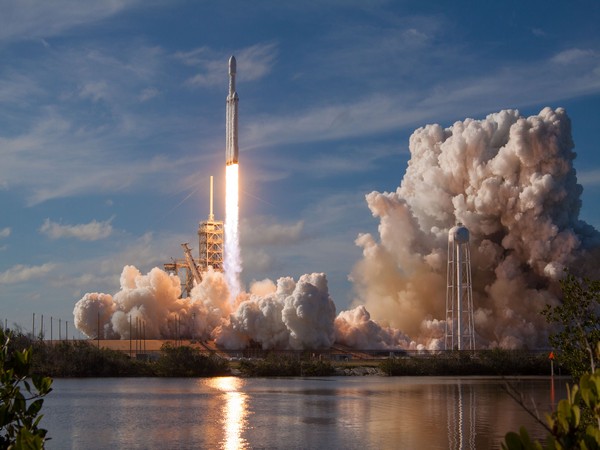
S.Korea's second space rocket launch successfully puts satellites in orbit
South Korea's second test launch of its domestically produced Nuri rocket successfully placed several satellites in orbit on Tuesday, officials said, taking a major step in efforts to jumpstart its space program after a first test failed last year. The rocket lifted off from Naro Space Center on the southern coast of South Korea at 4 p.m. (0700 GMT). A 162.5-kg (358 lb)satellite designed to verify the rocket's performance successfully made contact with a base station in Antarctica after entering orbit, officials said.
Scientists probe the link between 'snow blood' and climate change
Standing on a snowy mountainside about 2,500 meters above sea level, Eric Marechal holds up a crimson test tube. Inside is an algae sample is known as "snow blood," a phenomenon that accelerates Alpine thaw and that scientists worry is spreading. "These algae are green. But when it's in the snow, it accumulates a little pigment like sunscreen to protect itself," said Marechal, research director at Grenoble's Scientific Research National Center, who was collecting laboratory samples on Le Brevent mountain with teammates.
Chilean beachgoers become guardians of Elasmosaurus fossils
While strolling along Los Tubos beach on the central Chilean coast, a group of neighbors found strange remains which turned out to be fossils of an ancient marine reptile that lived in the surrounding sea millions of years ago. Several fossils belonging to the long-necked sea creature from the Upper Cretaceous period, known as Elasmosaurus, were found by Andrea Galvez and other residents of the town of Algarrobo, some 95 kms (60 miles) east of Santiago, the country's capital.
ALSO READ
-
Can Native Shrubs Help Stop Invasive Plants From Reclaiming Gangwon’s Riverbanks?
-
Lee Jae Myung's Diplomatic Milestones: Balancing Amidst Global Tensions
-
US-Korea Investment Talks Face Viability Concerns
-
Prospects of a New Summit: South Korean Optimism Amid Uncertainty
-
South Korean Stance on Middle East Conflict


 Google News