



ESA's Swarm satellite avoids collision with space debris
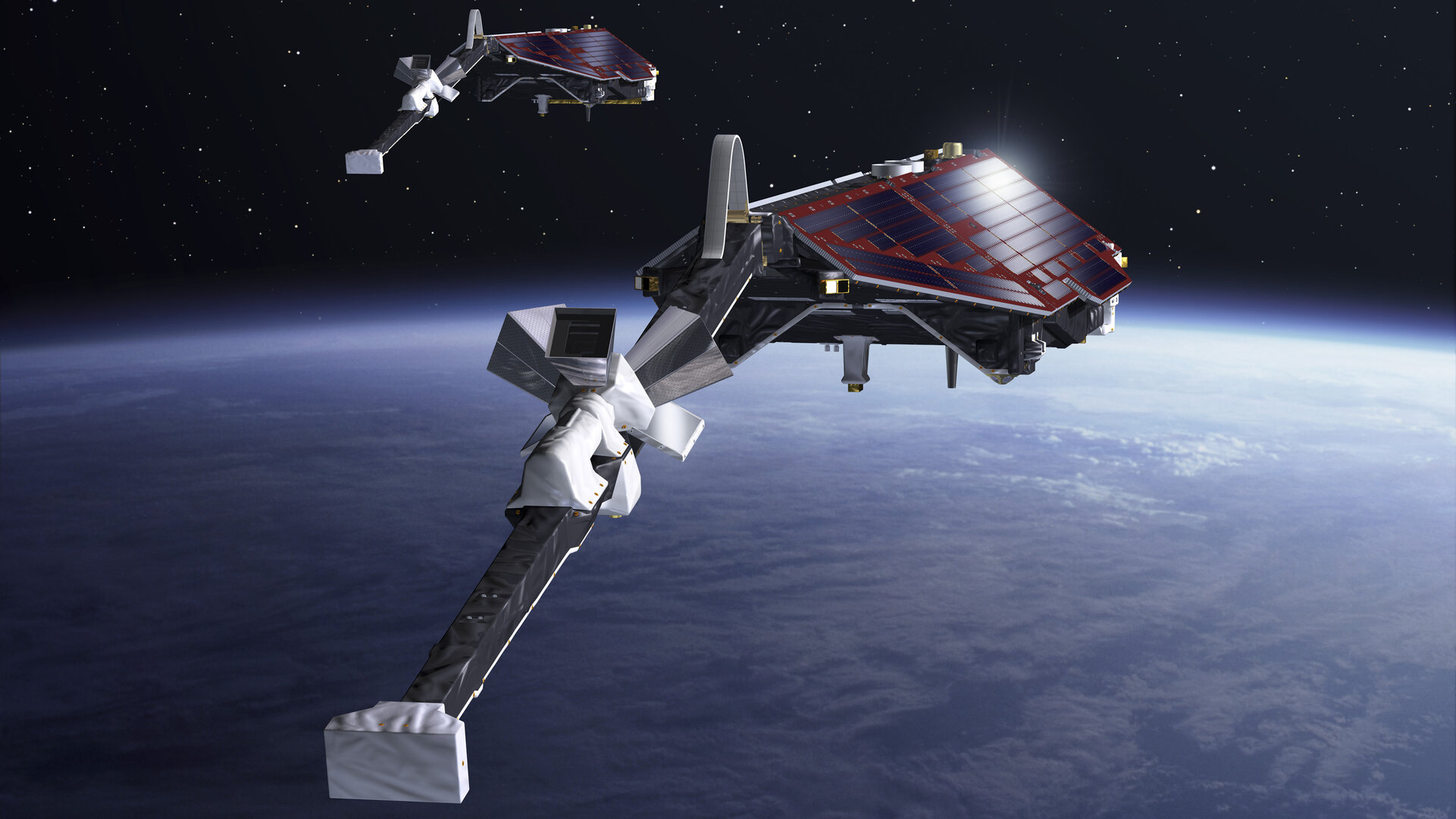
One of the satellites of Swarm, the European Space Agency's mission to unravel the mysteries of Earth's magnetic field, avoided potential collision with space debris - human-made rubbish circling our planet.
Launched in 2013, Swarm is ESA's first constellation of satellites to advance humanity's understanding of how Earth works. It is made up of three identical Swarm satellites, named Alpha, Bravo and Charlie, precisely measuring the magnetic signals that stem from Earth's core, mantle, crust and oceans, as well as from the ionosphere and magnetosphere.
On Monday, October 10, Swarm-Alpha was moved out of the path of that piece of space debris, which was in the form of a rocket body, according to a tweet by the Swarm mission team.
"Collision avoided! 💥 In the wee small hours this morning Swarm-Alpha was moved out of harm's way - space debris in the form of a rocket body 🚀 that has been threatening our inner duo 🫣 Thanks to the hard work of the @esaoperations Space Debris Office for guiding us clear! pic.twitter.com/WW10Sn8QmO
— ESA Swarm mission (@esa_swarm) October 10, 2022
Back in July 2022, Swarm-Alpha dodged out of the way of a mystery piece of space junk spotted just hours before a potential collision. One of Alpha's manoeuvres was planned for just a few hours after the possible collision.
ESA's Space Debris Office analyses data from the US Space Surveillance Network which uses radar and other technologies to track, correlate and catalogue objects. It then raises the warning of a potential collision to ESA's Flight Control and Flight Dynamics teams, usually more than 24 hours before the piece of debris comes closest to the satellite.
take action to keep satellites safe after receiving an alert warning of a possible collision between an active satellite and a piece of space debris.
When the alert is raised, ESA experts determine the risk of a collision and plan a collision avoidance manoeuvre that can be used to get the satellite out of harm's way if necessary.


 Google News