

Lucy spacecraft adjusts course for close encounter with main-belt asteroid in November
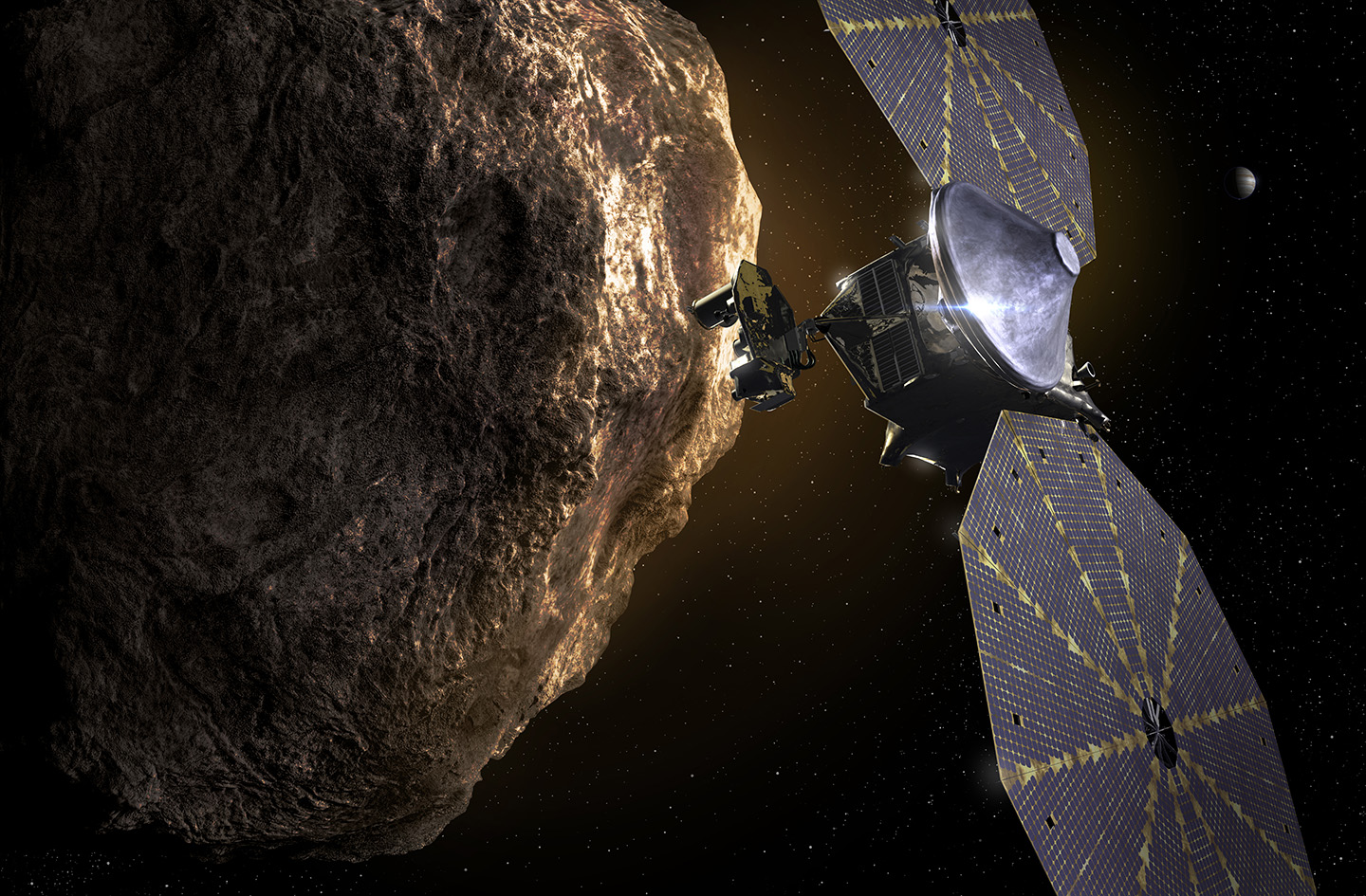
NASA's asteroid hunter Lucy recently executed a trajectory correction maneuver to refine its path for a planned close encounter with the small main belt asteroid Dinkinesh in November 2023.
The maneuver, carried out on May 9, changed the spacecraft's velocity by a mere 7.7 mph (3.4 m/s). Despite its staggering current speed of approximately 43,000 mph (19.4 km/s), this subtle nudge is enough to propel the spacecraft nearly 40,000 miles (65,000 km) closer to its target, the agency said on Thursday.
If needed, the mission team will have further opportunities to fine-tune the flight path. The team is also analyzing the data collected from Lucy's spring instrument calibration campaign and making other preparations for the mission's first asteroid encounter, which will provide a valuable test of the spacecraft's systems and procedures to ensure that everything operates as expected during the mission's high-speed asteroid encounters.
During the November 2023 flyby, the Lucy spacecraft will fly a mere 265 miles (425 km) from the small, half-mile- (sub-km)-sized asteroid, while travelling at a relative speed of 10,000 mph (4.5 km/s).
Dinkinesh will be the smallest main belt asteroid ever explored, and it is much closer in size to near-Earth asteroids visited by recent NASA missions OSIRIS-REx and DART than to previously visited main belt asteroids.
Lucy embarked in October 2021 on a 12-year journey to explore the enigmatic Trojan asteroids which are thought to be remnants of the primordial material that formed the outer planets. During the course of its mission, Lucy will fly by nine different asteroids - two main belt asteroids and seven Trojans leading and trailing Jupiter in its orbit.
With some of the extremely advanced scientific instruments onboard, the spacecraft will study the Trojan asteroids up-close to help scientists unravel key insights into the formation and evolution of our cosmic neighborhood.


 Google News