



Science News Roundup: Nobel physics prize goes to trio who lit up secrets of the atom; China offers to collaborate on lunar mission as deadlines loom and more
Russia's first moon mission for 47 years ended in failure on Aug. 19 with the crash of its Luna-25 spacecraft, dashing Moscow's hopes of beating India to the unexplored south pole of the moon.
Following is a summary of current science news briefs.
Prada and Axiom Space collaborate to design NASA's lunar spacesuits
Italian luxury group Prada and Texas-based startup Axiom Space will collaborate to design NASA's lunar spacesuits for the Artemis III mission planned for 2025, the two companies said on Wednesday. Prada's engineers will work alongside the Axiom Space systems team throughout the design process, developing solutions for materials and design features to protect astronauts against the challenge of space and the lunar environment, they said in a joint statement.
China offers to collaborate on lunar mission as deadlines loom
China, which aims to become a major space power by 2030, has opened up a key lunar mission to international cooperation as mission deadlines loom for setting up a permanent habitat on the south pole of the moon. China welcomes countries and international organisations on its uncrewed Chang'e-8 mission and to jointly carry out "mission-level" projects, the China National Space Administration (CNSA) said at the 74th International Astronautical Congress in Baku, Azerbaijan, on Monday.
Russia pinpoints cause of moon shot failure, looks to bring next missions forward
Russia on Tuesday blamed a malfunction in an on-board control unit for causing its lunar lander to crash into the moon in August, and said it was looking at speeding up the timetable for two further missions. Russia's first moon mission for 47 years ended in failure on Aug. 19 with the crash of its Luna-25 spacecraft, dashing Moscow's hopes of beating India to the unexplored south pole of the moon. An Indian spacecraft landed there on Aug. 23.
Nobel Chemistry prize awarded for 'quantum dots' that bring coloured light to screens
Scientists Moungi Bawendi, Louis Brus and Aleksey Ekimov won the 2023 Nobel Prize in Chemistry for their discovery of tiny clusters of atoms known as quantum dots, widely used today to create colours in flat screens, light emitting diode (LED) lamps and devices that help surgeons see blood vessels in tumours. The prize-awarding academy said that the research of the three U.S.-based scientists on quantum dots, which in size ratio have the same relationship to a football as a football to Earth, had "added colour to nanotechnology."
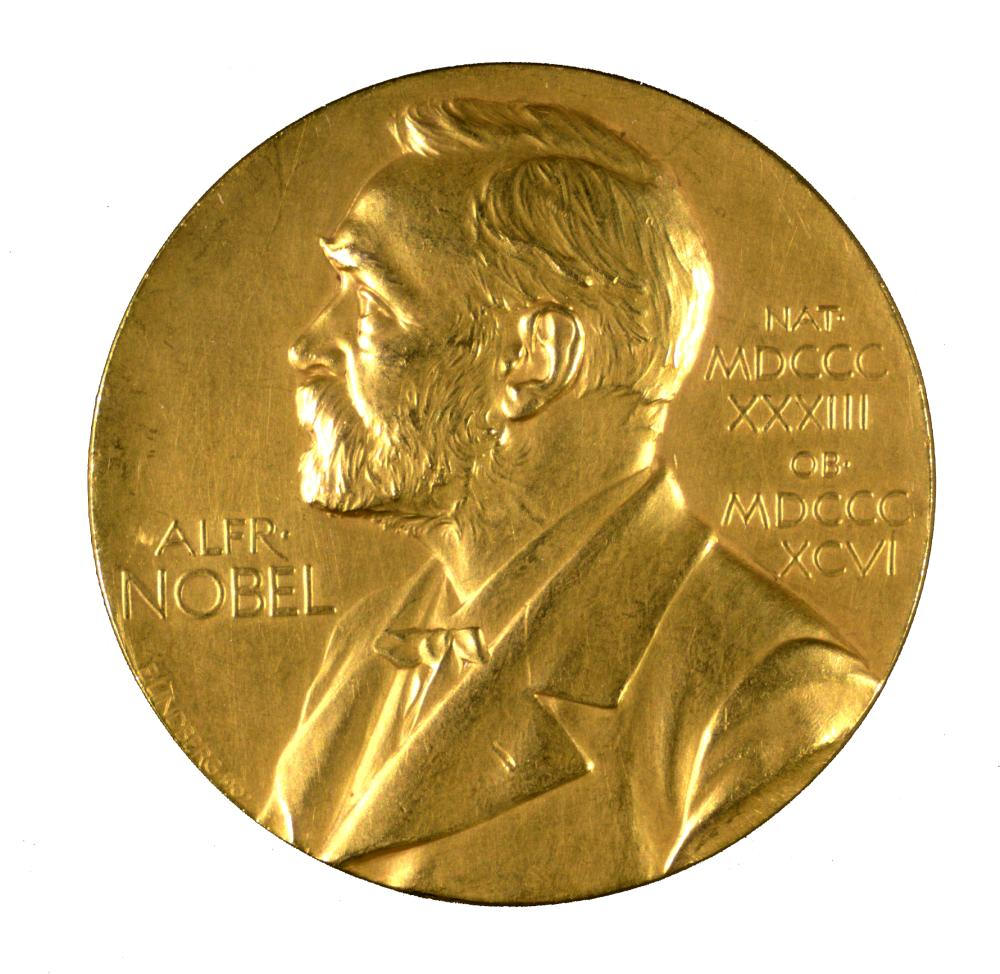
Nobel physics prize goes to trio who lit up secrets of the atom
Scientists Pierre Agostini, Ferenc Krausz and Anne L'Huillier won the 2023 Nobel Prize in Physics for creating ultra-short pulses of light that can give a snapshot of changes within atoms, potentially leading to better detection of disease. The prize-awarding academy said their studies had given humanity new tools for exploring the movement of electrons inside atoms and molecules, a phenomenon that was long thought impossible to trace.
(With inputs from agencies.)


 Google News