

NASA's MAVEN Mars mission observes rare disappearing solar wind
- Country:
- United States
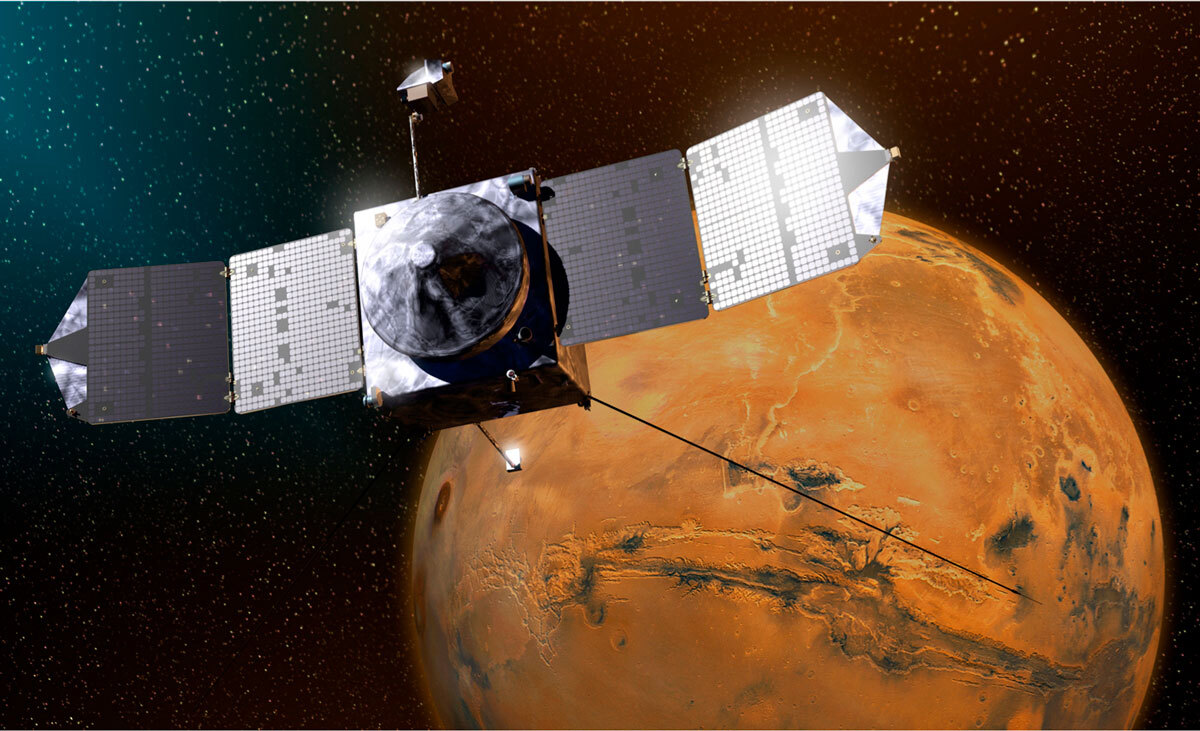
NASA's MAVEN (short for Mars Atmosphere and Volatile EvolutioN) mission observed an unexpected "disappearance" of the solar wind in December 2022. This rare and unusual event was caused by a special type of solar event that was so powerful, it created a void in its wake as it travelled through the solar system.
Due to this solar event, MAVEN's measurements at Mars indicated a significant drop in the number of particles constituting the solar wind. In the absence of this solar wind pressure, the Martian atmosphere and magnetosphere expanded by thousands of kilometers. Notably, MAVEN stands as the sole asset at the Red Planet with the capability to simultaneously observe both the solar activity and the Martian atmosphere's response to solar influences.
"When we first saw the data, and how dramatic the drop in the solar wind was, it was almost unbelievable. We formed a working group to study the event, and we have found this time period to be rich with incredible findings," said Jasper Halekas, professor at the University of Iowa and the lead author on a new study on the event.
Researchers attribute this solar event to faster-moving solar wind overtaking slower-moving solar wind, acting like a broom sweeping and compressing the two regions together. This phenomenon, referred to as a stream interaction region, resulted in an uncommon void of extremely low-density solar wind, as observed by NASA's MAVEN. This disappearance of the solar wind led to unprecedented interactions within Mars' magnetosphere and ionosphere.
This marked the first occasion for the MAVEN mission to observe solar wind events on this scale, which are exceedingly rare and typically occur during times of heightened solar activity. While other spacecraft at Mars and Earth also captured aspects of the event, only MAVEN simultaneously measured both the Sun and the Martian atmosphere's response.
As the Sun progresses toward solar maximum, the peak of its natural 11-year cycle, the MAVEN mission is poised to contribute significantly to our understanding of extreme solar events.


 Google News