

Shredded stars briefly awake sleeping supermassive black holes
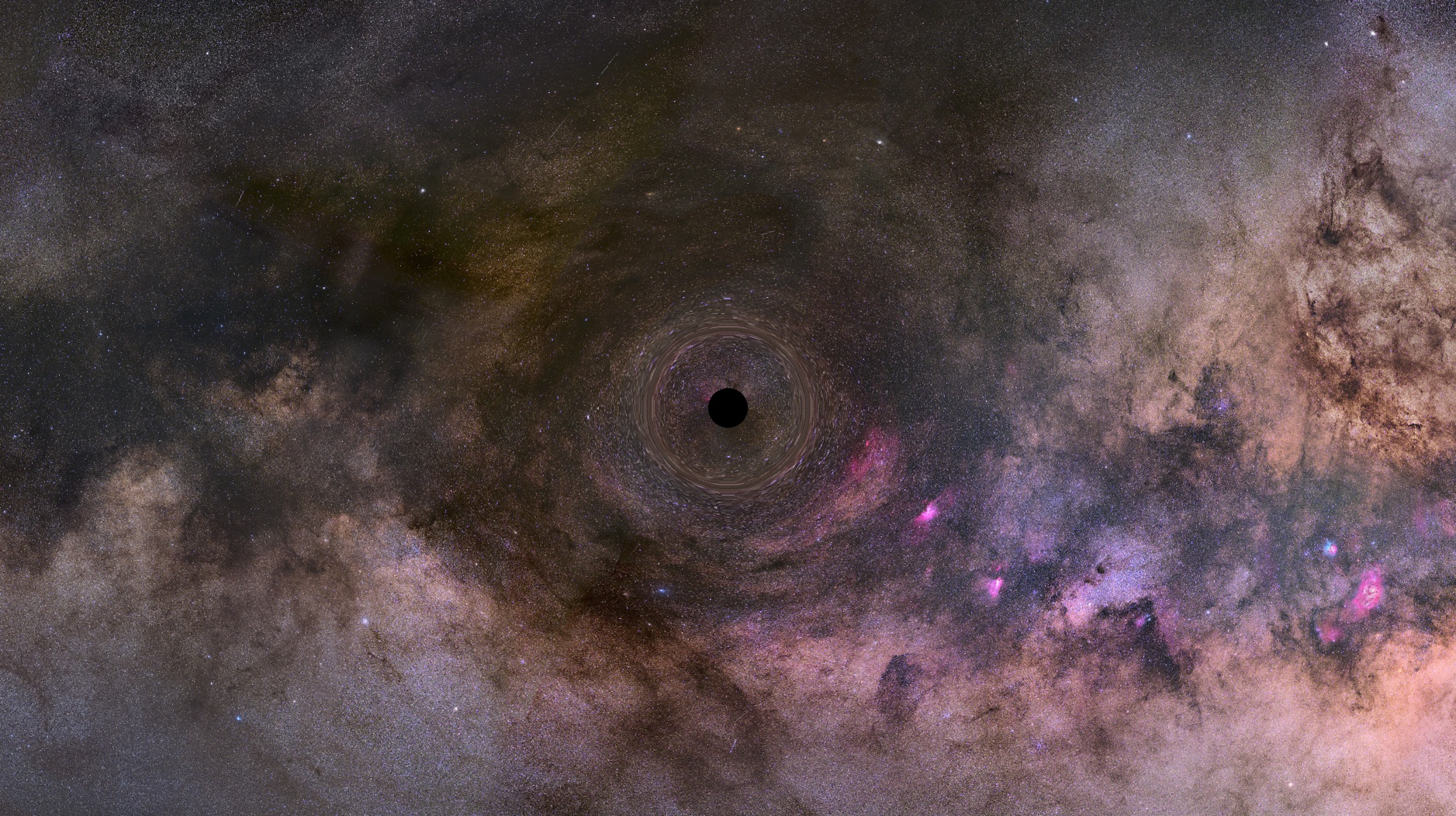
Compact Symmetric Objects (CSOs) - active galaxies that host supermassive black holes at their cores - have long puzzled astronomers with their unique characteristics. These monster black holes emit powerful jets travelling at near-light speeds in opposite directions.
However, unlike their counterparts in other galaxies, these jets remain compact, not extending out to great distances as expected. For decades, scientists presumed that CSOs were youthful entities, with their jets destined to expand over time.
A new investigation into CSOs has revealed that these objects are not entirely what they seem. The researchers discovered that these enigmatic objects are short-lived, challenging the long-standing belief that these celestial bodies are youthful entities in the cosmos.
The Caltech-led team, led by Anthony (Tony) Readhead, Robinson Professor of Astronomy, Emeritus, identified over 3,000 CSO candidates, confirming 64 as authentic CSOs and recognizing 15 new candidates. These objects were previously observed by the U.S. National Science Foundation National Radio Astronomy Observatory (NSF NRAO)'s Very Long Baseline Array (VLBA).
The team concluded that CSOs expel jets for 5,000 years or less and then die out. Scientists believe a tidal disruption event (TDE) is fueling the short-lived jets, which occurs when a single star wanders too close to a supermassive black hole and is devoured.
"The CSO jets are very energetic jets but they seem to shut off. The jets stop flowing from the source," says Vikram Ravi, assistant professor of astronomy at Caltech and a co-author of one of the studies.
Astronomers believe that the CSO jets likely form when a single, massive star wanders too close to a supermassive black hole and is shredded to pieces.
"These objects are indeed a distinct population with their own distinct origin, and it is up to us now to learn more about them and how they came to be," Readhead says.


 Google News