

Science News Roundup: U.S. FAA in contact with SpaceX after booster rocket fire; NASA draws back the curtain on the Webb space telescope's first full-color images and more
CAS Space signed a strategic cooperation agreement with a wholly-owned subsidiary of Hong Kong-based travel industry giant China Tourism Group, pledging to "jointly promote the application of commercial space technology and create a new space economy such as space tourism," according to a statement published on CAS Space's official WeChat account. Webb space telescope opens door to discoveries still unimagined The powerful James Webb Space Telescope's inaugural batch of images has opened a new chapter of cosmic exploration, but astronomers say the observatory's most consequential discoveries may well be those they have yet to even imagine.
Following is a summary of current science news briefs.
U.S. FAA in contact with SpaceX after booster rocket fire
The Federal Aviation Administration (FAA) said Tuesday it was in "close contact" with SpaceX as the company reviewed a fire that occurred as part of its Super Heavy booster rocket development, but that the agency was barred from investigating the matter. The FAA said U.S. law "limits the FAA's safety oversight to protecting the public during scheduled launch and reentry operations. Yesterday's event does not fall under the agency's jurisdiction."
NASA draws back the curtain on the Webb space telescope's first full-color images
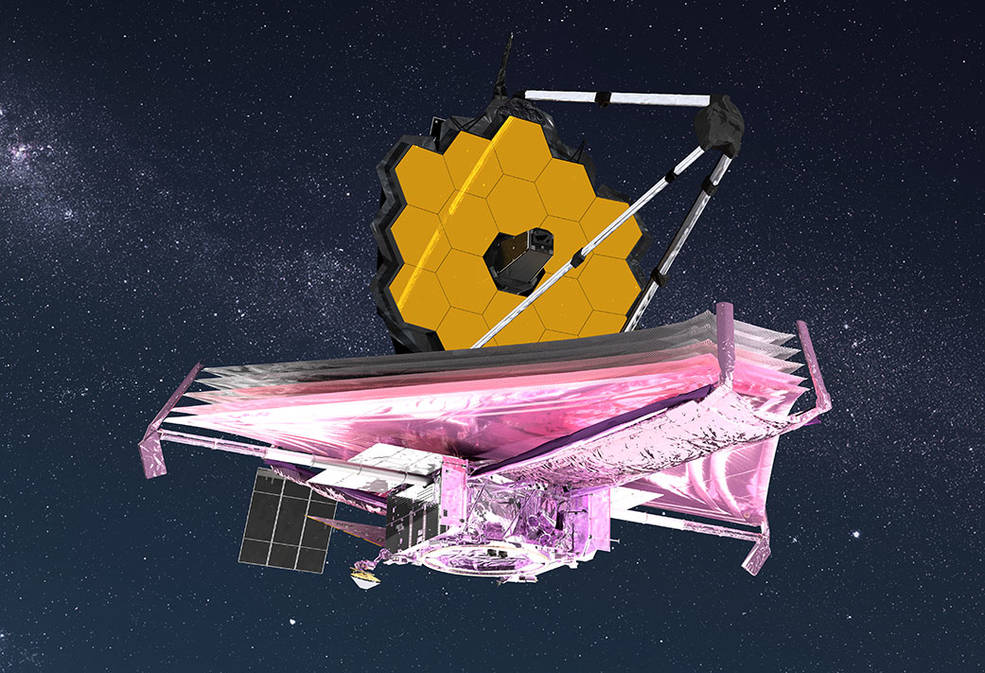
NASA on Tuesday drew back the curtain on billions of years of cosmic evolution with the inaugural batch of photos from the largest, most powerful observatory ever launched to space, saying the luminous imagery showed the telescope exceeds expectations. The first full-color, high-resolution pictures from the James Webb Space Telescope, designed to peer farther than before with greater clarity to the dawn of the universe, were hailed by NASA as a milestone marking a new era of astronomical exploration.
Science offers a basis for national climate damage claims -study
A scientific basis exists to calculate how much one country's carbon emissions have damaged the economy of another, a study said on Tuesday of development is billed as a potential game-changer for climate litigation. The research by U.S.-based Dartmouth College found that a small group of heavy polluters has caused trillions of dollars of economic losses due to warming caused by their emissions, with warmer and poorer Global South countries hit hardest.
Chinese scientists develop robot fish that gobble up microplastics
Robot fish that "eat" microplastics may one day help to clean up the world's polluted oceans, says a team of Chinese scientists from Sichuan University in southwest China. Soft to the touch and just 1.3 centimeters (0.5 inches) in size, these robots already suck up microplastics in shallow water.
SpaceX Starship booster 'probably' returning to pad after the explosion -Elon Musk
The Starship rocket booster SpaceX plans to use for an inaugural flight to orbit will "probably" return to its launch mount in Texas next week following a testing explosion on Monday, the company's chief executive, Elon Musk, told Reuters. "Damage is minor, but booster will be transferred back to the high bay for inspections, returning to the launch stand probably next week," Musk said in an email.
China's space tourism prospects were boosted by a cooperation agreement
A Chinese space tech company said on Wednesday it had signed a cooperation agreement with the country's largest state-owned travel corporation, the latest sign that the arrival of a domestic "space tourism" industry is near. CAS Space signed a strategic cooperation agreement with a wholly-owned subsidiary of Hong Kong-based travel industry giant China Tourism Group, pledging to "jointly promote the application of commercial space technology and create a new space economy such as space tourism," according to a statement published on CAS Space's official WeChat account.
Webb space telescope opens door to discoveries still unimagined
The powerful James Webb Space Telescope's inaugural batch of images has opened a new chapter of cosmic exploration, but astronomers say the observatory's most consequential discoveries may well be those they have yet to even imagine. Distant colliding galaxies, gas-giant exoplanets, and dying star systems were the first celestial subjects captured by the multibillion-dollar observatory, putting its wide range of infrared-imaging capabilities on colorful display and proving the telescope works as designed.


 Google News