

Mapp4all allows blind, wheelchair users to find how accessible a building is before visit
The 50-year-old, who founded the free mobile application Mapp4all in 2015, said such data had simply not existed in Spain.
- Country:
- Spain
Entrepreneur Josep Esteba became so frustrated trying to get around his native Spain in a wheelchair for more than 20 years that he embarked on a mission to map cities for disabled people all over the world.
"Many years ago I traveled a lot for work, and would arrive in cities that I didn't know very well," he told the Thomson Reuters Foundation. "That's when I realized that there just wasn't information for those that needed it."
Fast-forward several years and Esteba, a paraplegic since a car accident in his early twenties, set out on another journey – this time a virtual one to digitalize information on accessibility.
The 50-year-old, who founded the free mobile application Mapp4all in 2015, said such data had simply not existed in Spain.
The Barcelona-based app allows wheelchair users, as well as the blind, hearing-impaired and others, to find out how accessible a building is before they visit it.
Users can check whether a cinema or museum has ramps or lift access, for instance, or if a restaurant provides menus in Braille.
Establishments can register to add information themselves, but the app also draws on data that is self-reported by users. It has been downloaded in nearly 3,000 cities and works across nine languages.
Mapp4all is one of a slew of apps that have been developed in recent years to help disabled people navigate cities.
BlindSquare and Wayfindr both offer audio instructions to help blind people get around cities globally, while the Wheely NYC app helps New Yorkers use the subway by providing targeted information, like whether lifts are working.
LESS OPPORTUNITY
More than 1 billion people in the world have a disability, according to the World Health Organization (WHO).
By 2050, of the roughly 6.25 billion people who will be living in urban areas, 15 percent are expected to have disabilities, the United Nations Department of Economic and Social Affairs has predicted.
People with disabilities tend to have fewer economic opportunities and lower educational achievements than their able-bodied peers, due to a lack of tailored services and the obstacles they face in everyday life, according to the WHO.
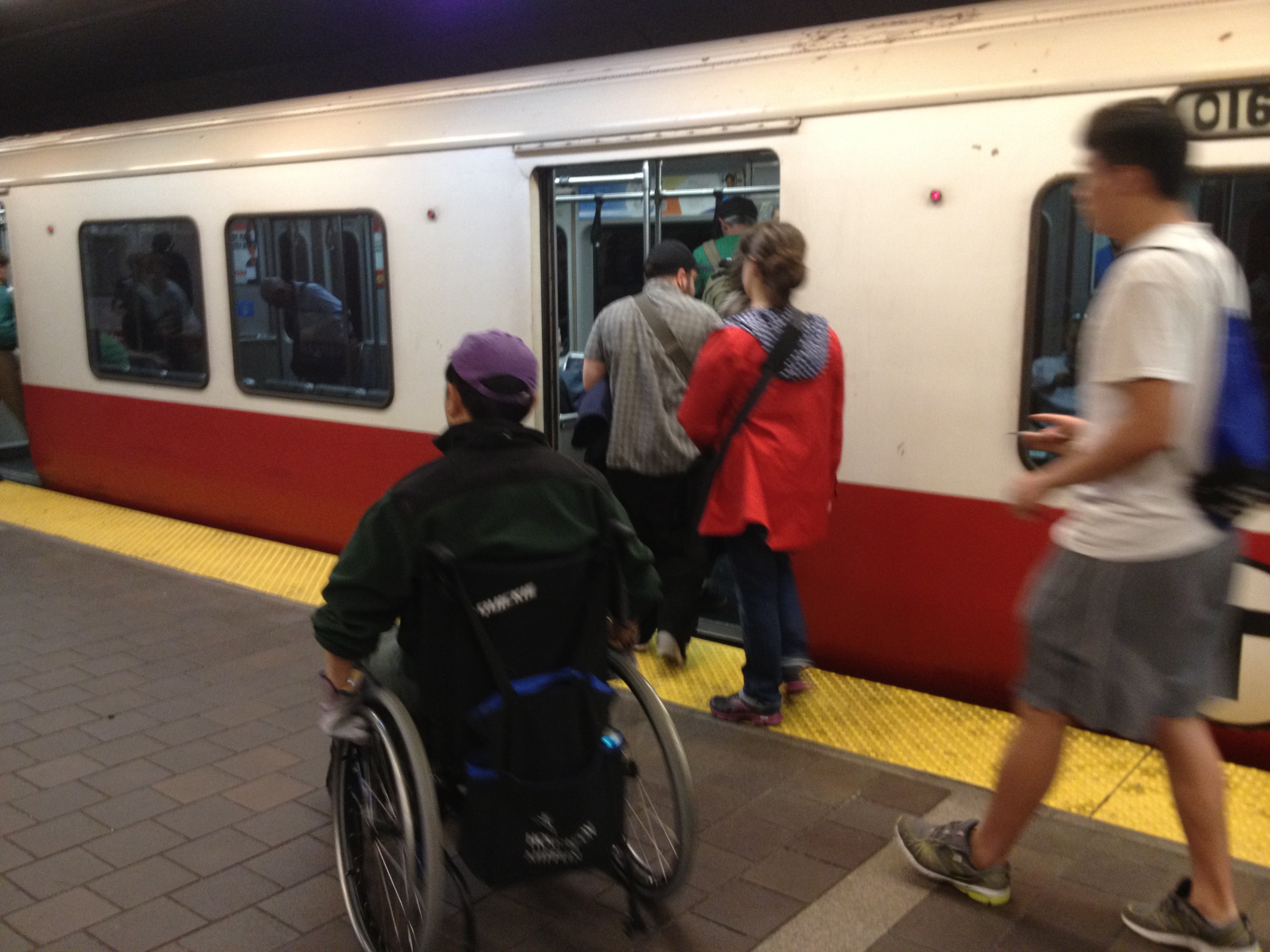
Buildings without lifts, shops that have no step-free access and inaccessible toilets are just some of the challenges disabled people face in getting around urban areas.
In general, disabled people still do not expect places to be fully accessible, and there is a long way to go in quelling that anxiety, said Ross Atkin, a UK-based designer specializing inaccessibility.
"When it's somewhere they don't know, they're not sure there will be the drop curbs they need ... they're not sure they're going to be able to get off the bus," he told the Thomson Reuters Foundation.
"You only need a couple of experiences of going somewhere and getting stuck to lose your independent mobility," he added.
Being better informed allows people to move out of their comfort zone, instead of going back to the same places they already know they can access, said Esteba.
Personal experience has taught him that accessibility data must be broad enough to cater for every type of user.
"I'm in a wheelchair, but what is accessible for me is not the same as for someone who is 30 years older or weighs 30 kilos more," he said.


 Google News