

EIB Grants €400M Loan to Complete Prague Ring Road and Boost Green Mobility in Czech Republic
The financing is channelled through the State Fund for Transport Infrastructure (SFTI) under the supervision of the Ministry of Transport, with the project implemented by Ředitelství silnic a dálnic (ŘSD), the country’s Road and Motorway Directorate.
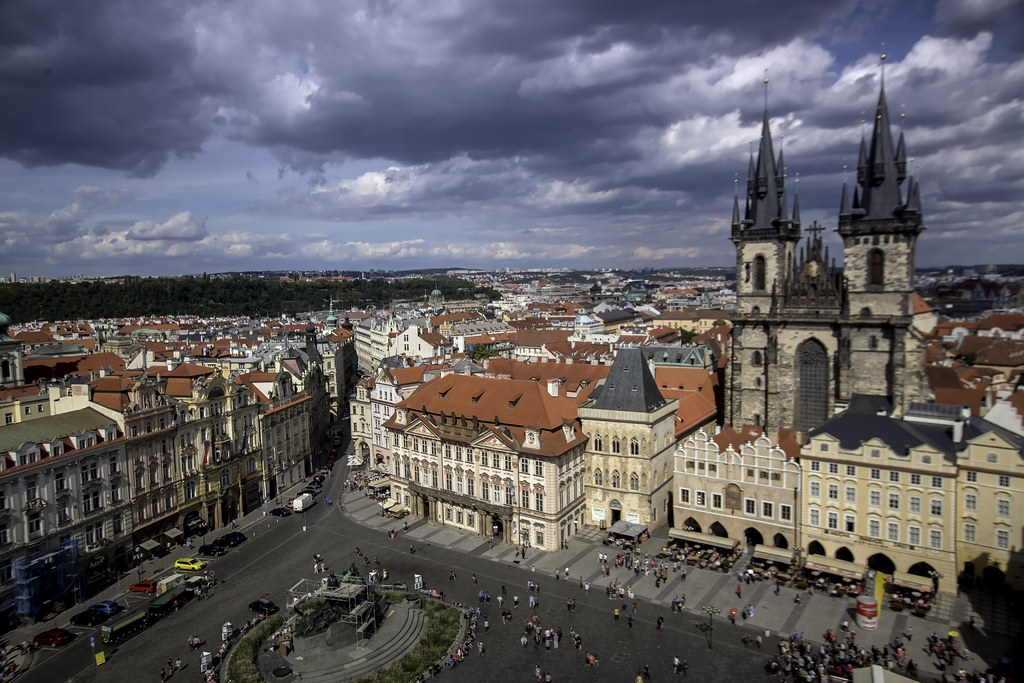
The European Investment Bank (EIB) has approved a €400 million (CZK 10.1 billion) loan to support the construction of a 12.64 km section of the Prague Ring Road, a flagship infrastructure project set to transform transport connectivity in and around the Czech capital. The new motorway section—D0 Běchovice–D1—is strategically located south-east of Prague and forms part of the Trans-European Transport Network (TEN-T), enhancing mobility, economic development, and environmental sustainability.
The project will significantly reduce congestion, improve air quality, and strengthen both regional and international transport links, providing an essential upgrade to the Czech Republic's transport system.
Financing the Future of Czech Transport
The new loan reflects the EIB's continued partnership with the Czech Republic in advancing sustainable mobility. The financing is channelled through the State Fund for Transport Infrastructure (SFTI) under the supervision of the Ministry of Transport, with the project implemented by Ředitelství silnic a dálnic (ŘSD), the country's Road and Motorway Directorate.
Out of the approved CZK 10.1 billion, CZK 5.1 billion (€200 million) has been disbursed to the Czech Republic through the Ministry of Finance, while the remaining funds will be released as construction progresses.
"This investment will help reduce congestion, improve air quality and the environment in general, and strengthen the Czech Republic's transport," said EIB Vice-President Marek Mora. "It is a strategic step forward for both local commuters and international transit."
The project forms a key part of Prague's Sustainable Urban Mobility Plan (SUMP) and will contribute to completing the 81.28 km ring road—a critical transport artery expected to be finalised by 2032.
A Sustainable, Modern and Safe Motorway
The new 2x3 lane motorway section will incorporate state-of-the-art safety, environmental, and accessibility features. Key infrastructure elements include:
-
Four grade-separated interchanges to improve traffic flow;
-
Two tunnels and 22 bridges ensuring smooth and resilient connectivity;
-
Two pedestrian and cycling overpasses, supporting multimodal mobility;
-
16 noise barriers covering 7.8 km to protect residential areas; and
-
18 vegetation belts across 48 hectares to mitigate environmental impact and enhance biodiversity.
A green belt will also run along the inner side of the ring road, reflecting the Czech Republic's commitment to sustainable transport development and environmental protection.
Economic Growth and Employment
The project is expected to create around 5,300 full-time jobs during construction, driving local employment and stimulating regional economic activity. The investment will also support small and medium-sized enterprises (SMEs) through subcontracting opportunities, supply chains, and related services.
Beyond economic benefits, the project will improve access to jobs, services, and education, fostering regional cooperation and social inclusion in line with the European Union's cohesion policy objectives.
The project aligns with the EIB's Transport Lending Policy, which prioritises safe, green, and efficient mobility solutions consistent with EU climate objectives and the European Green Deal.
Linking the Czech Republic to Europe
The Prague Ring Road plays a vital role in connecting nine major motorway routes from the capital, serving as a linchpin for domestic and international transit. It forms part of the TEN-T Core Network and the Baltic-Adriatic Corridor, improving the movement of goods and passengers across Central Europe.
"The D0 511 section between Běchovice and the D1 motorway is an integral part of the gradually constructed Prague Ring Road, one of the most important transport infrastructure projects in the Czech Republic," said Radek Mátl, Director General of ŘSD.
He noted that completing this section will extend the existing southern part of the ring road, operational since 2010, toward the D11 motorway, facilitating a continuous link for long-distance traffic. "This will shift heavy freight transport from overloaded urban roads onto a new high-capacity motorway, improving safety and air quality while strengthening international connectivity," Mátl explained.
Enhancing Connectivity, Sustainability and Safety
The new motorway segment has been designed with dual-use capabilities and climate resilience in mind. It includes modern drainage and environmental protection systems to ensure durability under extreme weather conditions and to safeguard surrounding ecosystems.
By diverting transit traffic away from city roads, the project will cut travel times, reduce vehicle emissions, and improve air quality in urban areas—making Prague's transport network cleaner and more efficient.
The project also supports the EU's 2050 climate neutrality goals and the Czech Republic's National Transport Policy, which prioritises smart, sustainable, and inclusive mobility.
A Long-Awaited Milestone for Prague
The construction of the D0 Běchovice–D1 section represents a major milestone in the long-term development of the Prague Ring Road, a project that has garnered strong public and political support. Once completed, it will transform urban mobility, facilitate regional development, and strengthen trade routes within Central and Eastern Europe.
"The completion of this section will bring tangible benefits for people, the environment, and the economy," said Vice-President Mora. "The EIB's financing demonstrates our firm commitment to helping the Czech Republic advance modern, sustainable infrastructure that meets the needs of future generations."
With construction underway, this investment marks a new chapter in Prague's transport evolution—one that balances efficiency with environmental care and contributes to Europe's broader goals of sustainable, connected, and inclusive growth.


 Google News