



World Is Breaking Planetary Limits—A New Global Finance Tool Aims to Fix the Incentives
Some high-income countries have already demonstrated that economic growth can be decoupled from environmental harm, largely through gains in resource efficiency.
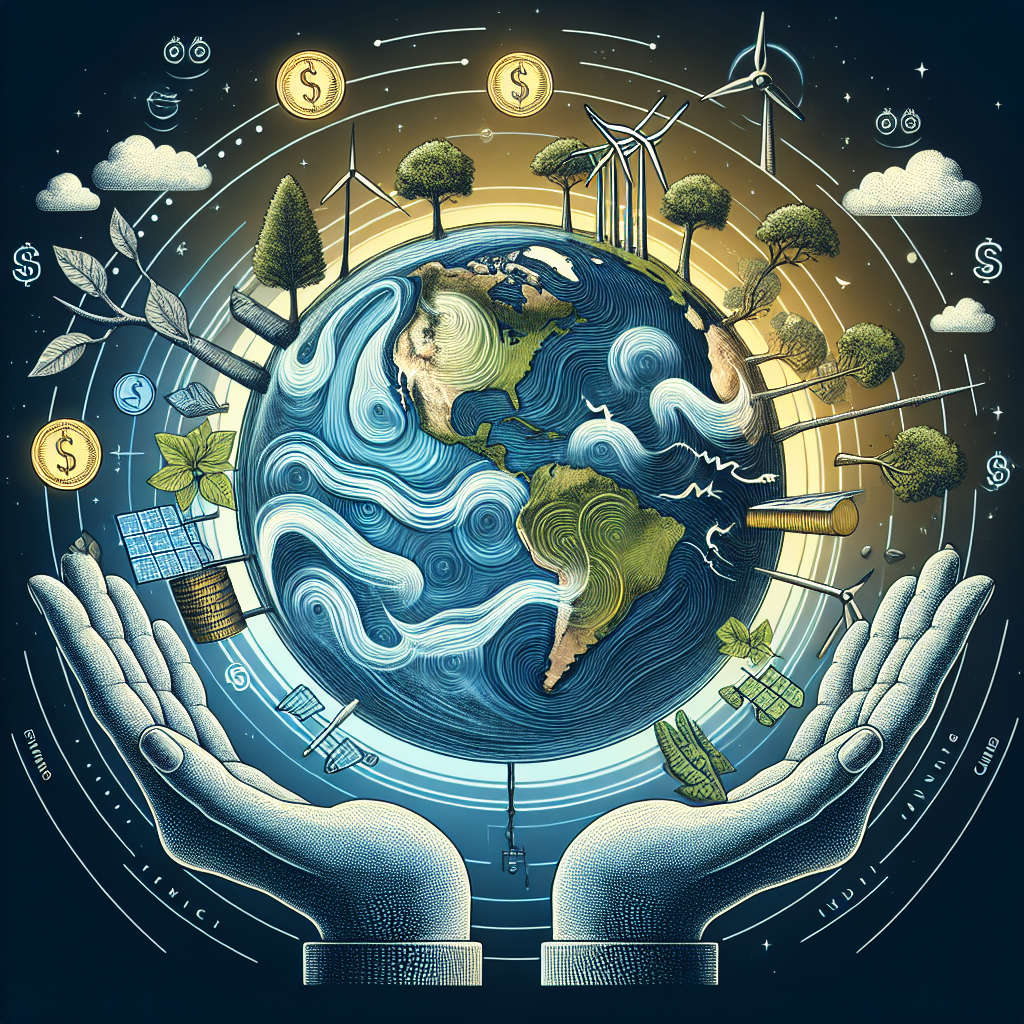
Ninety percent of humanity now lives with degraded land, polluted air, or water stress—and in low-income countries, four out of five people face all three at once. This is no longer a distant environmental warning. It is an economic emergency unfolding in real time, with direct consequences for jobs, productivity, health, and global stability.
The planet has already crossed six of nine planetary boundaries, the scientifically defined thresholds that keep Earth livable. In just 150 years, the balance of life has shifted dramatically: wild mammals now account for only 5 percent of global biomass, while humans and livestock make up 95 percent. Natural capital—the foundation of economies—is being rapidly depleted.
But a growing body of evidence shows this trajectory is not inevitable.
Development Without Destruction Is Already Possible
Restoring nature is no longer a moral argument alone—it is an economic one. Data shows that smart environmental investments deliver outsized returns:
-
Improving nitrogen fertilizer use at the farm level yields benefits 25 times greater than costs, while increasing crop yields
-
Point-of-use water chlorination could prevent one in four child deaths linked to waterborne diseases
-
Pollution markets generate between $26 and $215 in benefits for every dollar spent
Clean air, healthy soils, and resilient ecosystems are now recognized as core drivers of jobs and growth. Sectors such as forestry, renewable energy, and sustainable agriculture create more employment per dollar invested than highly polluting industries.
Some high-income countries have already demonstrated that economic growth can be decoupled from environmental harm, largely through gains in resource efficiency. Yet most low- and middle-income countries are facing severe environmental degradation before they have raised living standards—exposing the myth that pollution is a necessary stage of development.
The Finance System Is the Bottleneck
Despite the evidence, global finance is misaligned with planetary reality.
Concessional finance is largely restricted to low-income countries, while middle-income countries (MICs)—home to major tropical forests, biodiversity hotspots, and critical river systems—receive little incentive to protect global public goods. These countries rationally prioritize projects with immediate domestic returns, even when environmental protection would generate enormous cross-border benefits.
In short, the international financial system does not reward countries for acting in humanity’s collective interest.
Enter the Framework for Financial Incentives (FFI)
The Framework for Financial Incentives (FFI) is a new financing instrument designed to fix this market failure—by making investments in global public goods financially rational for individual countries.
Built on the economic logic of Reboot Development, the FFI provides targeted financial incentives for projects that generate positive cross-border externalities, such as:
-
Forest and biodiversity protection
-
Clean energy transitions
-
Pandemic preparedness
-
Water security and pollution reduction
Under a “least financial incentive” principle, countries receive only the minimum additional support needed to make such projects viable—through larger loan volumes, longer maturities, or reduced borrowing costs.
The result: what once looked like a fiscal burden becomes an attractive investment opportunity.
Backed by New Global Funds—And Moving Fast
Two new mechanisms underpin the FFI:
-
The Livable Planet Fund (LPF), the first trust fund dedicated exclusively to incentivizing middle-income countries to address global challenges
-
The Global Solutions Accelerator Platform (GSAP), which uses innovative shareholder-backed capital instruments to deliver true additional lending capacity, leveraging the World Bank’s balance sheet at 5:1 or higher
Demand has been swift. In just nine months, the FFI has approved incentives for 25 projects, delivering $200 million in price support, $3.6 billion in volume incentives, and catalyzing $12 billion in total lending.
A Three-Part Policy Shift: Inform, Enable, Evaluate
The FFI operationalizes a new development model through three pillars:
-
Inform: Real-time data—from satellites to air monitors—makes environmental damage visible and measurable, and rewards projects with verifiable cross-border benefits
-
Enable: A systems approach aligns policies across sectors, supporting win-win transformations in water, food, climate, biodiversity, and health
-
Evaluate: Performance-based incentives ensure accountability and learning, as seen in Brazil’s Amazonas project, where payments depend on measurable deforestation reductions
Why This Matters—For Everyone
-
For policymakers: FFI makes smart, nature-positive development financially feasible
-
For donors: Each dollar invested delivers cascading global benefits, from climate stability to pandemic resilience
-
For researchers: It tests whether paying for externalities can solve collective action failures
-
For civil society: It turns environmental commitments into funded, measurable action
-
For future generations: It offers a pathway to remain within planetary boundaries while expanding opportunity
As economist Kevin Watkins put it, the FFI gives the world a chance to act like “good ancestors”—aligning today’s economic choices with the survival and prosperity of tomorrow.
The message is clear: investing in nature is no longer optional, and it is no longer uneconomic. With the right incentives, development that delivers jobs, growth, and a livable planet is not just possible—it is already underway.
ALSO READ
Sri Lanka Partners with World Bank for Economic Revival
India Adopts Mission-Mode Approach to Ocean Conservation: Deep Ocean Mission Drives Marine Biodiversity Protection
Rise in IPR Filings Reflects Stronger Biodiversity Act
ADB Targets Glacier Melt Risks with New Framework for Climate Finance
India Emerges as Global Leader in Biodiversity Compliance, Accounts for 56% of Nagoya Protocol Certificates


 Google News