

Reviving Polynesian Traditions: Safeguarding Tahiti's Unique Ecosystem
Patrick Rochette, a Tahitian elder, shares traditional Polynesian conservation methods to protect Tahiti's unique environment with schoolchildren. Emphasizing cultural roots lost during French colonization, he highlights a community-focused approach to counter climate change. As the world embraces sustainability, the revival of indigenous methods is gaining traction in Polynesia, particularly in Teahupo'o.
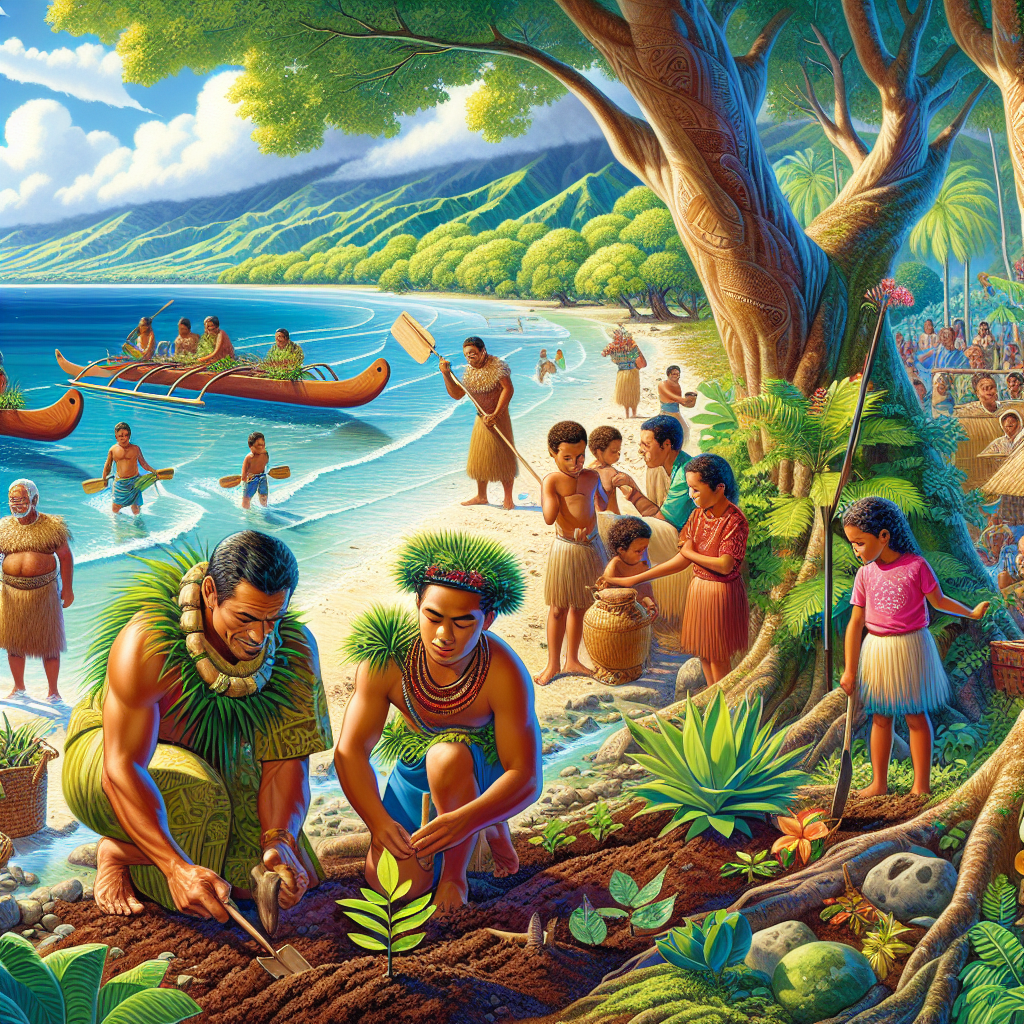
On the remote south coast of Tahiti, its iconic Jurassic peaks and azure lagoon accessible only by boat, Patrick Rochette is reviving centuries-old Polynesian conservation traditions to protect this unique environment. Rochette's compelling accounts, mingled with the island's history of tribal wars and the roots of wave-riding, resonate with schoolchildren he brings to this idyllic spot near the Olympic surfing venue of Teahupo'o.
Rochette emphasizes the interconnected Polynesian concepts lost or repressed during Tahiti's French colonization: respect for tupuna (ancestors), mana (spiritual power), tapu (the sacred), rahui (prohibition), and the guardians like whales, sharks, and turtles. "It's up to the children to take home this information and pass it to their parents," says the 63-year-old Tahitian elder.
With a focus on countering over-exploitation and climate change, Rochette promotes a cultural renaissance across the Pacific island group, which spans the world's largest ocean. He stresses, "We Polynesians, in 15 or 20 years, if we don't do anything, there'll be nothing left. We have to act together, not just here, but across the entire Pacific community."
The Polynesian Triangle encompasses some 10 million square miles of the Pacific Ocean, with Hawaii, New Zealand, and Easter Island at its corners. Traditional and culturally relevant approaches to conservation are gaining traction as global sustainability efforts increase, resonating deeply with Indigenous communities.
An intimate knowledge of the moana (ocean) and guardianship in Polynesia becomes ever more crucial as pressures on reefs and lagoons from development and climate change grow. Tereva David, a local surfing champion, also works with the Teahupo'o community to harmonize life with the environment. David has run camps for promising young French Polynesian surfers over the past decade, teaching them respect for the wave, themselves, their culture, and the environment.
Tahitian language and culture now thrive with local pride, particularly in Teahupo'o, where clear rivers run through the village to the lagoon. The win by local surfer Kauli Vaast in the Olympics brought great mana (spiritual power) to the community.
With the Olympics, local efforts combat new challenges like environmental impacts from infrastructure. The community fought for scaled-back construction to preserve the reef, which serves as both a natural wonder and vital resource.
A decade ago, Teahupo'o's reef faced over-fishing and storm damage. The community reinstated a rahui, banning fishing in a 768-hectare area to rejuvenate the reef. Modernized yet rooted in tradition, this effort has largely succeeded, showing improved fish stocks and reef health.
Economic assessments, like those by Hawaiian scientist Cliff Kapono, quantify the impacts of development on the reef. His MEGA Lab estimated significant economic damages from disturbing corals due to Olympic preparations. Beyond economics, the intrinsic role of ocean guardianship in Polynesian culture remains vital.
Communities across Polynesia, from resisting over-fishing to nuclear testing, continue to defend their reefs. "For us in Polynesia, that's who we are, that's our roots," says Kapono. "This is now the war we fight. We fight for our environment."


 Google News